
Ingredients
Noodles
- 400 gfresh wheat noodles
- or 300 g dried
Broth
- 1.5 litresbeef or chicken stock
- 300 gbeef or chicken, thinly sliced
Aromatics
- 1onion, sliced
- 6 clovesgarlic
- 3cm ginger
- 2tomatoes, chopped
- 3 tbspoil
Spices
- 1 tspturmeric
- 1 tspground cumin
- 1 tspground coriander
- 1 tsptimur, Nepali Sichuan pepper
- 1 tspchilli powder
- 1 tspgaram masala
- salt and pepper
Vegetables
- 1carrot, julienned
- 1 handfulgreen beans
- half a cabbage, shredded
- 1 handfulspinach
- 3spring onions
To finish
- chopped coriander
- a squeeze of lemon
- achar or chilli sauce
To serve
- in deep bowls, very hot
Directions
- Make it from bones if you can, simmered gently for a couple of hours and skimmed. Skim it properly, since a clear broth is what is wanted. Fry the onion in oil until soft and golden. Add the garlic and ginger and cook until fragrant.
- Add the sliced meat and brown it. Now add the ground spices and cook them for a minute in the oil. Grind it coarsely so you get occasional bursts of it.
- Add the tomatoes and cook them down until they collapse. Simmer for 20 minutes so the flavours come together. Taste and season it firmly, because a large volume of broth needs more salt than it seems.
- Keep the vegetables with some bite. Thukpa vegetables should be tender but distinct rather than stewed to nothing. Cook the noodles separately in a pot of boiling water, not in the broth.
- Drain them and rinse them briefly. For thenthuk, the hand-pulled version, make a firm dough of flour and water, rest it 30 minutes, and tear flat pieces straight into the simmering broth.
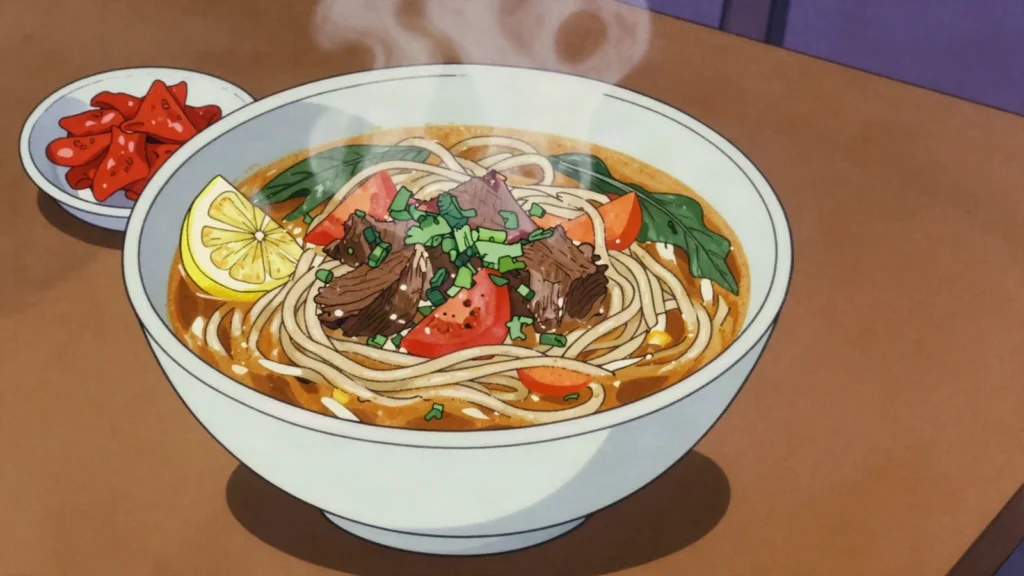
- Put a portion of noodles in each bowl and ladle the hot broth and vegetables over. Assembling in the bowl rather than in the pot keeps the noodles from sitting and softening.
- Scatter spring onion and coriander over. Add a squeeze of lemon and a spoonful of achar. Serve it very hot, in deep bowls. It is also a hangover cure and a cold-weather restorative.
Technique
- Thenthuk, made with hand-torn dough, is the other main version.
- Timur is the Nepali Sichuan pepper and is sold in South Asian shops.
- It arrived in Nepal over the passes and spread with Tibetan communities after 1959.
Substitutions
- Any wheat noodle, and even spaghetti at a pinch.
- Sichuan peppercorns in place of timur, which is close.
Variations
- Thenthuk, with hand-torn dough pieces.
- Vegetarian, with a vegetable broth.
- Made with mutton, which is common in the mountains.
History
A noodle soup with meat and vegetables that entered Nepali cooking from Tibet, carried across the Himalayan passes by trade and by the movement of Tibetan communities into Nepal, a process that intensified significantly after 1959, when a large wave of Tibetan refugees fled into Nepal and India following China’s assertion of control over Tibet. Tibetan refugee settlements in Nepal, particularly around Kathmandu, became centers for thukpa and other Tibetan dishes, and the soup spread from those communities into wider Nepali and South Asian popularity over the following decades. Its broth, noodles and vegetable-and-meat combination varies by region and by whether a thinner, clear broth or a thicker, more stew-like version is preferred, without one being treated as more authentic than the other.
Frequently asked questions
What is Thukpa?
Thukpa is a soup & stew from Nepal: tibetan-style hot noodle soup with meat and vegetables. A noodle soup with meat and vegetables that entered Nepali cooking from Tibet, carried across the Himalayan passes by trade and by the movement of Tibetan communities into Nepal, a process that intensified significantly after 1959, when a large wave of Tibetan refugees fled into Nepal and India following China’s assertion of control over Tibet. Tibetan refugee settlements in Nepal, particularly around Kathmandu, became centers for thukpa and other Tibetan dishes, and the soup spread from those communities into wider Nepali and South Asian popularity over the following decades. Its broth, noodles and vegetable-and-meat combination varies by region and by whether a thinner, clear broth or a thicker, more stew-like version is preferred, without one being treated as more authentic than the other.
How long does Thukpa take to make?
Thukpa takes 30 min of preparation and 40 min of cooking. The recipe makes 4 servings. It is rated easy to make.
What can I substitute in Thukpa?
Yes, within limits. Any wheat noodle, and even spaghetti at a pinch. Sichuan peppercorns in place of timur, which is close.
What is the most important thing to get right in Thukpa?
Keep the vegetables with some bite. Thukpa vegetables should be tender but distinct rather than stewed to nothing. Cook the noodles separately in a pot of boiling water, not in the broth.