
Ingredients
Meat
- 4 kgbone-in lamb or goat, leg and shoulder, deeply scored to the bone
Shuwa rub
- 6 tbspground cumin
- 4 tbspground coriander seed
- 3 tbspground red chilli
- 2 tbspground turmeric
- 2 tbspground cardamom
- 1 tbspground cinnamon
- 1 tbspground black pepper
- 6dried black limes (loomi), ground
- 2whole heads garlic, crushed to a paste
- 60 gfresh ginger, grated
- 150 mlred wine vinegar or date vinegar
- 200 gghee, melted
- 3 tbspsalt
- 4 tbspdate syrup (optional, for the sweeter interior style)
Wrapping
- banana leaves or fresh dried palm fronds, wilted over a flame
- clean jute or hessian sacking
- strong twine
- dry acacia or ghaf firewood, and stones, for the pit
To serve
- 1 kglong-grain rice, cooked with the meat juices, cardamom and saffron
- Omani rukhal bread
- fresh limes and a chilli relish (mashuai daqoos)
Directions
- Mix all the rub ingredients into a thick, dark, oily paste. It should smell fiercely of cumin and sour black lime.
- Score the meat to the bone in deep cuts and work the paste right into every cut and cavity with your hands. Use all of it.
- Cover and marinate 12–24 hours in a cool place. In Oman this is done on the eve of Eid, by the whole extended family.
- Dig a pit about 1.5 m deep, line it with stones, and burn dry hardwood in it for 3–4 hours until the stones glow and a deep bed of embers has formed. Rake the embers level.
- Wrap each piece of meat in wilted banana leaf or palm frond, then in sacking, and tie tightly so no ember or sand can reach the meat and no steam escapes.
- Lower the parcels into the pit in a metal cage or basket, cover with more leaves, then a metal sheet, then seal the whole pit with sand and mud so it is airtight. A smoking pit is a leaking pit and must be resealed.
- Leave it buried and untouched for 24 hours for goat, up to 48 for a large lamb. The pit holds a low, falling heat – roughly 120°C (250°F) dropping to 90°C (195°F) – which is why the meat becomes fall-apart tender without drying.
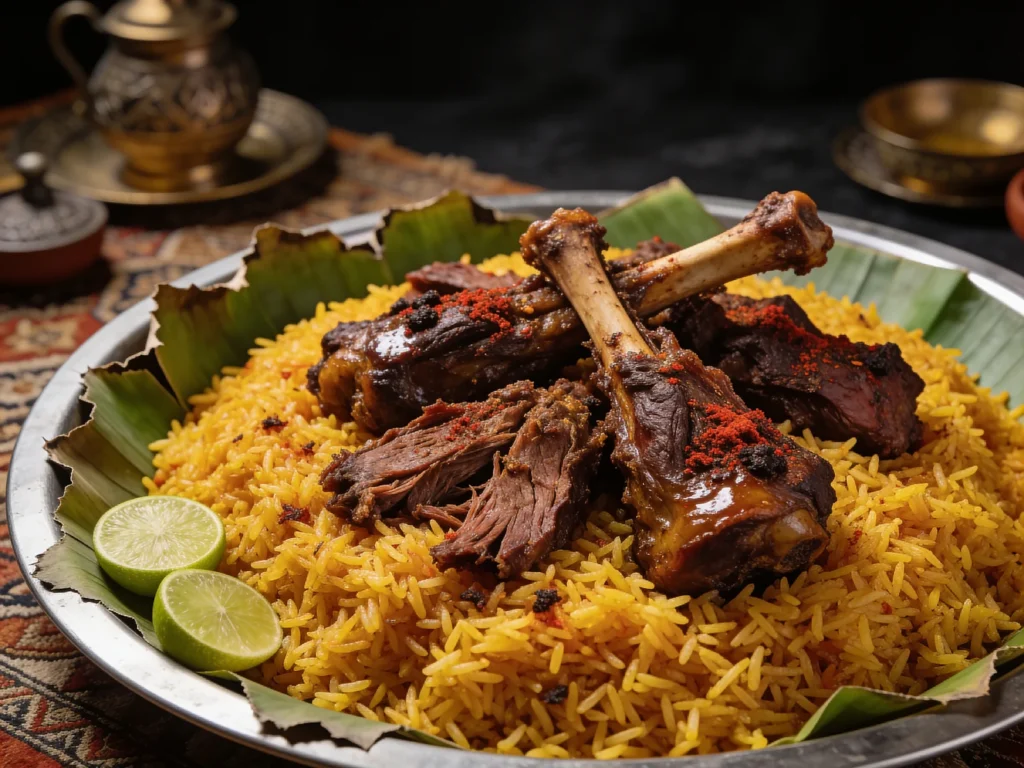
- Dig out the pit on the day of the feast, cut the twine and open the parcels at the table. The meat should be dark mahogany, pulling from the bone at a touch, and dripping spiced fat.
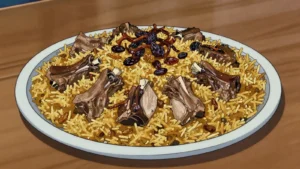
- Pour the collected juices from the parcels over the rice, pile the meat on top and serve communally from a single large platter with rukhal bread and lime.
Technique
- Shuwa is a communal and calendrical dish, cooked only for Eid al-Adha and major celebrations. The pit is often a permanent village structure, reused every year, and the burying is a men’s job while the rub is made by the women.
- Dried black lime is the flavour that makes it Omani rather than generically Arabian – sour, smoky and faintly fermented. Do not leave it out.
- The seal is everything. If the pit is not airtight the meat roasts and dries instead of steaming in its own fat, and can pick up ash and grit.
Substitutions
- Home workaround with no pit: wrap the marinated meat in banana leaf and a double layer of foil, seal in a lidded roasting tin with a little water, and cook at 120°C (250°F) for 8–10 hours, then at 100°C (200°F) for another 4. Add 1 tsp smoked salt or a few drops of liquid smoke to the rub to hint at the wood fire.
- No black limes? Use the zest and juice of 2 limes plus 1 tsp ground sumac – sharper and less smoky, but the closest easy match.
Variations
- Sharqiyah-style shuwa, sweeter, with date syrup worked into the rub.
- Dhofari shuwa from the south, spiced more heavily with cinnamon and dried chilli.
- Camel shuwa, cooked for the largest weddings, needing a bigger pit and a full two days.
History
Meat, traditionally goat or lamb, marinated for a full day or more in a paste of spices including cumin, coriander, garlic and chili, then wrapped tightly in banana or palm leaves and slow-cooked in an underground pit oven for up to two full days, a technique developed in Oman as a way to feed large gatherings using a cooking method requiring little active attention once the pit is sealed. It is most strongly associated with Eid celebrations and other major family or community occasions in Oman, when the days-long preparation time and communal digging and sealing of the pit itself become part of the celebration rather than simply a means to an end. The specific spice paste recipe, closely guarded within families, is often prepared well in advance and considered a point of household pride and rivalry.
Frequently asked questions
What is Shuwa?
Shuwa is a main from Oman: banana-leaf-wrapped spiced lamb buried over embers for days; Eid ritual. Meat, traditionally goat or lamb, marinated for a full day or more in a paste of spices including cumin, coriander, garlic and chili, then wrapped tightly in banana or palm leaves and slow-cooked in an underground pit oven for up to two full days, a technique developed in Oman as a way to feed large gatherings using a cooking method requiring little active attention once the pit is sealed. It is most strongly associated with Eid celebrations and other major family or community occasions in Oman, when the days-long preparation time and communal digging and sealing of the pit itself become part of the celebration rather than simply a means to an end. The specific spice paste recipe, closely guarded within families, is often prepared well in advance and considered a point of household pride and rivalry.
How long does Shuwa take to make?
Shuwa takes 1 hr of preparation and 24–48 hr of cooking. The recipe makes 8 servings. It is rated hard to make.
What can I substitute in Shuwa?
Yes, within limits. Home workaround with no pit: wrap the marinated meat in banana leaf and a double layer of foil, seal in a lidded roasting tin with a little water, and cook at 120°C (250°F) for 8–10 hours, then at 100°C (200°F) for another 4. Add 1 tsp smoked salt or a few drops of liquid smoke to the rub to hint at the wood fire. No black limes? Use the zest and juice of 2 limes plus 1 tsp ground sumac – sharper and less smoky, but the closest easy match.
What is the most important thing to get right in Shuwa?
Cover and marinate 12–24 hours in a cool place. In Oman this is done on the eve of Eid, by the whole extended family.