
Ingredients
The bones
- 1.5 kgmutton marrow bones
- cut into short lengths
- or beef marrow bones
- blanched and rinsed
The base
- 3onions, chopped
- 8garlic cloves, crushed
- 5cm ginger, grated
- 4 tablespoonsmeat curry powder
- 1 teaspoonchilli powder
- or to taste
- 4 tablespoonsoil
- or ghee
The gravy
- 4tomatoes, chopped
- 6 tablespoonstomato ketchup
- 3 tablespoonstomato purée
- 2 tablespoonssugar
- or to taste
- salt
- about 1.5 litres water
To serve
- French bread
- or sliced white bread
- sliced red chilli
- coriander
- drinking straws
Directions
- Add it only if you want the stall look. The bones must be cooked right through. Keep raw and cooked meat well apart. Bone fragments can be sharp and dangerous. Check the bones for splinters before serving. Pieces about eight centimetres long are right. Soak the bones in cold water for an hour. Boil the bones briefly and discard that water.
- Bring them to a boil for about five minutes. Drain them and rinse them under cold water. Rinse each bone individually after blanching. Rub it off under running water. Heat the oil and cook the onion until soft. Give it about twelve minutes over a moderate heat. Add the garlic and the grated ginger. Garlic burns and turns bitter within a minute.
- Stir them constantly so they do not catch. Add the curry powder and the chilli powder. Fry them briefly in the hot oil first. Add a splash of water to stop them burning. That makes a thick paste in the pan.
- Cook it for about three minutes. Use a meat curry powder rather than a fish one. Add the chopped tomato and the tomato purée. Cook them down for about eight minutes. The tomato should collapse into the paste. Stir it so it does not catch and burn. Add the blanched bones and stir them through.
- Turn them so they are coated in the paste. Give them a few minutes in it. Simmer the bones for about three hours. Three hours is a genuine minimum here. Keep it at a gentle simmer rather than a boil. Marrow melts out of the bone if boiled hard.
- Stir it gently and only occasionally. Scrape the base to stop it catching. Stir the ketchup and sugar into the pot. Add them in the last half hour of cooking. Half an hour is enough to combine them.
- Stir them through the pot thoroughly. The gravy should be clearly sweet and tangy. Reduce the gravy until it is thick and glossy. Take the lid off for the last half hour. It should coat the bones rather than run off. Taste the gravy and adjust the seasoning. It should be sweet, sour, salty and spiced at once.
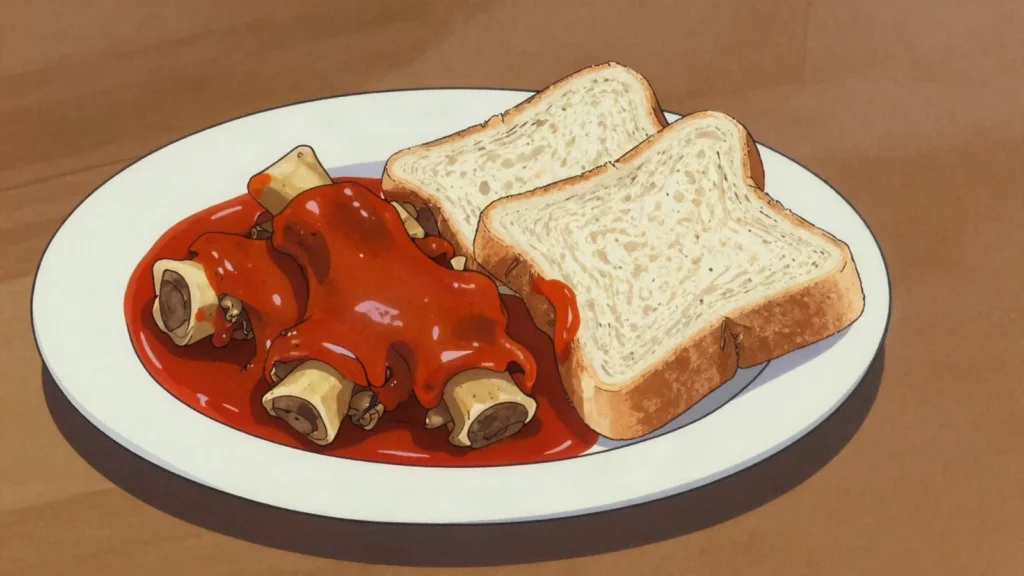
- Add sugar, salt or chilli to balance it. Taste it again after every adjustment. Pile the bones into a dish with the gravy over. Arrange them so the marrow ends are visible. Spoon plenty of gravy over the top. Include all of the thick gravy from the pot. Scatter sliced red chilli and coriander over. Add both at the last moment before serving.
- Serve French bread or white bread alongside. The gravy is far too good to leave behind. Put drinking straws on the table with the dish. Stalls serve it well into the small hours.
Technique
- Keep it at a gentle simmer throughout: hard boiling melts the marrow out of the bones and into the gravy, which defeats the whole point of the dish. Stir gently and only occasionally, moving the bones with tongs rather than knocking them about.
- Ask the butcher to cut the bones into roughly eight-centimetre lengths so the marrow is exposed at both ends — never attempt to cut bones at home. Check them for sharp splinters before serving, warn everyone they are eating around bones, and supervise young children closely.
- Soak the bones an hour in cold water, changing it once or twice, then blanch them five minutes and discard that water, rinsing each bone individually to rub off the scum that sticks to it. That gives a far cleaner finished gravy.
Substitutions
- Beef marrow bones replace mutton directly. Use a meat curry powder rather than a fish one — those blends are genuinely different, with meat blends carrying more coriander and cumin, and they are sold clearly labelled.
- Some stalls add red food colouring for the vivid stall shade, which the atlas records plainly; without it the gravy is a duller red and tastes exactly the same. The atlas gives the recipe without it.
Variations
- Tomato ketchup is a real ingredient rather than a shortcut, giving sweetness, acidity and colour together, and six tablespoons is genuinely what the recipe calls for — do not reduce it. Add it with the sugar only in the last half hour, since sugar added early can catch and burn.
- Fry the curry and chilli powder in the hot oil with a splash of water to make a paste and cook it about three minutes until the oil separates. That standard technique cooks out the raw powder taste and deepens the colour.
- Take the lid off for the last half hour so the gravy reduces to something thick and glossy that clings to the bones. It should taste sweet, sour, salty and spiced all at once, with all four clearly present. Serve it with drinking straws, which are pushed into the hollow bones to suck the marrow out — genuinely how it is eaten rather than a gimmick — and with bread to mop the gravy.
History
Invented by Indian Muslim stalls on Beach Road, who bought unwanted beef and mutton bones cheaply and made them a late-night dish.
Frequently asked questions
What is Sup Tulang?
Sup Tulang is a main from Singapore: mutton bones in a red masala gravy, the marrow sucked out with a straw. Invented by Indian Muslim stalls on Beach Road, who bought unwanted beef and mutton bones cheaply and made them a late-night dish.
How long does Sup Tulang take to make?
Sup Tulang takes 30 minutes of preparation and 3 hours of cooking. The recipe makes serves 4. It is rated medium to make.
What can I substitute in Sup Tulang?
Yes, within limits. Beef marrow bones replace mutton directly. Use a meat curry powder rather than a fish one — those blends are genuinely different, with meat blends carrying more coriander and cumin, and they are sold clearly labelled. Some stalls add red food colouring for the vivid stall shade, which the atlas records plainly; without it the gravy is a duller red and tastes exactly the same. The atlas gives the recipe without it.
What is the most important thing to get right in Sup Tulang?
Add it only if you want the stall look. The bones must be cooked right through. Keep raw and cooked meat well apart. Bone fragments can be sharp and dangerous. Check the bones for splinters before serving. Pieces about eight centimetres long are right. Soak the bones in cold water for an hour. Boil the bones briefly and discard that water.