
Ingredients
Base
- 250 gwhite cornflour or wheat starch
- 1.5 litreswater
- 800 gsugar, or 500 g sugar plus 300 g date syrup for the darker style
- 2 tbsprosewater
Fat and aromatics
- 350 gghee (samn), melted and warm
- 1 tspsaffron threads, steeped in 4 tbsp hot water
- 2 tspground green cardamom
- ½ tspground nutmeg
- 1 tsprosewater, extra, to finish
- a pinch of ground cloves
Nuts and colour
- 150 gcashews, lightly fried in a little ghee
- 50 gblanched almonds
- ¼ tspsaffron-based or natural food colour, for the amber or red styles (optional)
Directions
- Whisk the cornflour into 500 ml of the cold water until perfectly smooth, and leave it to stand 15 minutes; whisk again just before use so nothing settles.
- In a wide, heavy copper or steel pot, dissolve the sugar in the remaining 1 litre of water over medium heat and bring to a boil, skimming any scum.
- Pour the starch slurry into the boiling syrup in a slow stream while stirring hard with a long wooden paddle. It will thicken and go cloudy within a minute.
- Now begin the long stir. Keep the heat low to medium and move the paddle continuously in figures of eight, reaching the base and the corners. Never stop for more than a few seconds.
- After about 30 minutes the mixture turns from opaque white to translucent and pulls away from the sides in sheets. Stir in the saffron water and the colouring if using.
- Begin adding the warm ghee a ladleful at a time, waiting each time until the previous addition has been fully absorbed and the mass no longer looks slick. This takes another 45–60 minutes and is where most home cooks give up too early.
- Add the cardamom, nutmeg, cloves and rosewater and continue stirring another 30–45 minutes, until the halwa is deep glossy amber, thick enough that the paddle stands upright for a second, and a little ghee begins to weep from the surface – the classic sign that it is done.
- Fold in the fried cashews and almonds off the heat, keeping a few for the top.
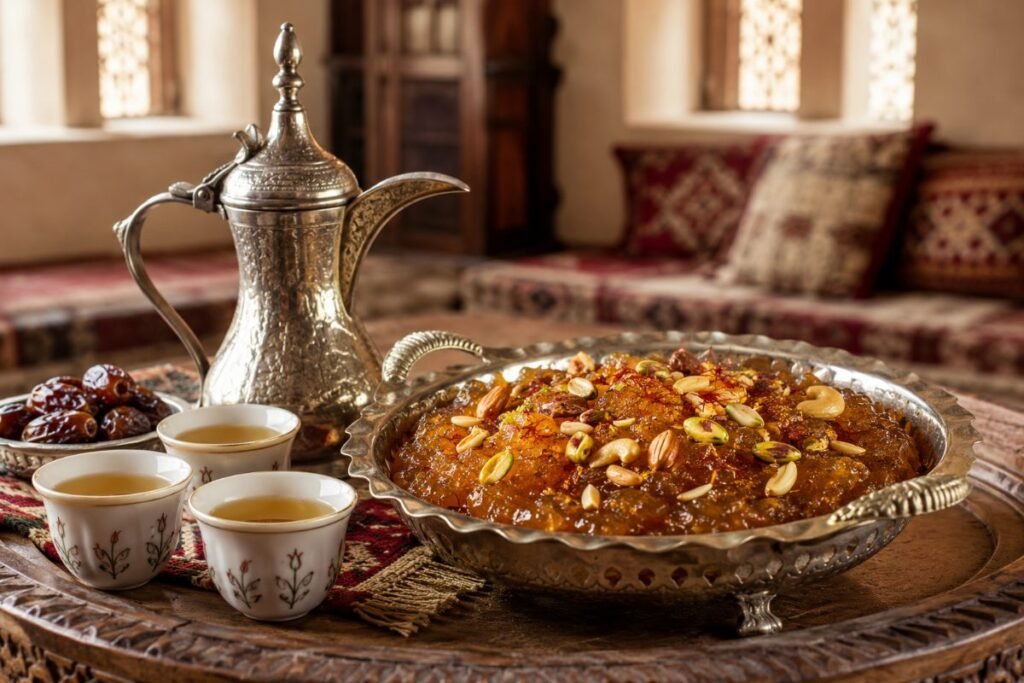
- Scrape into a shallow tray or into small copper or clay bowls, smooth the surface with a wet spatula, press the reserved nuts on top and leave to set at room temperature 4–6 hours. Serve at room temperature in small spoonfuls with Omani kahwa, never chilled.
Technique
- The stirring is the recipe. Traditional halwa makers work in pairs at a copper mirjal over a wood fire, swapping the paddle every few minutes for two to three hours; there is no shortcut, and stopping means a burnt base and a ruined batch.
- Add the ghee slowly and warm. Cold ghee or a rush at this stage makes the halwa split into a greasy layer with a starchy mass underneath.
- The weeping of a little ghee at the surface is the traditional doneness test, along with the halwa holding a clean ridge when the paddle is drawn through it.
Substitutions
- Date syrup (dibs) in place of some of the sugar gives the darker, less sweet halwa of the interior; some families use only dates.
- If ghee is unavailable, clarified unsalted butter is the same thing made at home – do not use ordinary butter, whose water content will make the halwa seize.
Variations
- Black halwa, made with extra date syrup and heavier spicing, sold in Barka.
- Saffron halwa, the palest and most expensive, perfumed with a heavy dose of saffron and rosewater.
- Halwa with a heavy hand of black pepper, an old style still made for weddings in the interior.
History
Cooked in copper pots over wood fires from starch, sugar, rosewater and saffron, then served with kahwa to guests.
Frequently asked questions
What is Omani halwa?
Omani halwa is a dessert from Oman: glossy saffron-rosewater confection stirred for hours in copper vats. Cooked in copper pots over wood fires from starch, sugar, rosewater and saffron, then served with kahwa to guests.
How long does Omani halwa take to make?
Omani halwa takes 20 min of preparation and 2 hr 30 min of cooking. The recipe makes about 1.2 kg (20 small portions). It is rated hard to make.
What can I substitute in Omani halwa?
Yes, within limits. Date syrup (dibs) in place of some of the sugar gives the darker, less sweet halwa of the interior; some families use only dates. If ghee is unavailable, clarified unsalted butter is the same thing made at home – do not use ordinary butter, whose water content will make the halwa seize.
What is the most important thing to get right in Omani halwa?
Now begin the long stir. Keep the heat low to medium and move the paddle continuously in figures of eight, reaching the base and the corners. Never stop for more than a few seconds.