
Ingredients
Meat
- 600 gbeef, from the flank, skirt or brisket
- 1 tspsalt
To cook
- 3 tbspbeef tallow or butter
- about 250 ml water
- 1 tspground cumin
- 1 tspblack pepper
- 1 tspchilli flakes, pul biber
- salt
To fill
- 4thin lavash or dürüm breads
- 2tomatoes, diced
- 1onion, thinly sliced and rubbed with sumac
- flat parsley leaves
- sliced pickled chillies
To serve
- a wedge of lemon
- şalgam, the turnip juice, which is traditional
Equipment
- a wide shallow iron pan, a sac
Directions
- Use a working cut with some connective tissue: flank, skirt or brisket rather than a tender steak. A lean fillet would simply dry out. Simmer it whole in salted water for about an hour, until it is soft but not falling apart. Cool it slightly, then chop it very finely with a heavy knife.
- Chop it small, into pieces of 5 mm or so. Add the chopped meat and spread it across the pan. Repeat this many times over several minutes. The meat should stay glossy and moist throughout and never fry dry.
- Use the reserved cooking broth in place of plain water if you have it, which is better still. Season with cumin, pepper, chilli and salt as you go. Cumin is the dominant spice in tantuni and it should be clearly present. Keep working it for 8 to 10 minutes until it is deeply flavoured and glossy.
- Lay a lavash briefly on the hot pan, in the meat juices. It softens the bread and it takes up the fat and flavour, which is half the dish.
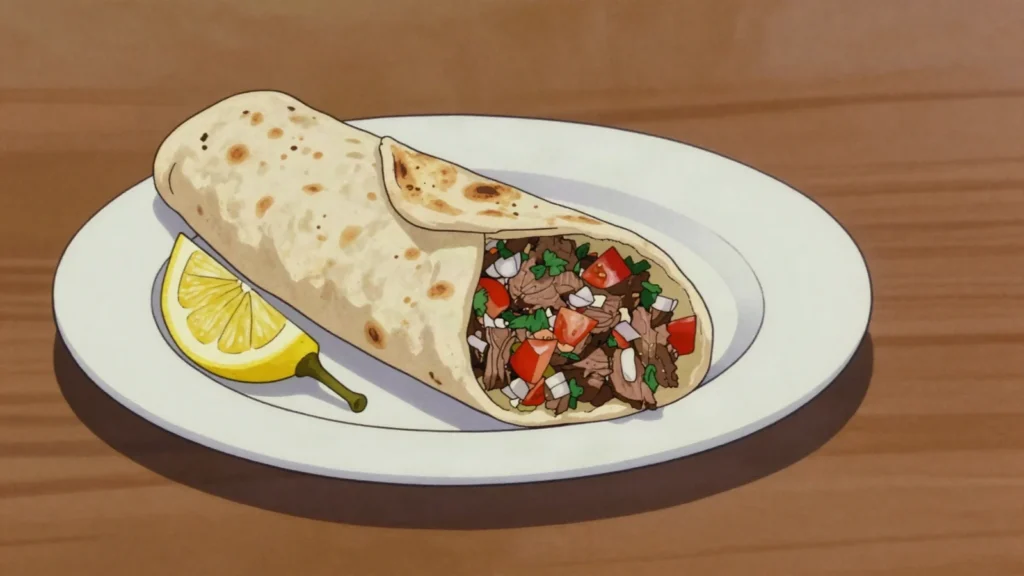
- Turn it once and take it off while it is still soft and pliable. Now assemble it quickly, while hot. Pile a portion of hot meat down the centre of the bread. Add diced tomato, sumac onion, parsley and pickled chilli.
- Rub the sliced onion with sumac and a little salt before it goes in, which takes the harsh edge off and adds sourness. Squeeze lemon over the meat and filling. Now roll it tightly: fold one end up, then roll it from the side into a firm cylinder.
- Roll it tight and fold the bottom so the juices do not run straight out. Serve it immediately, while the bread is warm and the meat is hot.
Technique
- The water cooking is the defining Mersin technique.
- Şalgam suyu is the standard accompaniment and is an acquired taste.
- Liver tantuni is the other common version.
Substitutions
- Lamb in place of beef, which is also made.
- Any thin flatbread in place of lavash.
Variations
- Ciğer tantuni, made with liver.
- Served as a plate rather than a wrap.
- With cheese, which some modern shops add.
History
A Mersin speciality from southern Turkey, cooked in a wide sac pan with water rather than much oil.
Frequently asked questions
What is Tantuni?
Tantuni is a street food from Turkey: finely chopped beef cooked on a hot iron plate, rolled in thin lavash. A Mersin speciality from southern Turkey, cooked in a wide sac pan with water rather than much oil.
How long does Tantuni take to make?
Tantuni takes 30 min of preparation and 20 min of cooking. The recipe makes 4 wraps. It is rated medium to make.
What can I substitute in Tantuni?
Yes, within limits. Lamb in place of beef, which is also made. Any thin flatbread in place of lavash.
What is the most important thing to get right in Tantuni?
Use a working cut with some connective tissue: flank, skirt or brisket rather than a tender steak. A lean fillet would simply dry out. Simmer it whole in salted water for about an hour, until it is soft but not falling apart. Cool it slightly, then chop it very finely with a heavy knife.