
Ingredients
Dough
- 400 gplain flour
- 1 teaspoonsalt
- 3 tablespoonsoil
- about 220 ml warm water
The filling
- 300 gcooked tuna
- smoked or tinned, flaked
- 150 ggrated fresh coconut
- or desiccated, moistened
- 1large onion, very finely chopped
- 3green chillies, finely chopped
- or to taste
- 10curry leaves, chopped
- juice of 2 limes
- 1 teaspoonground black pepper
- 1/2 teaspoonground turmeric
- salt
To cook
- a little oil, for the griddle
To serve
- with black tea
- sai
- as part of hedhikaa
Directions
- Put the flour and salt in a bowl. Add the oil and rub it through. Add warm water gradually as you work. Bring it together into a soft dough. It should be soft and slightly tacky. Knead it for about eight minutes. It should become smooth and elastic.
- Cover the dough and let it rest. Give it at least thirty minutes. Flake the cooked tuna into a large bowl. Check it carefully for any bones. Break it down finely with your fingers. Break it down properly before mixing. Add the grated coconut to the tuna. Desiccated works if moistened with warm water.
- Let it soak for ten minutes first. Dry desiccated coconut makes a dry filling. Add the very finely chopped onion. Add the chopped chillies and curry leaves.
- Add the pepper and the turmeric. Squeeze in all of the lime juice. Season it with salt to your taste. Mixing it takes a proper effort. Work it all together with your hands. Squeeze it hard as you mix it. Work it for a few full minutes. The onion must be chopped very finely indeed.
- Chop it as finely as you can manage. Taste the filling and adjust it. It should be sharp with the lime. Taste before adding any salt at all. Fresh tuna needs considerably more.
- Divide the rested dough into pieces. Roll each one into a smooth ball. Flatten a ball into a disc with your hands. Keep the middle thicker than the edge. Adding the filling takes a judgement. Put a generous ball of filling in the centre. The filling should be most of the bulk.
- Pinch them together firmly at the top. Make sure there are no gaps at all. Pinch it firmly and check each one. Flattening it is the next step to take. Turn the sealed ball seam side down. Press it out gently with your palm. Press it slowly rather than forcing it. Work from the centre outwards. Aim for about a centimetre thick. Roll it very gently if you do.
- Heat a heavy griddle or a flat pan. Get it properly hot before you start. Brush it with a very little oil. Just enough to stop it sticking. Lay a masroshi on the hot griddle. Give it about three full minutes. Turn it over with a wide spatula. Give it another three minutes.
- Adjust it in between the batches. Serving them is always done warm. Pile them all onto a warm plate. Serve strong black tea alongside. They keep a day in a sealed container. Warm them on a dry pan to reheat.
Technique
- The filling is essentially mas huni — tuna, grated coconut, onion and lime — which is eaten at breakfast with flatbread; the difference here is that it goes inside the bread. Bajiya, gulha and kulhi boakibaa use much the same base wrapped different ways, and the atlas says so plainly.
- Break the tuna down finely and chop the onion very finely indeed: large flakes and coarse onion tear the dough as you fill it, and coarse onion also stays raw and harsh. Squeeze the mixture as you mix it, which breaks the onion down further and releases the moisture that binds it.
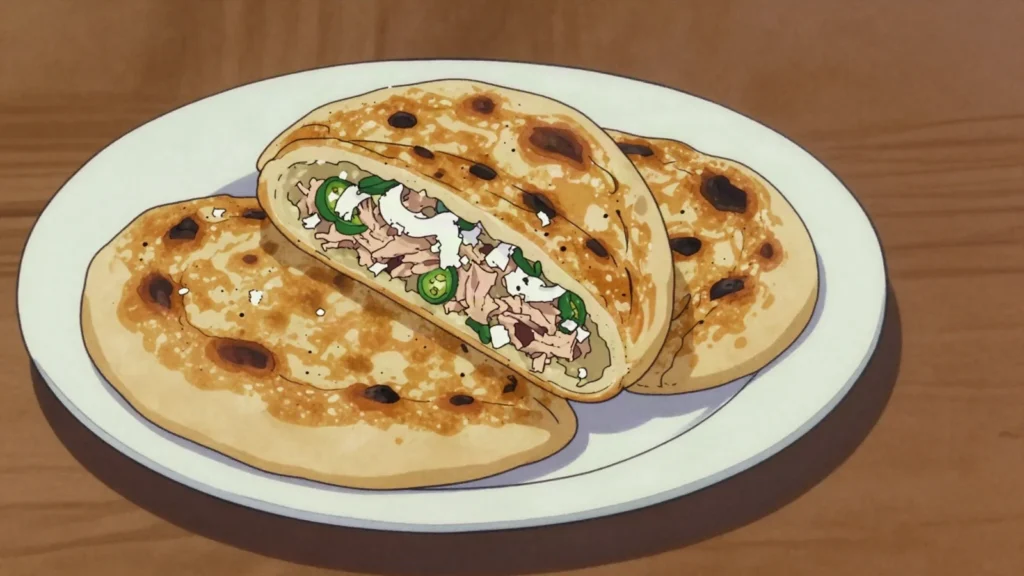
- It is griddled with barely any oil rather than fried, and the dark charred patches are wanted — they give a smoky bitter edge, and evenly pale masroshi tastes flat.
Substitutions
- Tinned tuna stands in for the smoked and dried tuna central to Maldivian cooking, though it needs more salt.
- Desiccated coconut works if moistened with warm water for ten minutes first, since dry coconut makes a dry filling.
Variations
- Hedhikaa are the short eats set out on tea-shop counters for customers to help themselves.
- Sai is the afternoon tea they are eaten at, a social occasion as much as a meal.
- The chilli level varies considerably between tea shops.
History
One of the hedhikaa short eats laid out on Maldivian tea-shop counters for the afternoon tea known as sai.
Frequently asked questions
What is Masroshi?
Masroshi is a street food from Maldives: flatbread stuffed with tuna, coconut, onion and chilli, griddled until charred. One of the hedhikaa short eats laid out on Maldivian tea-shop counters for the afternoon tea known as sai.
How long does Masroshi take to make?
Masroshi takes 40 minutes plus resting of preparation and 25 minutes of cooking. The recipe makes about 10 pieces. It is rated medium to make.
What can I substitute in Masroshi?
Yes, within limits. Tinned tuna stands in for the smoked and dried tuna central to Maldivian cooking, though it needs more salt. Desiccated coconut works if moistened with warm water for ten minutes first, since dry coconut makes a dry filling.
What is the most important thing to get right in Masroshi?
Add the pepper and the turmeric. Squeeze in all of the lime juice. Season it with salt to your taste. Mixing it takes a proper effort. Work it all together with your hands. Squeeze it hard as you mix it. Work it for a few full minutes. The onion must be chopped very finely indeed.