
Ingredients
The beans
- 400 gdried red kidney beans
- soaked overnight
- or borlotti beans
- drained and rinsed
The meats
- 1pig’s ear
- or 300 g pork belly
- 200 gstreaky bacon
- in one piece
- 1chouriço sausage
- 1morcela, blood sausage
- 200 gpork ribs, optional
The vegetables
- 3potatoes, cubed
- 2carrots, sliced
- 2onions, chopped
- 4garlic cloves
- 2bay leaves
- 3 litreswater
- salt and black pepper
To finish
- plenty of chopped coriander
- olive oil, to drizzle
- a clean stone
- if you follow the tale
- crusty bread
Directions
- Keep raw and cooked meat well apart while working. Dried kidney beans must be boiled hard first. Soak the beans overnight before cooking them. Discard the soaking water entirely afterward. They can be added in the last twenty minutes. Pick the dried beans over for small stones. Spread them on a tray and look them over. Discard anything that is not a good bean.
- Cover the beans with cold water overnight. Use far more water than seems necessary. Cover them by ten centimetres at least. Boil the drained beans hard in fresh water. Bring them to a full rolling boil. Hold that hard boil for ten full minutes.
- Simmer them for about an hour after that. They should be tender but still holding shape. Rinse the pig’s ear and the bacon thoroughly. Rinse it and soak it if it is heavily salted. That prevents an oversalted finished soup. Taste a small piece if you are unsure. Boil the pork pieces briefly and discard that water.
- Bring them to a boil for about five minutes. Drain them and discard that water entirely. Put the blanched pork in a large pot with water. Use a genuinely large pot for this soup. Add the onion, garlic and bay leaves now.
- Leave the garlic cloves whole rather than crushing. Simmer the pork gently for about ninety minutes. Pig’s ear and belly need that long to soften. Keep it at a bare simmer rather than a boil. Skim the fat and foam during the first half hour. Lift it off with a spoon and discard it. Leave some fat, since it carries flavour.
- Add the chouriço for the last forty minutes. Chouriço is already cured and needs only heating. Prick it a few times before it goes in. Give it only the last twenty minutes. Add the potato and carrot for the last half hour. Thirty minutes cooks it right through.
- Add the cooked beans for the last twenty minutes. They are already cooked and only need warming. Add some of their cooking liquid too. This should be a thick soup rather than a thin one. Lift the pork out and cut it into pieces. Let it cool just enough to handle safely. Cut everything into rough bite-sized pieces. Slice the sausages into thick rounds.
- Keep the pieces large rather than fine. Do not shred it finely at all. Season the soup with salt and black pepper. Taste it carefully before adding any salt. It may well need very little more. Add plenty of black pepper regardless. Stir a great deal of chopped coriander in.
- Add it right at the end, off the heat. A whole large bunch is not too much. Chop the stalks as well as the leaves. Let the soup stand off the heat for ten minutes. Ten minutes is quite enough for that. Ladle the soup into deep bowls to serve.
- Stir the pot well before ladling it out. Everything settles toward the bottom otherwise. Put a clean boiled stone in the serving pot. Leave it out entirely if you prefer. Serve plenty of crusty bread alongside. It keeps four days refrigerated in a covered bowl. Add fresh coriander when you reheat it.
Technique
- Dried kidney beans must be boiled hard for ten full minutes before any slow cooking. Raw kidney beans contain phytohaemagglutinin, a lectin that causes severe vomiting and stomach pain, and slow cooking without a hard boil can concentrate rather than destroy it. Soak them overnight, discard the soaking water, then boil hard in fresh water. Tinned beans are already cooked and safe, and can simply be added in the last twenty minutes.
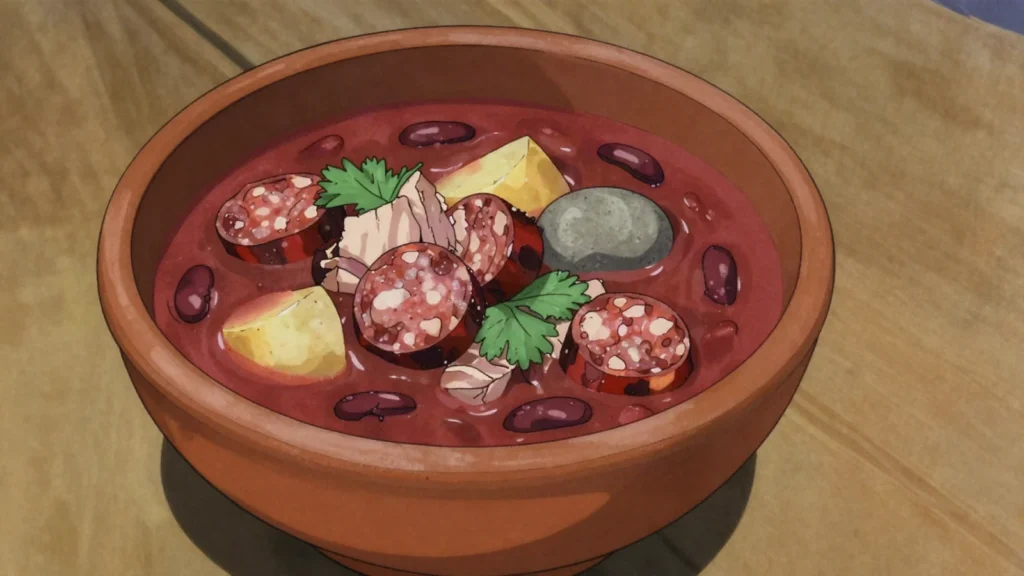
- If you put a stone in the pot for the tale, it must be a clean smooth one, scrubbed and boiled first — never a porous or river-damp stone, since trapped water turns to steam and can split it violently. It is entirely decorative and adds nothing, so the atlas suggests simply leaving it out.
- Blanch the pork for five minutes and discard that water with its grey scum before building the soup — it gives a far cleaner broth. Rinse or soak heavily salted cured pork first and taste a piece, or the finished soup comes out oversalted.
Substitutions
- Pork belly replaces the pig’s ear, which gives gelatine and a distinctive texture; both are genuinely used in Portuguese kitchens. Borlotti beans replace kidney beans.
- The stone soup tale — a hungry friar boiling a stone until curious villagers each add something — exists across Europe as nail soup and axe soup too. The Portuguese version attaches specifically to Almeirim in Ribatejo. It is a folk story explaining the name rather than documented history, and the atlas records it as such.
Variations
- Add the meats in stages: the ear and bacon simmer ninety minutes, the chouriço goes in for the last forty since long cooking leaches out its colour and flavour, and the morcela only for the last twenty, since blood sausage bursts and disintegrates. Lower it in gently rather than dropping it.
- Mash a ladleful of the cooked beans into the broth to thicken it — this should be a thick soup rather than a thin one — and add some of the bean cooking liquid for body. Cut the meat into rough bite-sized chunks rather than shredding it finely, since this is a rustic soup.
- Stir in a great deal of chopped coriander at the very end off the heat, stalks as well as leaves: a whole large bunch is not too much, it is a defining element, and long cooking destroys its fresh flavour entirely. Taste before adding salt, since the cured meats have already salted the broth.
History
Named for the folk tale of a friar who talked villagers into making a soup from a stone; Almeirim in Ribatejo claims it.
Frequently asked questions
What is Sopa da pedra?
Sopa da pedra is a soup & stew from Portugal: thick pork, bean and vegetable soup claimed by Almeirim. Named for the folk tale of a friar who talked villagers into making a soup from a stone; Almeirim in Ribatejo claims it.
How long does Sopa da pedra take to make?
Sopa da pedra takes 30 minutes plus soaking of preparation and 2 hours 30 minutes of cooking. The recipe makes serves 8. It is rated medium to make.
What can I substitute in Sopa da pedra?
Yes, within limits. Pork belly replaces the pig’s ear, which gives gelatine and a distinctive texture; both are genuinely used in Portuguese kitchens. Borlotti beans replace kidney beans. The stone soup tale — a hungry friar boiling a stone until curious villagers each add something — exists across Europe as nail soup and axe soup too. The Portuguese version attaches specifically to Almeirim in Ribatejo. It is a folk story explaining the name rather than documented history, and the atlas records it as such.
What is the most important thing to get right in Sopa da pedra?
Keep raw and cooked meat well apart while working. Dried kidney beans must be boiled hard first. Soak the beans overnight before cooking them. Discard the soaking water entirely afterward. They can be added in the last twenty minutes. Pick the dried beans over for small stones. Spread them on a tray and look them over. Discard anything that is not a good bean.