
Ingredients
Sauce
- 80 gfresh red piri-piri (bird’s eye) chillies, stalks removed, seeds left in
- 8garlic cloves, peeled
- 2 tspcoarse sea salt
- 1 tspsweet paprika
- Juice of 2 lemons, about 80 ml
- 150 mlsunflower, peanut or olive oil
- 1 tbspred wine vinegar
Optional
- 1 tspdried oregano
- 1small onion, grated (for a softer, Zambezia-style sauce)
- 1 tbspwhisky or brandy, the coastal restaurant trick
Equipment
- 1stone or wooden mortar and pestle
- 1sterilised 300 ml glass bottle or jar
Directions
- Wear gloves. Piri-piri oil stays on your hands for hours and finds your eyes long after you have washed.
- Pound the garlic with the coarse salt in the mortar to a smooth wet paste, 2–3 minutes. The salt acts as the abrasive.
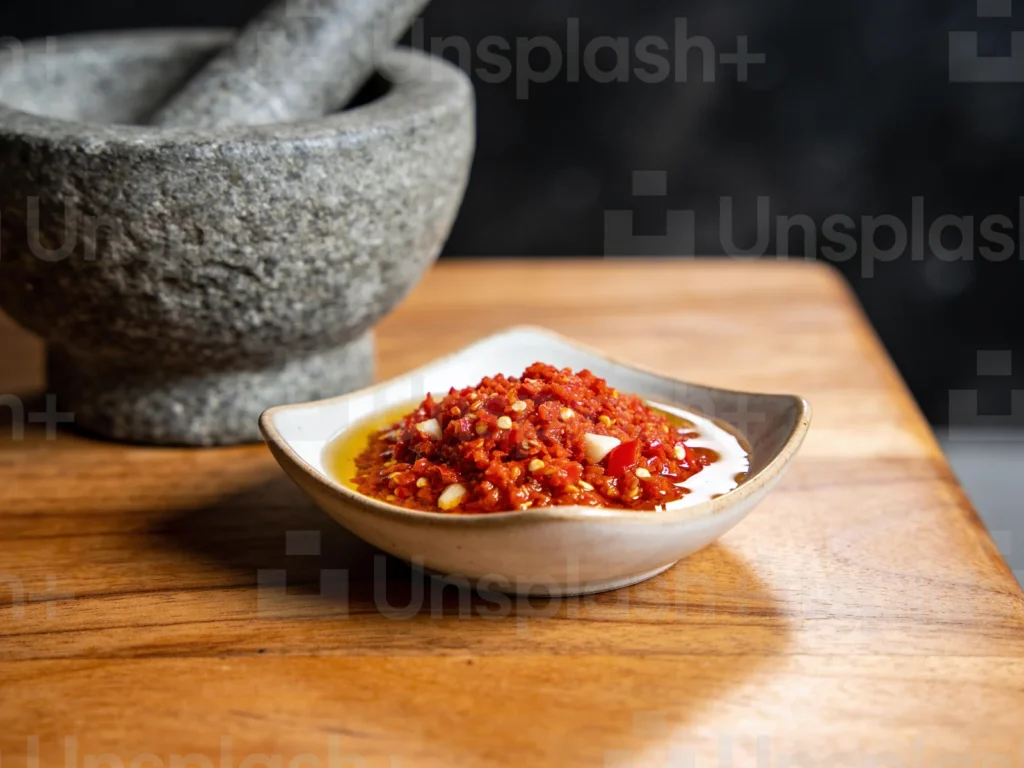
- Add the chillies a handful at a time and pound them into the garlic, working round the bowl, until you have a rough red-orange mash with visible flecks of skin. Do not blitz it to a smooth puree; the traditional sauce has texture.
- Work in the paprika, then the lemon juice, a little at a time so it emulsifies rather than splitting.
- Add the vinegar, then trickle in the oil while pounding and stirring, until the sauce is loose and glossy and the oil sits in a thin layer on top.
- Taste with the tip of a spoon and correct the salt and lemon. It should be searingly hot, sharply sour and salty, in that order.
- Pour into the sterilised bottle, cap it and leave it at room temperature for 24 hours, then move it to the fridge and leave it 2 more days before using. The raw garlic burn softens and the flavours knit.
- Shake before every use; the oil separates and that is normal.
- Serve it in a small dish for spooning over grilled food, rice, xima and roasted vegetables, or brush it onto anything going over charcoal in the last minutes of cooking. It keeps 2–3 months refrigerated under its oil layer.
Technique
- Piri-piri is a Swahili word meaning pepper-pepper, and the small chilli it names travelled with Portuguese ships from the Americas to East Africa and became Mozambican. The sauce is a Mozambican creation, not a Portuguese import.
- Do not remove the seeds and pith. In Mozambique the heat is the point; deseeded chillies make a sauce that tastes of nothing but garlic.
- Basting with a sauce this acidic works better late than early: brushed on early over live fire the sugars and lemon burn, so brush it on in the last few minutes and serve more raw at the table.
- The oil layer on top is preservative as well as texture. Keep the sauce topped up with oil and it will hold for months.
Substitutions
- No fresh piri-piri: use 60 g fresh red Thai bird chillies, or 40 g dried piri-piri rehydrated in hot water for 20 minutes, and add 1 tbsp of the soaking water.
- A blender pulsed in short bursts will do if you have no mortar, but stop while it is still coarse.
- Lime can replace lemon; the sauce becomes brighter and slightly more perfumed.
Variations
- Molho cru, a fresher table sauce of chopped chilli, onion, lemon and oil left only an hour.
- Piri-piri butter, the same paste beaten into softened butter for basting over the grill.
- Zambezia-style sauce loosened with coconut milk for a milder, creamier heat.
History
Portuguese traders carried American chilies to East Africa, where the small piri-piri took hold; settlers in Mozambique built the garlic-and-lemon sauce around it.
Frequently asked questions
What is Molho de piri-piri?
Molho de piri-piri is a sauce & condiment from Mozambique: bird’s eye chilies crushed with garlic, lemon and oil into a stinging sauce. Portuguese traders carried American chilies to East Africa, where the small piri-piri took hold; settlers in Mozambique built the garlic-and-lemon sauce around it.
How long does Molho de piri-piri take to make?
Molho de piri-piri takes 20 min of preparation and 3 days maturing of cooking. The recipe makes about 250 ml. It is rated easy to make.
What can I substitute in Molho de piri-piri?
Yes, within limits. No fresh piri-piri: use 60 g fresh red Thai bird chillies, or 40 g dried piri-piri rehydrated in hot water for 20 minutes, and add 1 tbsp of the soaking water. A blender pulsed in short bursts will do if you have no mortar, but stop while it is still coarse. Lime can replace lemon; the sauce becomes brighter and slightly more perfumed.
What is the most important thing to get right in Molho de piri-piri?
Add the chillies a handful at a time and pound them into the garlic, working round the bowl, until you have a rough red-orange mash with visible flecks of skin. Do not blitz it to a smooth puree; the traditional sauce has texture.