Ingredients
Beans
- 500 gdried beans
- red or white
- soaked overnight
- water, for cooking
The pot
- 3onions, chopped
- 5garlic cloves, crushed
- 150 mlred palm oil
- or 100 ml oil
- 3tomatoes, chopped
- 2 tablespoonstomato purée
- 1stock cube
- 1chilli, chopped, optional
- salt and black pepper
Sometimes added
- dried or smoked fish
- a handful of chopped greens
- a little groundnut paste
To serve
- over rice
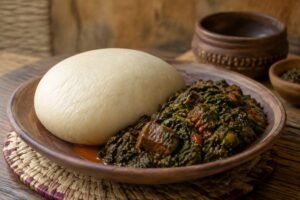
- with fufu or chikwanga
- pilipili, chilli sauce
Directions
- Cook them tender first and add tomato after. Rinse the beans and pick them over. Remove any stones or damaged beans. Put them all into a large bowl. Cover them with plenty of cold water. Leave them to soak there overnight.
- Use far more water than you think. They should stay covered throughout. Drain all of the beans thoroughly. Discard all of the soaking water. Rinse them in fresh cold water. Put the beans into a large deep pot. Cover them well with fresh water. Bring the pot up to a full boil. Let it boil hard for fifteen minutes. Skim off any of the foam that rises.
- Cover the pot and let it cook on. Give it about ninety full minutes. Add boiling water as it is absorbed. The beans should stay covered. Cook them on if any still resist. Heat the palm oil in a separate pan. Warm it gently until it liquefies. Do not overheat it or it darkens.
- Add the chopped onions to the pan. Cook them for a good twelve minutes. Let them go genuinely soft and golden. Undercooked onion leaves it sharp and thin.
- Take them further than feels necessary. Add the crushed garlic to them. Cook it for two more full minutes. Add the chopped tomatoes to the pan. Add the tomato purée along with them. Cook them down for about ten minutes. The tomato must cook right down.
- Oil should separate at the edges. Raw tomato taste should be entirely gone. Tip the tomato base into the beans. Crumble the stock cube into the pot. Add the chilli if you want heat.
- Season it with salt and black pepper. Let it simmer together gently. Give it about twenty more minutes. Stir it regularly so it does not catch. Stir right into the corners each time. Lower the heat if it starts to stick. Crush some of the beans against the pot. Use the back of a wooden spoon. Crush about a quarter and leave the rest. It should be thick rather than soupy.
- Oil should be visible at the surface. The beans should be soft but recognisable. Add flaked smoked fish to the pot. Let it warm through for ten minutes. Stir chopped greens through near the end. Let them wilt down into the beans.
- Taste it and adjust the salt as needed. It needs more than you might expect. Spoon it over plain white rice. Put pilipili chilli sauce on the table. It keeps four days refrigerated.
Technique
- Red kidney beans are commonly used in madesu and contain phytohaemagglutinin, which soaking does not remove and which needs at least ten minutes at a full rolling boil; a slow simmer alone is not enough and low heat can increase the toxicity, so the hard boil is essential whatever bean you use.
- Tomato is acidic and acid slows the softening of bean skins, so cook the beans tender first and add the tomato base afterwards; beans cooked in tomato from the start stay firm.
- Palm oil’s environmental reputation concerns industrial plantations largely in Indonesia and Malaysia; African red palm oil is a different case, much of it smallholder and artisanal, the oil palm is native to West Africa, and red unrefined oil is not the industrial commodity.
Substitutions
- Any dried bean works, red and white being the usual choices.
- Smoked fish flaked in near the end adds considerable savoury depth.
Variations
- Chopped greens are stirred through near the end in some households.
- A little groundnut paste thickens and enriches it.
- It is served over rice or with fufu or chikwanga.
History
Dried beans stewed with palm oil and onion, the cheap protein that anchors Congolese student and worker meals.
Frequently asked questions
What is Madesu?
Madesu is a soup & stew from DR Congo: beans stewed in palm oil with onions, served over rice. Dried beans stewed with palm oil and onion, the cheap protein that anchors Congolese student and worker meals.
How long does Madesu take to make?
Madesu takes 15 minutes plus soaking of preparation and 2 hours of cooking. The recipe makes serves 6. It is rated easy to make.
What can I substitute in Madesu?
Yes, within limits. Any dried bean works, red and white being the usual choices. Smoked fish flaked in near the end adds considerable savoury depth.
What is the most important thing to get right in Madesu?
Cover the pot and let it cook on. Give it about ninety full minutes. Add boiling water as it is absorbed. The beans should stay covered. Cook them on if any still resist. Heat the palm oil in a separate pan. Warm it gently until it liquefies. Do not overheat it or it darkens.