
Ingredients
Oxtail
- 1.5 kgoxtail, in joints
- 3 litreswater
Aromatics
- 1onion, sliced
- 6 clovesgarlic, crushed
- 4cm ginger, sliced
- 1 stickcinnamon
- 4cloves
- ½ tspgrated nutmeg
- 3star anise, optional
- 1 tspwhite peppercorns
- 2daun salam, Indonesian bay leaves
- 1 stalklemongrass, bruised
Vegetables
- 3potatoes, in chunks
- 3carrots, in chunks
- 2tomatoes, in wedges
- 150 ggreen beans
- 2spring onions
To finish
- 2 tbspfried shallots
- chopped celery leaves
- salt and white pepper
To serve
- steamed rice
- sambal
- emping crackers
- lime wedges
- sweet soy sauce
Directions
- Rinse the oxtail pieces under cold running water and trim off any large lumps of external fat. Now parboil them: cover with cold water, bring to a boil, and boil hard for ten minutes. Drain the pieces, rinse each one under running water, and wash out the pot before starting again. Do not skip this, since it is the difference between a clear golden broth and a murky greasy one.
- Return the cleaned oxtail to the pot with fresh water and all the aromatics. Bring it to a boil, then reduce it to the barest simmer with the surface barely trembling. Never let it boil, which emulsifies the fat into the liquid and turns a clear broth permanently cloudy.
- Skim the surface whenever anything rises, for the first half hour especially. Simmer for two and a half to three hours. The oxtail is ready when the meat pulls away from the bone with no resistance at all.
- Lift out the oxtail pieces and strain the broth through a fine sieve or muslin. Discard the spent aromatics, which have given everything they have. Return the strained broth and the oxtail to the clean pot.
- Add the potatoes and carrots and simmer for fifteen to twenty minutes until tender. Add the green beans and tomato for the last five minutes only. Cook them in the broth rather than separately, so they take on its flavour, and add them late so they stay whole. Season with salt and plenty of white pepper.
- Add more grated nutmeg at the end if the broth tastes flat, which is often the answer. The broth should taste clean and beefy with a warm spiced background rather than being heavily seasoned.
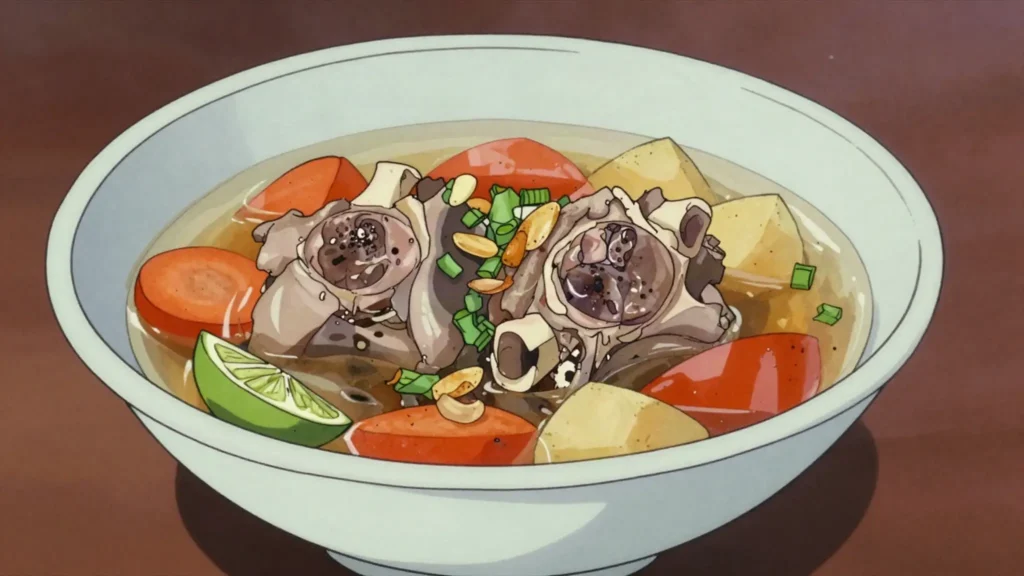
- Ladle it into deep bowls with a piece or two of oxtail and the vegetables. Scatter fried shallots and chopped celery leaves over generously. Serve steamed rice, sambal, emping crackers, lime and sweet soy sauce at the table.
Technique
- The broth is deliberately clear, unlike European oxtail soup.
- Nutmeg, clove and cinnamon are the characteristic spicing.
- Parboiling and rinsing the oxtail is what keeps the broth clear.
Substitutions
- Beef shin if oxtail is unavailable, though the result differs.
- Mediterranean bay used sparingly in place of daun salam.
Variations
- Sop buntut goreng, with the oxtail deep fried.
- Sop buntut bakar, with the oxtail grilled.
- Made with a richer, darker broth, which some restaurants do.
History
A soup made from oxtail, slow-cooked for many hours with vegetables and warming spices until the meat becomes extremely tender, documented across Indonesia as a dish reflecting Dutch colonial-era culinary influence, since the technique of making a clear, slow-simmered oxtail soup traces significantly to Dutch cooking introduced during the colonial period, subsequently adapted by Indonesian cooks with local spices and served alongside rice rather than as a standalone European-style soup course. Its extremely long, slow cooking time, required to properly tenderize the oxtail and extract its flavour into the broth, reflects a broader pattern found across several other former Dutch colonial dishes adapted into Indonesian cuisine. Sop buntut remains a popular and relatively prized dish across Indonesia, commonly served at both home and restaurants.
Frequently asked questions
What is Sop Buntut?
Sop Buntut is a soup & stew from Indonesia: clear oxtail soup with vegetables, also fried or grilled. A soup made from oxtail, slow-cooked for many hours with vegetables and warming spices until the meat becomes extremely tender, documented across Indonesia as a dish reflecting Dutch colonial-era culinary influence, since the technique of making a clear, slow-simmered oxtail soup traces significantly to Dutch cooking introduced during the colonial period, subsequently adapted by Indonesian cooks with local spices and served alongside rice rather than as a standalone European-style soup course. Its extremely long, slow cooking time, required to properly tenderize the oxtail and extract its flavour into the broth, reflects a broader pattern found across several other former Dutch colonial dishes adapted into Indonesian cuisine. Sop buntut remains a popular and relatively prized dish across Indonesia, commonly served at both home and restaurants.
How long does Sop Buntut take to make?
Sop Buntut takes 30 min of preparation and 3 hr of cooking. The recipe makes 6 servings. It is rated medium to make.
What can I substitute in Sop Buntut?
Yes, within limits. Beef shin if oxtail is unavailable, though the result differs. Mediterranean bay used sparingly in place of daun salam.
What is the most important thing to get right in Sop Buntut?
Rinse the oxtail pieces under cold running water and trim off any large lumps of external fat. Now parboil them: cover with cold water, bring to a boil, and boil hard for ten minutes. Drain the pieces, rinse each one under running water, and wash out the pot before starting again. Do not skip this, since it is the difference between a clear golden broth and a murky greasy one.