
Ingredients
Broth
- 800 gbeef brisket or short rib, on the bone
- 3 litreswater
- 1onion
- 1carrot
- 2bay leaves
- 8peppercorns
The cabbage
- 600 gfresh white cabbage, shredded
- or 500 g sauerkraut, for kislye shchi
Vegetables
- 3potatoes, cubed
- 1onion, chopped
- 1carrot, grated
- 2 tbsptomato paste
- 2 tbspoil or butter
Seasoning
- salt
- black pepper
- 1 tspsugar, if using sauerkraut
To finish
- smetana, sour cream, a generous spoonful per bowl
- chopped dill
- crushed garlic
To serve
- black rye bread
- salo or salted lard, optional
Directions
- Start the broth. Cover the beef with cold water and bring it slowly to a boil. Start it in cold water rather than hot, which draws the flavour out into the broth instead of sealing it in the meat.
- Skim the grey scum off carefully as it rises, before it disperses. Skim it properly in the first ten minutes, because scum stirred back in makes the broth cloudy and muddy-tasting.
- Add the whole onion, carrot, bay and peppercorns and simmer very gently for 2 hours. Keep it at a bare simmer with barely a bubble breaking, which is what gives a clear broth. Lift the meat out, strain the broth and discard the boiled vegetables.
- Cut the meat off the bone into pieces and set it aside. Now the sauerkraut, if you are making the winter version. Taste it first, and if it is very sour, rinse it and squeeze it out. Stew the sauerkraut separately in a little broth and fat for 30 to 40 minutes before it goes into the pot.
- Fry the chopped onion and grated carrot in oil until soft and golden, then add the tomato paste and cook 2 minutes. Frying the tomato paste rather than adding it raw takes the tinny edge off it.
- Bring the strained broth back to a simmer and add the potatoes. Cook the potatoes until nearly tender, about 12 minutes. For fresh cabbage, cook only 10 to 15 minutes more. Return the meat to the pot and season. Taste it, and add a little sugar if the sauerkraut version is too sharp. Now take it off the heat and let it stand, covered, for at least 20 minutes.
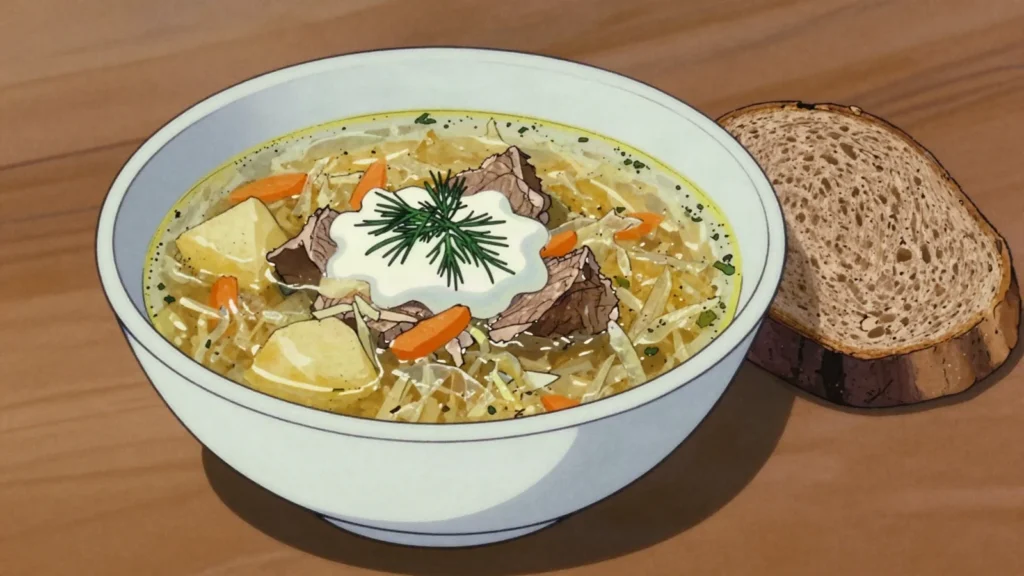
- Serve it in deep bowls with a generous spoonful of smetana stirred in at the table. Scatter dill over and add crushed garlic if you like, which is common. Serve black rye bread alongside, and salted lard for those who want it.
Technique
- Kislye shchi, with sauerkraut, is the winter version and the more distinctive of the two.
- Zelyonye shchi are made with sorrel in spring and are a different soup again.
- It genuinely improves overnight and is often deliberately made a day ahead.
Substitutions
- Pork or a mix of meats in place of beef.
- Vegetable stock for a Lenten version, which is traditional during fasts.
Variations
- Kislye shchi, with sauerkraut.
- Zelyonye shchi, with sorrel.
- Sutochnye shchi, deliberately made a day ahead and reheated.
History
A soup built on a base of cabbage, either fresh or fermented as sauerkraut, cooked with meat broth and root vegetables, documented across Russia for over a thousand years, considered by many food historians one of the oldest continuously prepared dishes in Russian cuisine and closely tied to Russia’s long agricultural relationship with cabbage as a hardy, easily stored crop well suited to the country’s cold climate. Its fermented cabbage version, using sauerkraut rather than fresh cabbage, historically allowed shchi to be prepared even in winter months when fresh cabbage was unavailable, reflecting a broader Russian and wider Eastern European tradition of fermentation as a critical food preservation technique before refrigeration. Shchi remains one of the most essential and enduring dishes in Russian home cooking, often described as a defining symbol of traditional Russian cuisine.
Frequently asked questions
What is Shchi?
Shchi is a soup & stew from Russia: cabbage or sauerkraut soup, ancient everyday staple. A soup built on a base of cabbage, either fresh or fermented as sauerkraut, cooked with meat broth and root vegetables, documented across Russia for over a thousand years, considered by many food historians one of the oldest continuously prepared dishes in Russian cuisine and closely tied to Russia’s long agricultural relationship with cabbage as a hardy, easily stored crop well suited to the country’s cold climate. Its fermented cabbage version, using sauerkraut rather than fresh cabbage, historically allowed shchi to be prepared even in winter months when fresh cabbage was unavailable, reflecting a broader Russian and wider Eastern European tradition of fermentation as a critical food preservation technique before refrigeration. Shchi remains one of the most essential and enduring dishes in Russian home cooking, often described as a defining symbol of traditional Russian cuisine.
How long does Shchi take to make?
Shchi takes 30 min of preparation and 2 hr 30 min of cooking. The recipe makes 8 servings. It is rated easy to make.
What can I substitute in Shchi?
Yes, within limits. Pork or a mix of meats in place of beef. Vegetable stock for a Lenten version, which is traditional during fasts.
What is the most important thing to get right in Shchi?
Start the broth. Cover the beef with cold water and bring it slowly to a boil. Start it in cold water rather than hot, which draws the flavour out into the broth instead of sealing it in the meat.