
Ingredients
The fish
- 1whole fish
- red snapper or kingfish
- about 1.5 kg, scaled and gutted
- or 4 fillets
The marinade
- juice of 3 limes
- 4garlic cloves, crushed
- 1 teaspoonsalt
- 1 teaspoonblack pepper
The coconut sauce
- 400 mlthick coconut milk
- 2onions, finely chopped
- 6garlic cloves, crushed
- 3cm ginger, grated
- 2tomatoes, chopped
- 2 tablespoonstamarind paste
- or juice of 2 limes
- 2 teaspoonsground cumin
- 2 teaspoonsground coriander
- 1 teaspoonturmeric
- 1 teaspoonpaprika
- 2hot chillies, chopped
- 3 tablespoonsoil
- salt
To serve
- coconut rice
- or plain rice
- lime wedges
- kachumbari salad
Directions
- Use full fat tinned or else fresh. Coconut milk splits if boiled hard. Keep it well below a rolling boil. Simmer it gently instead of that. The sauce is meant to be thick. Score the fish deeply on both sides. Cut three or four slashes each side. Cut right down almost to the bone. It also helps the fish cook evenly.
- Rub the lime, garlic and salt over it. Work it right into the slashes. Rub it inside the cavity as well. Cover the whole fish thoroughly. Be genuinely thorough about it. Heat the oil in a wide frying pan. Add all the chopped onion to it. Cook it for about twelve minutes. It should soften and turn golden. Add the garlic and grated ginger. Give them about one full minute.
- Add the cumin, coriander and turmeric. Add the paprika and the chilli. Fry them briefly in the hot oil. Heat releases their aromatic oils. Give them about thirty seconds only. Stir them so they do not burn. Add the chopped tomatoes to the pan. Cook them down for five minutes. It should thicken up noticeably.
- Pour in the thick coconut milk. Bring it to a gentle simmer only. Never let it boil hard at all. Keep it just barely bubbling away. Simmer it until genuinely thick. It should coat a spoon heavily.
- Stir it regularly as it reduces. Use a moderate heat throughout. Stir the tamarind paste into it. Add it near the end of reducing. Taste it and adjust from there. It should be sour as well as rich. Taste the sauce and season it well. It should be rich, sour and spiced.
- Season it more than seems right. It must never reach the table at all. Keep the serving sauce entirely separate. Wait until it glows under grey ash. That is what the method needs. Oil the bars thoroughly before cooking. A hot oiled grill releases the fish. Rub the bars with an oiled cloth.
- Use tongs to hold the oiled cloth. Pat the marinated fish fully dry. Lay it out onto the hot grill. Grill it for about five minutes a side. It should be part cooked at that point. Take it to about half way done. Brush a thin coat of sauce over it. Brush it thinly rather than thickly. A thick coat slides straight off.
- Cover the whole surface evenly. Then leave it to dry a little. Brush on another very thin coat. Let it dry off just as before. It takes genuinely real patience. Turn the fish once partway through. Baste the second side the same way. Both sides need the same treatment. Turn it carefully with a wide spatula. The crust should be thick and clinging.
- Check it at the very thickest point. Fish should reach sixty-three degrees. Check it at the thickest part. Move it to a cooler spot if needed. Serve the whole fish on a platter. Serve the reserved sauce alongside. Spoon it over it at the table. It has never touched raw fish.
Technique
- The whole technique is repeated thin coats rather than one thick one: a thick coat slides straight off, where thin coats dry and grip, each layer holding the next. Brush a thin coat, give it two or three minutes to go from wet to tacky, then brush the next — five or six times at least on each side, which is genuinely twenty minutes of work and cannot be hurried.
- Split the sauce into two bowls before any basting starts: one for basting the raw fish and one kept back for the table. A basting brush carries raw fish juices and contaminates the whole bowl, so the serving sauce must never be touched by it.
- Grill the fish only to about half done before the basting starts, since it keeps cooking through those twenty minutes — fully cooking it first dries it out. Fish overcooks very quickly, so watch the heat and move it to a cooler part of the grill if needed.
Substitutions
- Lime juice stands in for tamarind, which gives a more rounded sour fruity depth balancing the rich coconut.
- An oven grill works in place of charcoal, though the smoke is genuinely part of the dish and the flavour is noticeably different. Charcoal produces carbon monoxide, which is odourless and lethal, so burn it outdoors only.
Variations
- Use thick full fat coconut milk, since it must reduce to a sauce that coats a spoon heavily and almost holds its shape — a thin sauce will not cling to the fish. Keep it below a rolling boil, since hard boiling splits it, though a little separated oil in a sauce this thick is normal rather than a disaster.
- Season the sauce more strongly than seems right, since it will be spread thinly over the fish and needs to taste strong on its own.
- Score the fish deeply almost to the bone on both sides so the marinade penetrates and it cooks evenly, but marinate no more than an hour — the lime starts to cure the flesh beyond that.
History
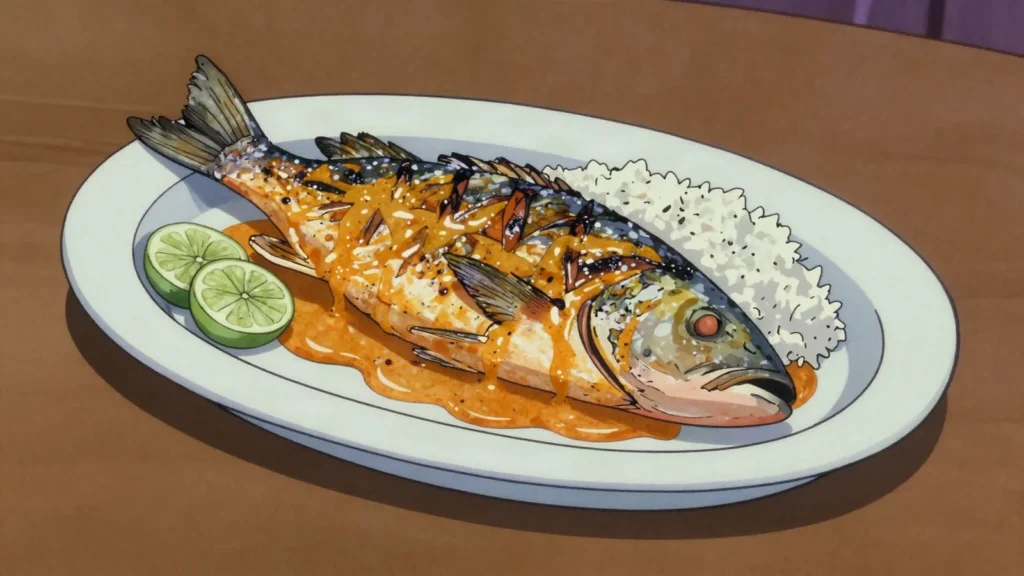
Grilled fish, coated in a rich sauce made from coconut milk, turmeric and warming spices, documented across Tanzania, particularly the Zanzibar archipelago, reflecting the coastal region’s heavy reliance on fresh seafood combined with significant historic Indian Ocean trade influence that introduced spices and coconut-based cooking techniques to the East African coast over many centuries. Its technique, grilling the fish first before basting or coating it in the warm coconut sauce, distinguishes samaki wa kupaka from simply poaching fish directly in coconut milk, giving the dish a distinct smoky char alongside its rich, spiced coating. Samaki wa kupaka remains closely associated with Zanzibar and Tanzania’s coastal Swahili culinary tradition specifically.
Frequently asked questions
What is Samaki wa kupaka?
Samaki wa kupaka is a main from Tanzania: grilled fish basted in spiced coconut sauce. Grilled fish, coated in a rich sauce made from coconut milk, turmeric and warming spices, documented across Tanzania, particularly the Zanzibar archipelago, reflecting the coastal region’s heavy reliance on fresh seafood combined with significant historic Indian Ocean trade influence that introduced spices and coconut-based cooking techniques to the East African coast over many centuries. Its technique, grilling the fish first before basting or coating it in the warm coconut sauce, distinguishes samaki wa kupaka from simply poaching fish directly in coconut milk, giving the dish a distinct smoky char alongside its rich, spiced coating. Samaki wa kupaka remains closely associated with Zanzibar and Tanzania’s coastal Swahili culinary tradition specifically.
How long does Samaki wa kupaka take to make?
Samaki wa kupaka takes 30 minutes plus marinating of preparation and 40 minutes of cooking. The recipe makes serves 4. It is rated medium to make.
What can I substitute in Samaki wa kupaka?
Yes, within limits. Lime juice stands in for tamarind, which gives a more rounded sour fruity depth balancing the rich coconut. An oven grill works in place of charcoal, though the smoke is genuinely part of the dish and the flavour is noticeably different. Charcoal produces carbon monoxide, which is odourless and lethal, so burn it outdoors only.
What is the most important thing to get right in Samaki wa kupaka?
Use full fat tinned or else fresh. Coconut milk splits if boiled hard. Keep it well below a rolling boil. Simmer it gently instead of that. The sauce is meant to be thick. Score the fish deeply on both sides. Cut three or four slashes each side. Cut right down almost to the bone. It also helps the fish cook evenly.