
Ingredients
Greens
- 700 gamaranth leaves, mchicha
- salt
Pot
- 3 tbspoil
- 1onion, chopped
- 3tomatoes, chopped
- 3 clovesgarlic
- 1 tspground cumin, optional
To finish
- 250 mlcoconut milk
- 2 tbspground peanuts, optional
- salt and black pepper
To serve
- ugali
- grilled fish or meat
Directions
- Strip the amaranth leaves and the tender shoot tips from the stems and discard the thick woody stalks.
- The tender upper stems are worth keeping and the woody lower ones are not, because they stay stringy however long they cook.
- Wash the leaves in several changes of water, because amaranth is grown low and holds a great deal of grit.
- Chop the leaves roughly, which is all the preparation they need.
- Fry the onion in the oil over a medium heat until soft and golden, about 8 minutes.
- Add the garlic and cumin and cook 30 seconds.
- Add the tomatoes and cook them down until they collapse into a thick pulp, about 8 minutes.
- Let the tomato reduce properly before the greens go in. Watery tomato makes a thin dish, and mchicha should be thick enough to hold on a lump of ugali.
- Add the chopped amaranth with a good pinch of salt and stir it through.
- It will look like far too much and it collapses to a fraction of the volume within two minutes.
- Cook uncovered for 5 minutes, stirring, until wilted.
- Cook it uncovered so the water it releases evaporates rather than boiling the leaves.
- Pour in the coconut milk, add the ground peanuts if using, and simmer gently 10 minutes.
- Keep the heat low once the coconut milk is in, because a hard boil splits it and leaves an oily film.
- Cook until the sauce has thickened and clings to the leaves rather than pooling around them.
- Season with salt and black pepper and taste it.
- Serve it with ugali, eaten by pinching up a lump and scooping.
- Amaranth is an indigenous African green, harvested from field edges as much as grown deliberately, and it is the everyday vegetable across Tanzania and Kenya.
- Coconut milk is the coastal Swahili habit; inland it is cooked plainly with tomato and onion, or with groundnut.
Technique
- Amaranth is sold in African, Caribbean and Asian shops, sometimes as callaloo or Chinese spinach.
- It is high in iron and calcium and is promoted in Tanzania on exactly those grounds.
- It cooks in minutes and long cooking turns it to sludge.
Substitutions
- Spinach, chard or callaloo, all of which behave similarly.
- Groundnut paste in place of coconut milk, which is the inland version.
Variations
- With groundnut paste, as mchicha wa nazi na karanga.
- Cooked plainly with tomato and onion only.
- With dried shrimp added, which is coastal.
History
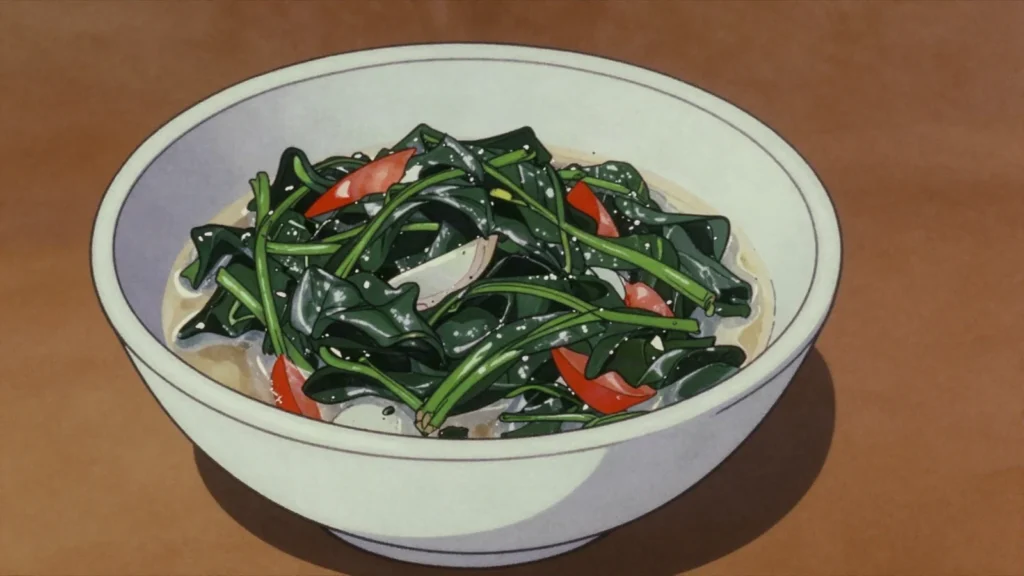
A dish of leafy amaranth greens, cooked down with onion, tomato and often coconut milk or ground peanut, developed in Tanzanian home cooking as an everyday vegetable side dish, with amaranth itself long cultivated across much of East and Southern Africa as a reliable, fast-growing leafy green well suited to the region’s varied growing conditions. Its exact preparation varies by region and household, with coastal versions more likely to include coconut milk, reflecting Swahili coastal cooking’s broader reliance on coconut, while inland versions more often use groundnut or simply tomato and onion without either enrichment. Mchicha remains a routine, everyday accompaniment to ugali or rice across Tanzanian households rather than a dish reserved for any specific occasion.
Frequently asked questions
What is Mchicha?
Mchicha is a salad & side from Tanzania: amaranth leaves stewed with tomato, onion and often coconut milk. A dish of leafy amaranth greens, cooked down with onion, tomato and often coconut milk or ground peanut, developed in Tanzanian home cooking as an everyday vegetable side dish, with amaranth itself long cultivated across much of East and Southern Africa as a reliable, fast-growing leafy green well suited to the region’s varied growing conditions. Its exact preparation varies by region and household, with coastal versions more likely to include coconut milk, reflecting Swahili coastal cooking’s broader reliance on coconut, while inland versions more often use groundnut or simply tomato and onion without either enrichment. Mchicha remains a routine, everyday accompaniment to ugali or rice across Tanzanian households rather than a dish reserved for any specific occasion.
How long does Mchicha take to make?
Mchicha takes 15 min of preparation and 25 min of cooking. The recipe makes 4 servings. It is rated easy to make.
What can I substitute in Mchicha?
Yes, within limits. Spinach, chard or callaloo, all of which behave similarly. Groundnut paste in place of coconut milk, which is the inland version.
What is the most important thing to get right in Mchicha?
Cook it uncovered so the water it releases evaporates rather than boiling the leaves.