
Ingredients
The vegetables
- 200 glong beans or green beans
- 200 gbean sprouts
- 200 gcabbage, shredded
- 200 gspinach or water spinach
- 1cucumber, sliced
- all trimmed
The peanut sauce
- 250 groasted peanuts
- or 250 g peanut butter
- 3garlic cloves
- 4red chillies
- or to taste
- 2 tablespoonspalm sugar
- 1 tablespoontamarind paste
- 2kaffir lime leaves
- 1 teaspoonsalt
- about 300 ml hot water
Sometimes added
- 1 teaspoonterasi
- shrimp paste, toasted
- a squeeze of lime
To serve
- at room temperature
- with krupuk
- or rice
Directions
- Toast the shrimp paste if using it. Wrap it in foil and toast it in a dry pan. Give it a couple of minutes each side. Pound or blend all of the peanuts. Add the garlic and the chillies. Add the palm sugar and tamarind.
- Add the salt and toasted shrimp paste. Add the lime leaves in to them. The sauce should be sweet, sour, salty and hot. Add the hot water in gradually. Whisk it into a thick pourable sauce. It goes stiff and looks wrong.
- Keep adding water and whisking. It loosens into a smooth sauce. Taste the sauce and adjust it. Add sugar if it tastes too sharp.
- Add tamarind if it is too sweet. Add more chilli for extra heat. Add salt to lift the whole thing. Trim and cut all the vegetables. Cut them into even bite-sized pieces. They should all be easily spoonable.
- Keep them roughly the same size. Bring a large pot of water to a boil. Salt the blanching water lightly. It also helps keep the colour. Use the same water for all of them. Refreshing them in cold water is essential. Lift each vegetable into cold water. That stops the cooking immediately.
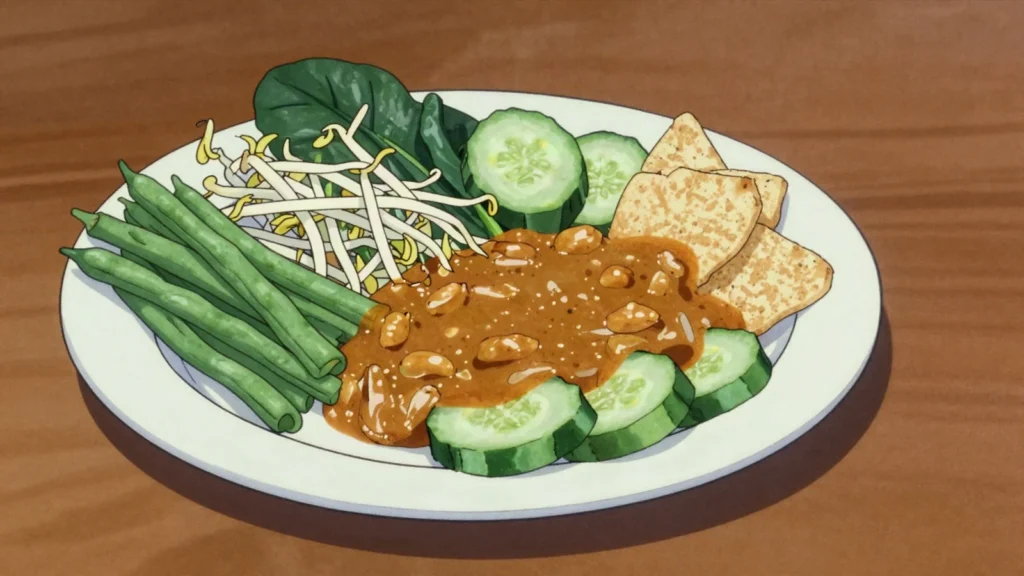
- Use plenty of very cold water. Add ice cubes if you have them. Drain each vegetable thoroughly. Drain them properly and pat them dry. Arrange the vegetables on a platter. Each vegetable keeps its own area.
- Add the raw sliced cucumber in. Spoon the peanut sauce over the vegetables. Pour it over rather than tossing. Let people mix their own portion. Serve krupuk crackers alongside. It is not served hot at all ever. Keep the sauce separate to store it.
Technique
- Blanch each vegetable separately rather than together, since they take very different times — beans about three minutes, cabbage two, spinach thirty seconds, bean sprouts barely twenty. Blanched together the spinach turns to mush while the beans cook. Use the same water for all of them, then lift each straight into cold water, which stops the cooking and sets the bright colour.
- The sauce is mostly peanut, peanut allergy is common and severe, and a brown sauce does not look like peanut — so say clearly what is in it. Terasi shrimp paste, where used, also makes the dish non-vegetarian; many versions leave it out and it works well without.
- Drain and pat every vegetable dry after refreshing: water clinging to them thins the sauce and makes the whole dish watery, which matters more than people expect.
Substitutions
- Peanut butter stands in for ground roasted peanuts; a stone mortar gives the traditional coarse texture where a blender gives a smoother sauce, and both are genuinely used.
- Toast terasi wrapped in foil for a couple of minutes each side, which mellows it considerably; it smells very strong doing so, so ventilate the kitchen.
Variations
- Javanese workers came to Suriname from 1890 under indenture contracts, following the end of slavery, in conditions that were often harsh and coercive; many never returned to Java. The atlas records that rather than skipping it, and the community built a lasting culture whose food is part of it.
- The atlas also carries pindasoep, another Surinamese peanut dish but African-derived Creole rather than Javanese — peanut sauces reached Suriname twice over by completely different routes, through Africa and slavery and through Java and indenture, and both are genuinely Surinamese now.
- Pour the sauce over the arranged vegetables rather than tossing them through it, which bruises them and makes them soggy; let people mix their own portion.
History
Javanese contract workers arrived in Suriname from 1890 and brought pecel; it is sold at warungs beside bami and saoto.
Frequently asked questions
What is Petjil?
Petjil is a salad & side from Suriname: blanched vegetables dressed in thick peanut sauce, Javanese style. Javanese contract workers arrived in Suriname from 1890 and brought pecel; it is sold at warungs beside bami and saoto.
How long does Petjil take to make?
Petjil takes 30 minutes of preparation and 25 minutes of cooking. The recipe makes serves 6. It is rated medium to make.
What can I substitute in Petjil?
Yes, within limits. Peanut butter stands in for ground roasted peanuts; a stone mortar gives the traditional coarse texture where a blender gives a smoother sauce, and both are genuinely used. Toast terasi wrapped in foil for a couple of minutes each side, which mellows it considerably; it smells very strong doing so, so ventilate the kitchen.
What is the most important thing to get right in Petjil?
Add tamarind if it is too sweet. Add more chilli for extra heat. Add salt to lift the whole thing. Trim and cut all the vegetables. Cut them into even bite-sized pieces. They should all be easily spoonable.