
Ingredients
The dough
- 500 gplain flour
- 1egg
- about 200 ml cold water
- 1 teaspoonsalt
The filling
- 300 gminced beef
- 200 gminced pork
- 1onion, very finely chopped
- 2garlic cloves, crushed
- 3 tablespoonscold water
- or ice
- salt and black pepper
To cook
- a large pot of salted water
- or stock
- 1bay leaf
- a few peppercorns
To serve
- sour cream
- melted butter
- black pepper
- chopped dill, optional
- vinegar, optional
Directions
- Chop it as fine as you possibly can. Put the flour and salt in a bowl. Beat the egg into the cold water. Add it gradually to the flour. Use cold water rather than warm. Cold water gives a firmer dough.
- Bring it into a stiff firm dough. It should be firm and quite dry. Add the water rather sparingly. Knead it for about ten minutes. A stiff dough takes real effort. Keep going through that stage. Ten minutes is what it really needs. Wrap the dough and let it rest. Give it at least thirty full minutes.
- Mix the beef and pork together. Beef alone is lean and can be dry. Add the very finely chopped onion. Add the crushed garlic in to it. Season it with salt and black pepper. Add the cold water or crushed ice.
- Work the cold water in thoroughly. It should not look wet at the end. Work it in one direction as you mix. Fry a small spoonful in a pan. Taste it and adjust the seasoning. It takes two minutes and is worth it. Roll the dough out extremely thin. Aim for about one millimetre thick.
- Work in batches to keep it manageable. Keep all unused dough covered. Dry dough will not seal at all. Cut discs with a small glass or cutter. About six centimetres across is right.
- Keep every one of them the same size. Put a small ball of filling on each disc. About one small teaspoon is enough. Leave a clear border all round. Fold the disc over into a half-moon. Press the curved edge firmly closed. Press out any air as you seal. Work from the middle right outward.
- Press along the whole curved edge. Bring the two corners together. Pinch them firmly to each other. Wet the corners if they will not stick. Pinch them all properly closed. Set them all out on a floured tray. Freeze them in a single layer. Freeze them all separated first. Bagging them soft makes one frozen lump.
- Bring a large pot of salted water to a boil. Add a bay leaf and peppercorns. The dumplings take up a little of it. Drop the pelmeenid into the water. Stir them all once very gently. One gentle stir stops them sticking. Use the back of a large spoon. Floating means they are nearly done. Lift them out with a slotted spoon. Let all of them drain briefly.
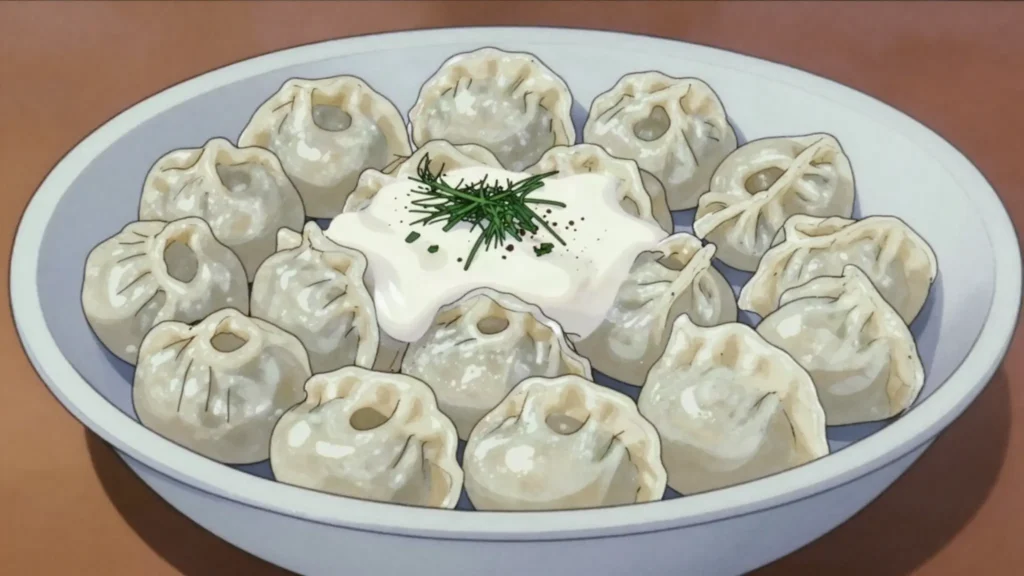
- Let them drain for a short moment. Do not leave them sitting though. Put all of them into warm bowls. Spoon sour cream over all of them. Grind black pepper over the top. Scatter chopped dill if you like. They are eaten hot with a fork.
Technique
- Cold water or crushed ice worked into the meat is a real technique rather than a trick: it keeps the meat cold as you work, and the water turns to broth inside the dumpling as it cooks, which is what makes them juicy. Without it they are dry. Work the mixture in one direction until it turns sticky and cohesive, which holds it together.
- Roll the dough about a millimetre thick — thin enough almost to see through, and thinner than seems possible — since thick dough gives a doughy dumpling and the filling should dominate. Use cold water in the dough for a firmer one that rolls thinner without tearing, rest it at least thirty minutes so the gluten relaxes, and keep unused dough covered, since dry dough will not seal at all.
- Press the air out as you seal the curved edge, working from the middle outward: trapped air expands and bursts them. Then bring the two corners together and pinch them firmly, wetting them if they will not stick — that ring shape holds the dumpling closed and is what defines pelmeenid.
Substitutions
- Stock stands in for salted water with a bay leaf and peppercorns; both are done in Estonia.
- Sour cream is the commonest finish and melted butter the other standard, with some using both; a splash of vinegar to cut the richness is a matter of preference.
Variations
- Estonia was occupied by the Soviet Union for decades and Russian food entered Estonian kitchens then, which the atlas records rather than softening. The food nonetheless stayed, because frozen packs were cheap, kept well and cooked in ten minutes — that practicality outlasted the politics.
- Freeze them separated on a floured tray first and bag them only once solid, since bagging them soft makes one frozen lump; they keep months and cook straight from frozen.
- Chop the onion as finely as you can, since coarse pieces tear the thin dough and cook unevenly inside.
History
Adopted during the Soviet decades, when frozen packs were a cheap staple; they remain everyday food in Estonian kitchens.
Frequently asked questions
What is Pelmeenid?
Pelmeenid is a main from Estonia: small boiled meat dumplings served with sour cream or butter. Adopted during the Soviet decades, when frozen packs were a cheap staple; they remain everyday food in Estonian kitchens.
How long does Pelmeenid take to make?
Pelmeenid takes 1 hour 30 minutes of preparation and 10 minutes of cooking. The recipe makes about 60 dumplings. It is rated hard to make.
What can I substitute in Pelmeenid?
Yes, within limits. Stock stands in for salted water with a bay leaf and peppercorns; both are done in Estonia. Sour cream is the commonest finish and melted butter the other standard, with some using both; a splash of vinegar to cut the richness is a matter of preference.
What is the most important thing to get right in Pelmeenid?
Chop it as fine as you possibly can. Put the flour and salt in a bowl. Beat the egg into the cold water. Add it gradually to the flour. Use cold water rather than warm. Cold water gives a firmer dough.