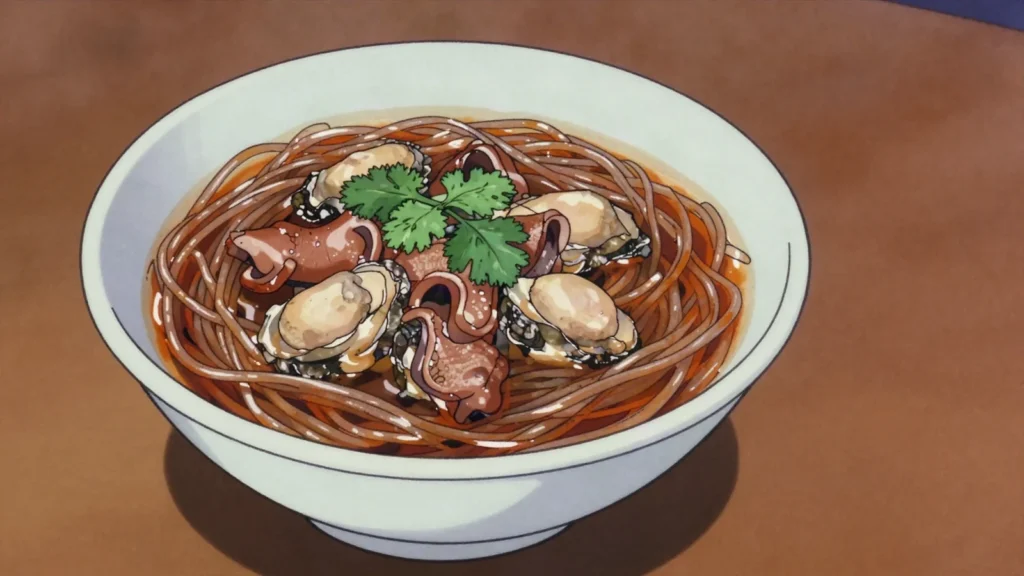

Ingredients
Noodles
- 300 gmianxian, thin wheat vermicelli
Broth
- 1.5 litreswater
- 30 gdried bonito flakes
- 1 piecedried kelp, about 10 cm
- 2 tbspdried shrimp
- 3 tbspsoy sauce
- 1 tbspsugar
- 1 tspwhite pepper
- salt
Oysters
- 300 gsmall shucked oysters
- 4 tbspsweet potato starch
Pork intestine, if using
- 300 gcleaned pork intestine
- 1 tbspflour and 1 tbsp salt, for cleaning
- 1thumb ginger, sliced
- 2 tbsprice wine
To thicken
- 5 tbspsweet potato starch
- 150 mlcold water
To finish
- chopped coriander
- black vinegar
- minced garlic
- chilli sauce
Directions
- Rinse them briefly in cold water before cooking. Taste the broth carefully at the end because of this. Put the water and the piece of kelp in a pot. Heat it slowly and remove the kelp just before it boils. Add the dried shrimp and bring it to a simmer. Take it off the heat and add the bonito flakes.
- Let them steep for five minutes without boiling. Strain the broth and discard the solids. Season it with soy sauce, sugar, white pepper and salt. Preparing the oysters is the step that keeps them whole.
- Rinse the shucked oysters gently in cold salted water. Check them over for shell fragments. Drain them and pat them fully dry. Toss them in sweet potato starch until coated. The starch coating protects them and keeps them plump. Bring a small pot of water to a gentle simmer. Drop the coated oysters in for thirty seconds only. They will firm up and the coating will set.
- Lift them out immediately with a slotted spoon. Set them aside and add them to the bowls at the end. Preparing the pork intestine takes real work. Turn the intestine inside out and scrape it clean. Rub it hard with flour and salt. Rinse it and repeat twice more.
- Rinse it until the water runs clear and it is no longer slippery. Put it in a pot with water, ginger and rice wine. Bring it to the boil and skim the foam. Simmer it for about ninety minutes until tender. Test it: it should be soft with a slight chew. Drain it and cut it into short lengths. Cooking the noodles is done in the broth itself.
- Bring the seasoned broth to a simmer. Break the noodle bundles into short lengths with your hands. Add them to the broth and stir gently. Cook them for two or three minutes until soft. Add the cooked intestine now if you are using it.
- Whisk the sweet potato starch into the cold water until smooth. Never add dry starch to hot liquid. Pour it into the simmering broth slowly while stirring. It will thicken within a minute.
- Keep stirring so it does not catch on the bottom. It should be thick enough to coat the back of a spoon heavily. Add more slurry if it is thin, or hot broth if it is stiff. Do not boil it hard after thickening, which thins it again.
- Ladle the thickened noodles and broth into bowls. Add the blanched oysters on top of each bowl. Adding them at the end keeps them plump. Scatter chopped coriander over the top. Serve black vinegar, minced garlic and chilli sauce at the table.
Technique
- Blanch the starch-coated oysters separately and add them at the end, or they shrink and toughen.
- Remove the kelp before the water boils, since boiling it turns the broth slimy and bitter.
- Break the noodles short so the dish can be eaten with a spoon.
Substitutions
- Cornflour in place of sweet potato starch, though the texture is different.
- Oysters alone, leaving out the intestine, which many stalls do.
Variations
- With intestine only, which some stalls serve.
- With oysters only, which is the more common version abroad.
- Made thicker still, as some Taipei stalls do.
History
Thin rice vermicelli noodles, cooked in a thick, starchy broth along with small oysters and often pig intestine, documented across Taiwan as one of the country’s most iconic night market foods, its broth thickened with sweet potato starch to achieve a distinctively glossy, almost gelatinous consistency. Its combination of delicate oysters with the more robust flavour of pig intestine reflects a broader Taiwanese culinary tradition of using the whole animal and pairing contrasting textures within a single comforting dish. Oyster vermicelli remains one of the most popular and widely recognized dishes sold at Taiwanese night markets, commonly eaten as a late-night snack or light meal.
Frequently asked questions
What is Oyster Vermicelli?
Oyster Vermicelli is a street food from Taiwan: thick bonito broth with thin wheat noodles, oysters and pork intestine. Thin rice vermicelli noodles, cooked in a thick, starchy broth along with small oysters and often pig intestine, documented across Taiwan as one of the country’s most iconic night market foods, its broth thickened with sweet potato starch to achieve a distinctively glossy, almost gelatinous consistency. Its combination of delicate oysters with the more robust flavour of pig intestine reflects a broader Taiwanese culinary tradition of using the whole animal and pairing contrasting textures within a single comforting dish. Oyster vermicelli remains one of the most popular and widely recognized dishes sold at Taiwanese night markets, commonly eaten as a late-night snack or light meal.
How long does Oyster Vermicelli take to make?
Oyster Vermicelli takes 30 min of preparation and 30 min of cooking. The recipe makes 4 servings. It is rated medium to make.
What can I substitute in Oyster Vermicelli?
Yes, within limits. Cornflour in place of sweet potato starch, though the texture is different. Oysters alone, leaving out the intestine, which many stalls do.
What is the most important thing to get right in Oyster Vermicelli?
Whisk the sweet potato starch into the cold water until smooth. Never add dry starch to hot liquid. Pour it into the simmering broth slowly while stirring. It will thicken within a minute.