
Ingredients
The base
- 4tomatoes, chopped
- 2green peppers, sliced
- 1onion, chopped
- 4garlic cloves, crushed
- 4 tablespoonsolive oil
- 2 tablespoonstomato paste
The spices
- 2 tablespoonsharissa
- or to taste
- 1 teaspoonground caraway
- 1 teaspoonground coriander
- salt and black pepper
The main addition
- 300 gmerguez sausage
- sliced, or 300 g shrimp
- peeled
To finish
- 6eggs
- chopped parsley
- bread, to mop
Directions
- Start with less and then add more. It gives a warm slightly bitter note. Use caraway where the recipe says so. Heat the olive oil in a wide pan. Add the chopped onion in to it. Cook it for a good six minutes. Add the sliced green peppers to it. Cook them for about six minutes. The peppers should soften considerably.
- Add the crushed garlic to the pan. Cook it for one full minute only. One minute is quite enough for it. Add it after the vegetables have softened. Stir the harissa into the pan. Add the caraway and coriander to it. Cook it for a good two full minutes.
- Add the chopped tomatoes to the pan. Add the tomato paste in as well. Season it with salt and black pepper. Let it cook for about fifteen minutes. Stir it through it now and then. The tomatoes should break down completely. Oil rising is a sign it has reduced. Slice the merguez into rounds. Add all of it into the hot sauce.
- Let it cook for about eight minutes. Let it cook in rather than draining it. Add shrimp only in the last few minutes. They cook in about three minutes. Add them much later than sausage.
- Add a splash of water if it is very thick. The eggs need some liquid to set into. Break the eggs straight into the pan. Stir the eggs through the sauce. Work gently with a wooden spoon.
- Stir slowly rather than beating. The white and yolk should stay visible. Let them set for two or three minutes. They set very fast in a hot sauce. Take the pan off slightly early. Judging them takes a careful look. Take it off while still slightly soft. It finishes off in the hot pan.
- Scatter chopped parsley over the top. Serving it is always done immediately. Take the pan straight to the table. Serve plenty of bread alongside. It does not keep at all well after. Make only what you will eat now.
Technique
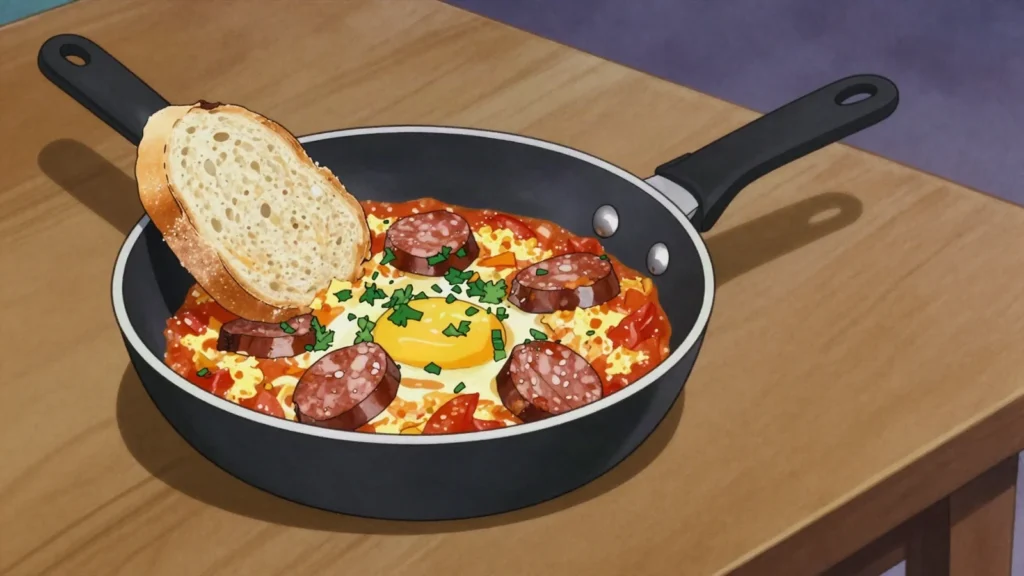
- The eggs are broken whole into the sauce and stirred through rather than poached whole — that scrambling is what makes it ojja, and the eggs thicken the sauce as they set. Stir slowly for streaks rather than uniform yellow, keeping white and yolk visible, since that marbled look is characteristic.
- Lower the heat before the eggs go in and take the pan off while they are still slightly soft: high heat makes them rubbery instantly, and overcooked egg weeps water that thins the whole sauce. They carry on setting in the hot pan.
- Fry the harissa with the caraway and coriander for two full minutes before the tomatoes go in, which deepens the flavour and releases its oil so the pan turns red. Caraway is not cumin — it is sharper and more aniseed-like, and it is central to Tunisian cooking.
Substitutions
- Shrimp is the coastal version, common in the port towns; add it only in the last few minutes since it cooks in about three and goes rubbery beyond that.
- Let the merguez cook into the sauce rather than draining it, since its spiced fat carries a great deal of flavour.
Variations
- Harissa strengths vary considerably, so start with less and add more; the dish is genuinely spicy and that heat is part of it.
- Add a splash of water if the sauce is very thick, since the eggs need liquid to set into and a dry pan gives dry scrambled egg.
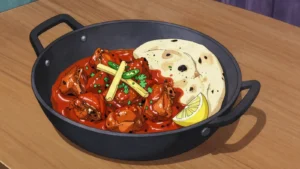
- It is cooked and served in one wide shallow pan taken straight to the table, with bread to scoop it up.
History
Eggs, poached directly in a spiced tomato and pepper sauce, often combined with merguez sausage or seafood, documented across Tunisia as a common and beloved everyday dish, closely related to shakshouka and other egg-in-sauce dishes found across the wider Maghreb and eastern Mediterranean region. Its distinctively spicy tomato base, commonly enriched with harissa, reflects Tunisia’s broader culinary preference for pronounced chili heat compared to some neighboring North African cuisines, and ojja is traditionally served directly in the cooking pan with bread for scooping, reflecting its status as a casual, shared, communal dish. Ojja remains a popular everyday dish across Tunisia, commonly eaten for breakfast or a light dinner.
Frequently asked questions
What is Ojja?
Ojja is a main from Tunisia: eggs scrambled into spicy tomato-pepper sauce, often with merguez or shrimp. Eggs, poached directly in a spiced tomato and pepper sauce, often combined with merguez sausage or seafood, documented across Tunisia as a common and beloved everyday dish, closely related to shakshouka and other egg-in-sauce dishes found across the wider Maghreb and eastern Mediterranean region. Its distinctively spicy tomato base, commonly enriched with harissa, reflects Tunisia’s broader culinary preference for pronounced chili heat compared to some neighboring North African cuisines, and ojja is traditionally served directly in the cooking pan with bread for scooping, reflecting its status as a casual, shared, communal dish. Ojja remains a popular everyday dish across Tunisia, commonly eaten for breakfast or a light dinner.
How long does Ojja take to make?
Ojja takes 15 minutes of preparation and 30 minutes of cooking. The recipe makes serves 4. It is rated easy to make.
What can I substitute in Ojja?
Yes, within limits. Shrimp is the coastal version, common in the port towns; add it only in the last few minutes since it cooks in about three and goes rubbery beyond that. Let the merguez cook into the sauce rather than draining it, since its spiced fat carries a great deal of flavour.
What is the most important thing to get right in Ojja?
Let it cook for about eight minutes. Let it cook in rather than draining it. Add shrimp only in the last few minutes. They cook in about three minutes. Add them much later than sausage.