
Ingredients
Tomato base
- 5 tbspred palm oil
- 2onions, finely chopped
- 4garlic cloves, crushed
- 6ripe tomatoes, blended, or 400 g tinned tomatoes
- 3 tbsptomato paste
- 2red chillies, blended
- 1 tspground dried ginger
- 2 tspsalt
- 1vegetable stock cube
- 700 mlwater
Dough
- 400 gfine white cornmeal (maize flour)
- 150 mlcold water, for slaking
Grilled chicken
- 1chicken (about 1.4 kg), jointed into 8
- 3garlic cloves, crushed
- 1 tbspgrated ginger
- 1onion, grated
- 1 tbspmustard
- 2 tbspgroundnut oil
- 2 tspsalt
- 1 tspblack pepper
Directions
- Marinate the chicken pieces with the garlic, ginger, grated onion, mustard, oil, salt and pepper for at least 1 hour, or overnight in the fridge.
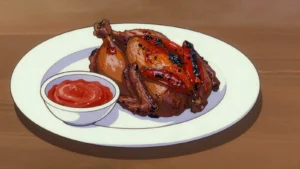
- Simmer the chicken gently in a covered pan with 200 ml water for 25 minutes until cooked through, then grill or barbecue over medium coals for 10–12 minutes, turning and basting with the pan juices until the skin is lacquered and charred at the edges.
- For the base, bleach the palm oil over medium heat for 2 minutes until it runs clear, then fry the onions 8 minutes to deep gold.
- Add the garlic, tomato paste and chillies and fry 4 minutes until the paste darkens, then the blended tomato, ginger, salt and crumbled stock cube. Simmer 20 minutes until thick and the oil separates.
- Pour in the water and bring to a rolling boil – you now have a thin, brick-red, well-seasoned liquid, and its seasoning is the seasoning of the finished dough.
- Slake 100 g of the cornmeal with the cold water to a smooth cream and whisk it into the boiling sauce. Cook 4 minutes until it thickens and loses its raw smell.
- Rain in the remaining cornmeal a handful at a time, beating hard with a flat wooden spoon. The mass will stiffen fast and pull away from the pot walls; keep beating 8–10 minutes over low heat until it is smooth, dense and glossy.
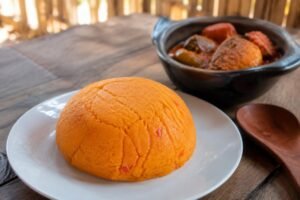
- Cover and steam 5 minutes on the lowest heat, beat once more, then pack the hot dough into an oiled bowl or loaf tin, turn out and cut into thick slices. Serve with the grilled chicken and any remaining sauce.
Technique
- Djenkoumé is not plain cornmeal porridge – the maize is cooked in the sauce itself, which is why it is red and already seasoned. Cooking it in water and stirring sauce in afterwards gives a completely different, flatter dish.
- The beating is what makes it silky. Undercooked or under-beaten dough tastes chalky and gritty; work it until it squeaks against the spoon.
- It is often made with the sauce left over from the previous day’s chicken, and Togolese cooks say it tastes better that way.
Substitutions
- Fine yellow polenta works but gives a coarser, sweeter dough – grind it finer in a blender first if you can.
- If palm oil is unavailable, groundnut oil with 2 tsp paprika keeps the colour, though not the distinctive resinous flavour.
Variations
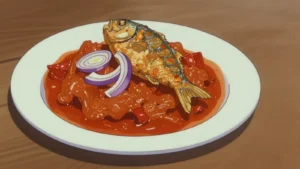
- Amiwo, the near-identical Beninese version, usually served with grilled tilapia.
- Djenkoumé shaped into balls and fried in slices the next day until crisp-edged.
History
A thick porridge made from cornmeal, tomato and pepper, cooked together into a dense, savory mixture, developed in Togolese cooking as a variation on the wider West African stiff-porridge tradition, distinguished by the addition of tomato and pepper directly into the cornmeal base rather than serving a plain porridge alongside a separate sauce. This integrated approach, cooking the flavouring directly into the porridge itself, gives djenkoumé its own distinct character within the broader landscape of West African maize-based staple foods. It remains a traditional Togolese dish, valued as a filling, flavourful staple that combines the region’s cornmeal-porridge cooking tradition with the tomato-and-pepper flavour base found across much of West African cooking more broadly.
Frequently asked questions
What is Djenkoumé?
Djenkoumé is a main from Togo: tomato-red cornmeal dough classically served with grilled chicken. A thick porridge made from cornmeal, tomato and pepper, cooked together into a dense, savory mixture, developed in Togolese cooking as a variation on the wider West African stiff-porridge tradition, distinguished by the addition of tomato and pepper directly into the cornmeal base rather than serving a plain porridge alongside a separate sauce. This integrated approach, cooking the flavouring directly into the porridge itself, gives djenkoumé its own distinct character within the broader landscape of West African maize-based staple foods. It remains a traditional Togolese dish, valued as a filling, flavourful staple that combines the region’s cornmeal-porridge cooking tradition with the tomato-and-pepper flavour base found across much of West African cooking more broadly.
How long does Djenkoumé take to make?
Djenkoumé takes 25 min of preparation and 45 min of cooking. The recipe makes 4 servings. It is rated medium to make.
What can I substitute in Djenkoumé?
Yes, within limits. Fine yellow polenta works but gives a coarser, sweeter dough – grind it finer in a blender first if you can. If palm oil is unavailable, groundnut oil with 2 tsp paprika keeps the colour, though not the distinctive resinous flavour.
What is the most important thing to get right in Djenkoumé?
Djenkoumé is not plain cornmeal porridge – the maize is cooked in the sauce itself, which is why it is red and already seasoned. Cooking it in water and stirring sauce in afterwards gives a completely different, flatter dish.