
Ingredients
The peas
- 400 gdried black-eyed peas
- niébé, soaked overnight
- or 2 tins, drained
The pot
- 400 gpotatoes
- peeled and diced
- 2onions, chopped
- 5garlic cloves, crushed
- 3tomatoes, chopped
- 2 tablespoonstomato purée
- 4 tablespoonsoil
- 1stock cube
- 1bay leaf
- salt and black pepper
The heat
- 1scotch bonnet, whole
- or chopped, to taste
To serve
- baguettes
- split lengthways
- at a breakfast stall
Directions
- Cook them until tender rather than to a rule. The stew should be thick rather than soupy. Rinse the black-eyed peas thoroughly. Cover them well with cold water. Leave them to soak there overnight.
- Discard all of the soaking water. Drain and rinse the soaked peas. Put them in a pot with fresh water. Bring them all up to a full boil. Skim off any foam that rises up. Grey foam rises in the first minutes. Let them simmer for about forty minutes. Judging them takes a firm squeeze.
- Squeeze a pea between your fingers. It should crush with little resistance. Take them off slightly underdone. Fully soft peas collapse into a mush. Drain all the part-cooked peas. Keep a little of the cooking water.
- Heat the oil in a wide heavy pot. Add the chopped onions in to it. Cook them for a good ten minutes. Let them soften and turn golden. Add the crushed garlic to the pot. Cook it for two more full minutes. Add the chopped tomatoes to the pot. Add the tomato purée along with them.
- Cook them down for about eight minutes. The tomato must cook right down. Oil should separate at the edges. Raw tomato taste should be entirely gone. Add the diced potato to the pot. Turn it through the tomato base. Add the part-cooked peas to the pot. Add the bay leaf and the stock cube. Add the whole scotch bonnet carefully. Adding the liquid is straightforward enough.
- Add the reserved pea cooking water. Add more water to just cover everything. Season it with salt and black pepper. Simmering it takes about thirty minutes. Bring it up to a gentle simmer. Let it simmer for about thirty minutes. Stir it every few minutes or so. They burn quickly if they do catch.
- Stir right into the corners of the pot. Judging it takes a look and a taste. Crush some of the potato against the pot. It should hold together on a spoon. Lift the whole scotch bonnet out. Discard it entirely before serving. That makes the stew fiercely hot.
- Take it out of the pot every time. Taste it and adjust the salt as needed. Add plenty of black pepper as well. Taste it before adding any more. Do not cut it right through it.
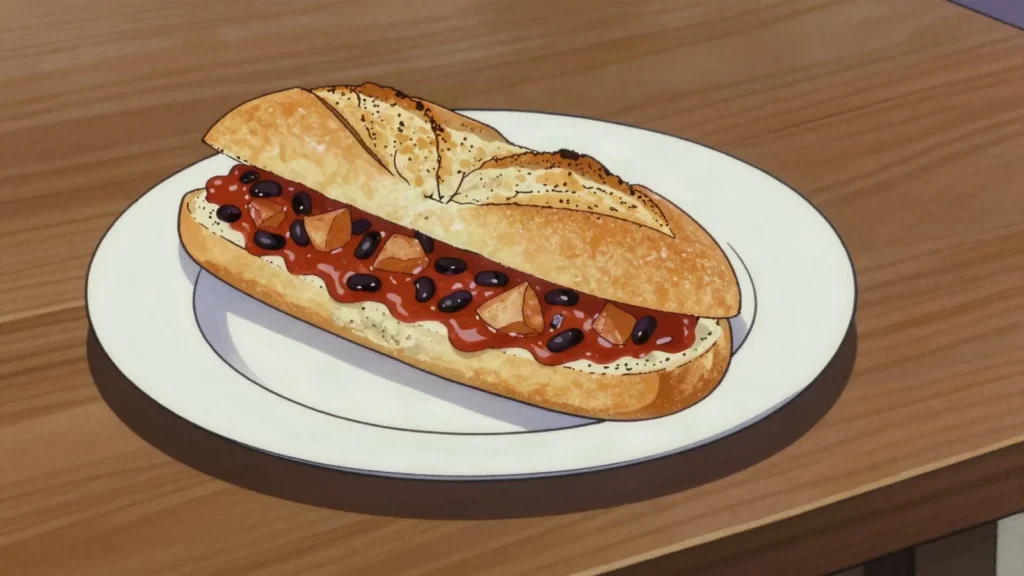
- Leave one long edge still attached. Spooning it in is straightforward enough. Spoon the hot stew into the split. Fill it generously along its length. It should be a substantial breakfast. Wrap it in paper so that it holds. It must be eaten while the stew is hot. Fill the bread only when you eat it.
Technique
- Black-eyed peas do not carry the red kidney bean toxin — that risk is specific to kidney beans, and cowpeas need no hard boil for safety, only long cooking to soften. People sometimes apply the kidney bean rule to every dried bean; it does not apply here.
- The stew must be thick rather than soupy because it has to sit inside a baguette, and a thin one soaks the bread through. Crush some of the potato against the side of the pot with the back of a spoon, which thickens it and binds the whole stew together.
- Take the peas off the boil slightly underdone before they go into the stew, since they finish cooking there and fully soft peas collapse into a mush.
Substitutions
- Two tins of drained black-eyed peas stand in for dried, added at the stew stage.
- The scotch bonnet goes in whole for aroma without heat and is lifted out, or chopped in for genuine heat; both are done.
Variations
- French bread is a colonial legacy and Senegalese bakeries make baguettes daily; the stew is West African and putting one inside the other is Senegalese.
- The same breakfast stalls sell fried egg and spaghetti fillings, with the baguette as the constant.
- Split the baguette along its length without cutting right through, since the hinge holds the filling in.
History
A cheap black-eyed pea and potato stew sold at breakfast stalls and eaten in a split baguette, a legacy of French bread in Senegalese cities.
Frequently asked questions
What is Ndambe?
Ndambe is a breakfast from Senegal: spiced black-eyed pea and potato stew stuffed into baguettes. A cheap black-eyed pea and potato stew sold at breakfast stalls and eaten in a split baguette, a legacy of French bread in Senegalese cities.
How long does Ndambe take to make?
Ndambe takes 20 minutes plus soaking of preparation and 1 hour 15 minutes of cooking. The recipe makes serves 6. It is rated easy to make.
What can I substitute in Ndambe?
Yes, within limits. Two tins of drained black-eyed peas stand in for dried, added at the stew stage. The scotch bonnet goes in whole for aroma without heat and is lifted out, or chopped in for genuine heat; both are done.
What is the most important thing to get right in Ndambe?
Cook them until tender rather than to a rule. The stew should be thick rather than soupy. Rinse the black-eyed peas thoroughly. Cover them well with cold water. Leave them to soak there overnight.