
Ingredients
Congee
- 150 gwhite rice
- 2.5 litreswater or light chicken stock
- 1 tbspneutral oil
- 1 tspsalt
- a thumb of ginger
Toppings
- 2century eggs, quartered
- 200 gpork, sliced and marinated in soy and cornflour
- 1salted duck egg
- spring onions, sliced
- fried shallots
- white pepper
- sesame oil
To serve
- youtiao
- pickled vegetables
Directions
- Rinse the rice until the water runs almost clear, then drain it well.
- Toss the drained rice with the oil and a pinch of salt and leave it for 20 minutes. The oil coats each grain and helps it break down into a creamier congee.
- Freeze the rinsed rice for an hour if you want to shorten the cooking considerably. The ice crystals crack the grains open and they collapse far faster.
- Bring the water to a rolling boil, add the rice and the ginger, and let it come back to the boil.
- Turn it down to the lowest possible simmer and cook for 1 hour 30 minutes to 2 hours, stirring every 15 minutes and scraping the base of the pan.
- Use far more liquid than seems reasonable, around sixteen parts to one, and stir often. Congee thickens dramatically at the end, and rice sinks and catches the moment you stop paying attention.
- It is ready when the grains have collapsed entirely and the whole pot is smooth, thick and pourable with no distinct rice visible in it.
- Season with salt only at the end, once it has reached its final thickness.
- If you are adding pork, stir the marinated slices in for the last 10 minutes so they poach gently in the congee.
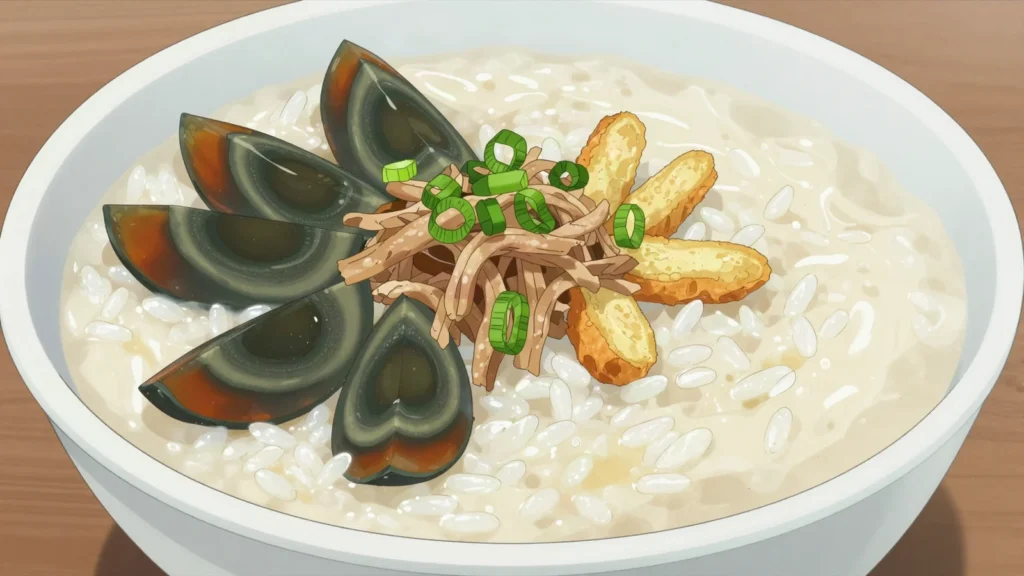
- Ladle into bowls and top with century egg, spring onion, fried shallots, white pepper and a few drops of sesame oil.
- Serve with youtiao for dipping, which is the standard Cantonese breakfast pairing.
Technique
- Rice gruel appears in Zhou-dynasty texts and was ladled out as famine relief for millennia before it became the standard breakfast and the standard sickbed food.
- The oil trick and the freezer trick both work and neither is traditional. Long slow cooking is, and it gives the best texture of the three.
- Salt at the end. Salted early, the grains take longer to break down.
Substitutions
- Jasmine or any long grain rice, though short grain breaks down fastest.
- Leftover cooked rice, simmered for 40 minutes, which is quick and gives a looser congee.
Variations
- Plain, with nothing but ginger and salt, which is what it is eaten as when someone is ill.
- With fish slices poached in at the last minute.
- Cantonese sampan congee, with several seafoods and peanuts.
History
A rice porridge, cooked with a large proportion of water relative to rice until it breaks down into a smooth, thick gruel, documented in Chinese cooking for many centuries and considered one of the oldest and most enduringly common Chinese dishes, valued historically both as an easily digestible food for the ill, elderly or very young, and as a practical way to stretch a limited quantity of rice into a filling meal during times of scarcity. Its plain base is traditionally topped with a wide range of savory or sweet additions, including preserved egg, pickled vegetable, meat floss or dried fish, with the specific toppings varying enormously by region and personal preference. Congee remains a common breakfast food across China and much of East and Southeast Asia, where closely related rice porridge traditions exist under different regional names.
Frequently asked questions
What is Congee?
Congee is a breakfast from China: slow-simmered rice porridge topped with century egg, pork or pickles. A rice porridge, cooked with a large proportion of water relative to rice until it breaks down into a smooth, thick gruel, documented in Chinese cooking for many centuries and considered one of the oldest and most enduringly common Chinese dishes, valued historically both as an easily digestible food for the ill, elderly or very young, and as a practical way to stretch a limited quantity of rice into a filling meal during times of scarcity. Its plain base is traditionally topped with a wide range of savory or sweet additions, including preserved egg, pickled vegetable, meat floss or dried fish, with the specific toppings varying enormously by region and personal preference. Congee remains a common breakfast food across China and much of East and Southeast Asia, where closely related rice porridge traditions exist under different regional names.
How long does Congee take to make?
Congee takes 10 min of preparation and 2 hr of cooking. The recipe makes 6 servings. It is rated easy to make.
What can I substitute in Congee?
Yes, within limits. Jasmine or any long grain rice, though short grain breaks down fastest. Leftover cooked rice, simmered for 40 minutes, which is quick and gives a looser congee.
What is the most important thing to get right in Congee?
It is ready when the grains have collapsed entirely and the whole pot is smooth, thick and pourable with no distinct rice visible in it.