
Ingredients
Offal
- 600 gbeef small intestine, motsu or shirakoro
- 1 tbspflour
- 1 tbspsalt
- 1 tbspsake
Soy broth
- 1.2 litresdashi or chicken stock
- 100 mlsoy sauce
- 80 mlmirin
- 50 mlsake
- 1 tbspsugar
- 1 tspsalt
Aromatics
- 1whole head garlic, sliced
- 3cm ginger, sliced
- 2dried red chillies
Vegetables
- half a cabbage, cut in large pieces
- 2large bunches garlic chives, nira, in 5 cm lengths
- 1onion, sliced
- 150 gbeansprouts
- 1block firm tofu, optional
To finish
- toasted sesame seeds
- sliced chilli
Shime, the finish
- 150 gchampon noodles, or cooked rice and 1 egg
Directions
- Rub the intestine hard with flour and salt, working it through, then rinse under cold running water. Flour is a genuinely effective abrasive here: it grips the surface and lifts the film in a way water cannot. Repeat the flour and salt scrub two or three times until the water runs clear and it smells clean.
- Trim off any hard or discoloured pieces rather than hoping they soften. Blanch the cleaned motsu in boiling water with the sake for 5 minutes, then drain and rinse it.
- Simmer the blanched motsu in fresh water with a slice of ginger for 30 to 40 minutes until it is tender and no longer chewy. Beef intestine is almost all collagen and it needs a long gentle simmer to soften.
- Drain it and cut it into bite-sized pieces. Add the sliced garlic, ginger and chillies and bring to a simmer. Add the cooked motsu and simmer 10 minutes.
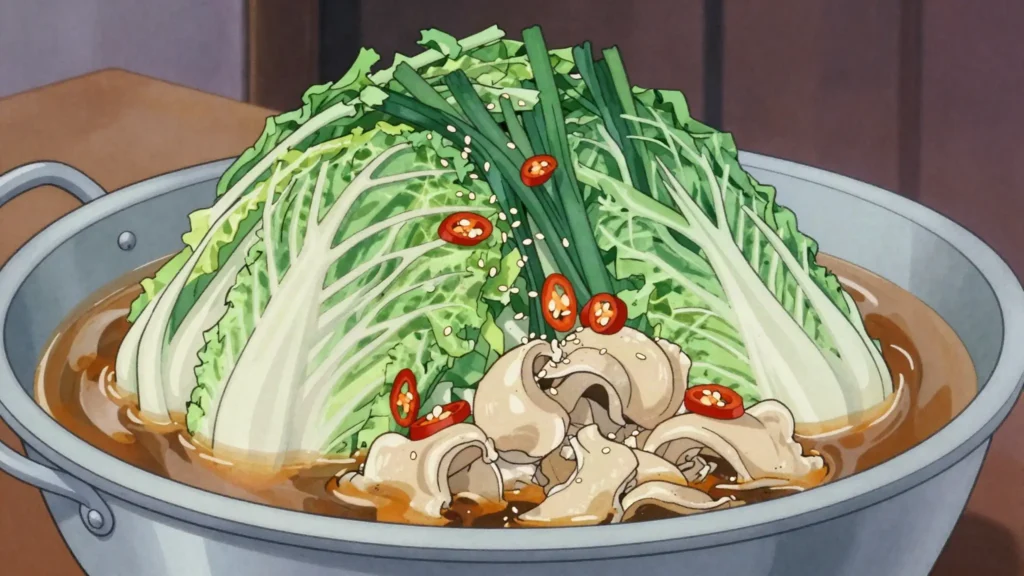
- Pack the cabbage in, then pile the garlic chives on top in a thick mound. They wilt in the steam in about two minutes and they are the visual signature of the pot. Add the onion, beansprouts and tofu around the edges.
- Cover and simmer 5 minutes, then bring the whole pot to the table on a burner. It is cooked and eaten at the table, and people take what they want from the shared pot as it goes.
- Scatter sesame seeds and chilli over, and eat with the broth. Add champon noodles to the remaining broth and cook them in it, or add rice and a beaten egg to make a porridge.
Technique
- Ask a butcher for prepared beef intestine, which saves an hour of scrubbing.
- The miso-based broth is the other standard version and is richer and sweeter.
- Nira, garlic chives, are essential and ordinary chives are not a substitute.
Substitutions
- Ready-cleaned motsu from a Japanese or Korean butcher.
- Miso broth in place of soy, which is the other classic.
Variations
- Miso motsunabe, the richer version.
- Shio motsunabe, a clear salt broth.
- With extra chilli, as a spicy pot.
History
Born in postwar Fukuoka when cheap offal was stewed in aluminium pots; a 1990s boom carried it from Hakata to Tokyo.
Frequently asked questions
What is Motsunabe?
Motsunabe is a soup & stew from Japan: fukuoka hotpot of beef offal, cabbage and garlic chives in soy or miso broth. Born in postwar Fukuoka when cheap offal was stewed in aluminium pots; a 1990s boom carried it from Hakata to Tokyo.
How long does Motsunabe take to make?
Motsunabe takes 40 min of preparation and 1 hr of cooking. The recipe makes 4 servings. It is rated medium to make.
What can I substitute in Motsunabe?
Yes, within limits. Ready-cleaned motsu from a Japanese or Korean butcher. Miso broth in place of soy, which is the other classic.
What is the most important thing to get right in Motsunabe?
Trim off any hard or discoloured pieces rather than hoping they soften. Blanch the cleaned motsu in boiling water with the sake for 5 minutes, then drain and rinse it.