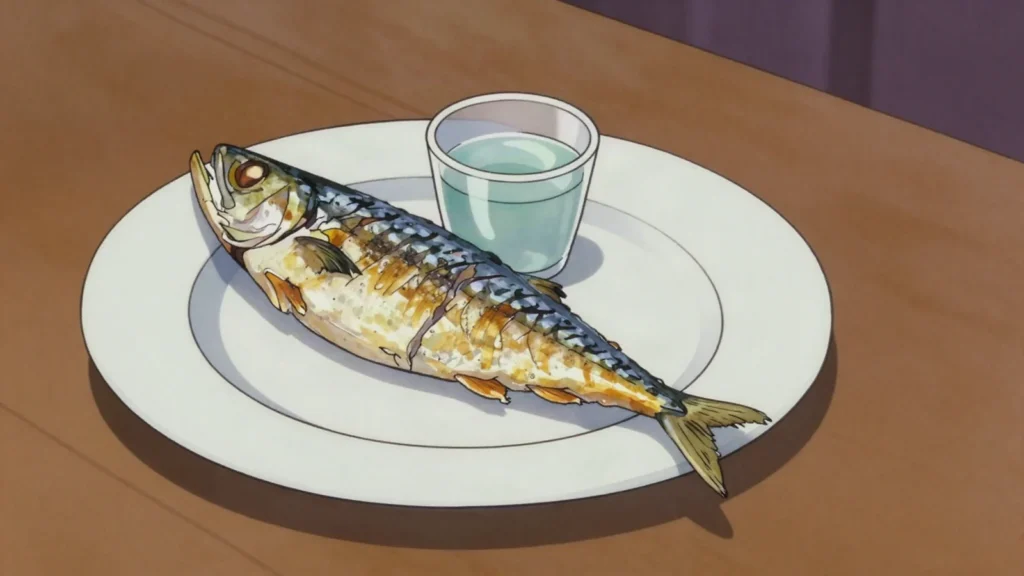

Fish steeped in an ancient brine and then dried, overwhelmingly pungent even by the standards of fermented fish. It comes from the Izu Islands, where salt was heavily taxed, so fishermen reused the same brine over and over until it stopped being a brine and became a perpetual ferment.
The brine cannot be made, only inherited. It is a two-hundred-year-old continuously maintained ambient ferment held in specific island households, and a new batch of salt water is not a young kusaya-eki — it is just salt water. There is nothing to write down that would produce this.
What goes into it
- mackerel, flying fish or horse mackerel, split
- kusaya-eki — the ancestral brine
- sun
How it is made
The split fish are soaked in the kusaya-eki for eight to twenty hours, then rinsed in fresh water and dried in the sun for a day or two. The brine itself is the thing: individual families on Niijima and Kōzushima have maintained the same liquid for two hundred years and more, topping it up rather than replacing it, and it carries a dense population of bacteria unique to each household’s tub. The fish is only the medium.
How long it takes: hours in the brine and days of drying, on top of a brine that is centuries old
How it is eaten
Grilled — traditionally outdoors — and torn into strips, with shōchū or sake.
History
From the Izu Islands, where salt was taxed so fishermen reused brine until it turned into a perpetual ferment.
Frequently asked questions
What is Kusaya?
Kusaya is a fermented & pickled from Japan: fish steeped in a centuries-old brine then dried; overwhelmingly pungent. From the Izu Islands, where salt was taxed so fishermen reused brine until it turned into a perpetual ferment.
How is Kusaya made?
The split fish are soaked in the kusaya-eki for eight to twenty hours, then rinsed in fresh water and dried in the sun for a day or two. The brine itself is the thing: individual families on Niijima and Kōzushima have maintained the same liquid for two hundred years and more, topping it up rather than replacing it, and it carries a dense population of bacteria unique to each household’s tub. The fish is only the medium. It takes hours in the brine and days of drying, on top of a brine that is centuries old.
Can I make Kusaya at home?
No, and the atlas gives no method for it. The brine cannot be made, only inherited. It is a two-hundred-year-old continuously maintained ambient ferment held in specific island households, and a new batch of salt water is not a young kusaya-eki — it is just salt water. There is nothing to write down that would produce this.
What goes into Kusaya?
Mackerel, flying fish or horse mackerel, split, kusaya-eki — the ancestral brine, sun.
How is Kusaya eaten?
Grilled — traditionally outdoors — and torn into strips, with shōchū or sake.