
Ingredients
Shiozuke — salt pickle
- 400 gcucumber, Chinese leaf or daikon, sliced thin
- 8 gfine salt — 2% of the vegetable weight
- 1 piecekombu, cut in thin strips
- 1dried chilli, sliced
- zest of ½ lemon or a little yuzu
Amazuzuke — sweet vinegar pickle
- 300 gdaikon or turnip, sliced thin
- 100 mlrice vinegar
- 50 gsugar
- 1 tspsalt
- 1 piecekombu
Equipment
- a Japanese pickle press, or a bowl and a weighted plate
Directions
- For the salt pickle, weigh the sliced vegetables and use 2% of that weight in salt. Weighing rather than eyeballing is what makes a tsukemono taste seasoned rather than salty.
- Toss the slices with the salt, kombu, chilli and citrus zest and pack them into a pickle press, or into a bowl with a plate and a weight on top.
- Press for two hours at room temperature, or overnight in the fridge. Liquid will be drawn out and the vegetables will wilt and go translucent — that is the pickle.
- Squeeze out the excess liquid before serving, and taste. If it is too salty, a brief rinse fixes it.
- For the sweet vinegar pickle, warm the vinegar, sugar and salt until dissolved, then cool completely.
- Pour the cold pickle over the sliced daikon with the kombu, press lightly, and refrigerate for at least two hours.
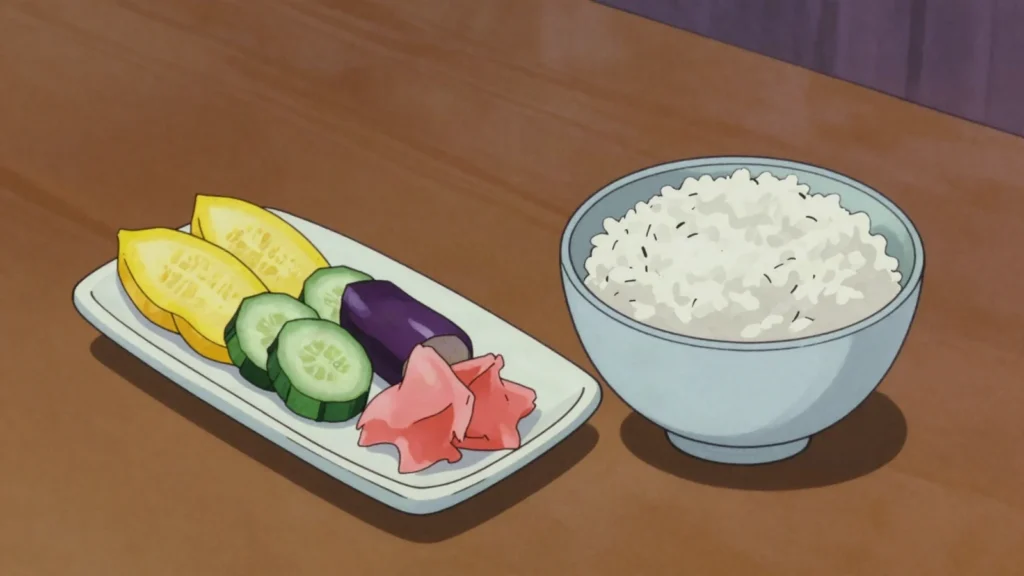
- Serve small amounts of each in separate dishes alongside rice and soup — tsukemono is a punctuation mark on the meal, not a salad.
- Both keep three to four days in the fridge. They are meant to be made often and eaten quickly.
Technique
- Two percent salt by weight is the reliable ratio for a quick salt pickle across almost any vegetable.
- Weight matters as much as salt. Without pressure the vegetables sit in their own liquid instead of being drawn dry.
- These are quick pickles, made and eaten within days. The long-fermented nukazuke and takuan are separate preparations.
Substitutions
- Any firm vegetable — carrot, celery, cabbage, aubergine — at the same 2% salt.
- A zip bag with the air pressed out and a tin on top, in place of a press.
Variations
- Nukazuke buries vegetables in a live rice-bran bed and is a maintained ferment rather than a quick pickle.
- Shibazuke from Kyoto uses red shiso and umezu and is fermented for weeks.
History
Nukazuke bran beds spread in the Edo period after rice polishing produced surplus bran; households feed and turn the same bed for generations.
Frequently asked questions
What is Tsukemono?
Tsukemono is a fermented & pickled from Japan: rice-bran or salt pickles of daikon, cucumber and aubergine served with every meal. Nukazuke bran beds spread in the Edo period after rice polishing produced surplus bran; households feed and turn the same bed for generations.
How long does Tsukemono take to make?
Tsukemono takes 20 min plus 2 hours to overnight of preparation and no cooking at all. The recipe makes serves 6 as a side. It is rated easy to make.
What can I substitute in Tsukemono?
Yes, within limits. Any firm vegetable — carrot, celery, cabbage, aubergine — at the same 2% salt. A zip bag with the air pressed out and a tin on top, in place of a press.
What is the most important thing to get right in Tsukemono?
For the salt pickle, weigh the sliced vegetables and use 2% of that weight in salt. Weighing rather than eyeballing is what makes a tsukemono taste seasoned rather than salty.