
Ingredients
The sumac
- 150 gcoarse ground sumac
- or whole sumac berries
- 1 litrehot water
- steeped, then strained
The meat
- 800 glamb
- shoulder or leg, cubed
- 2onions, chopped
- 3 tablespoonsoil
- or samna, clarified butter
- salt and black pepper
The stew
- 1 kgchard, chopped
- leaves and stalks
- 400 gcooked chickpeas
- 200 gtahini
- 60 gplain flour
- 8garlic cloves, crushed
- 2 teaspoonsground dill seed
- 1 tablespoonred chilli, ground
- or to taste
To serve
- at room temperature
- with khubz
- at Eid
- in shallow bowls
Directions
- Pour hot rather than boiling water over it. Let it steep for at least half an hour. Gazan cooking is notably hot with chilli. Adjust it to your own taste though. It goes from smooth to stiff and grainy. Add the liquid gradually while whisking hard. Keep going through that stiff stage.
- Flour goes in alongside the tahini here. It also stops the tahini splitting in the heat. Cool it and serve it within that window. Cool it quickly rather than letting it sit warm.
- Put the sumac in a bowl and cover with hot water. Use hot rather than boiling water for it. Let it stand for at least thirty minutes. An hour gives a stronger extraction. Strain the sumac liquid through fine cloth. Line a sieve with muslin over a bowl. Pour the whole lot through it slowly.
- Squeeze the cloth to get the last of it. You should get most of the litre back. Top it up with hot water if needed. Brown the lamb in the oil in a heavy pot. Get the oil hot before the meat goes in.
- Brown it well on all its sides. Work in batches rather than crowding the pot. Add the chopped onion to the browned lamb. Cook it for about ten minutes until soft. Stir so that residue comes away entirely. Add water and simmer the lamb until tender. Give it about an hour at a gentle simmer.
- Keep it at a bare simmer rather than a boil. Use water rather than the sumac liquid here. Keep it back until the meat is done. Wash the chard and chop it finely. Wash it in several changes of water. The stalks need longer cooking than the leaves.
- Chop the chard finely rather than coarsely. It should almost disappear into the stew. Take real time over that chopping. Add the chopped chard stalks to the pot. Give the stalks about ten minutes first.
- Stir the cooked chickpeas into the stew. They are already cooked and only need warming. Rinse them well before they go in. Add the garlic, dill seed and ground chilli. Add them now rather than at the very start. Give them a few minutes in the stew. Whisk the tahini and flour with the sumac liquid.
- Put the tahini and flour in a large bowl. Whisk them together dry to start with. Whisk it smooth between each addition. It becomes thick and grainy quite suddenly. Keep whisking and adding liquid regardless. It must be entirely smooth before it goes in.
- Check it carefully for any remaining lumps. Whisk them out against the bowl. Pour the tahini mixture into the pot slowly. Turn the heat down low before it goes in. Pour it in while stirring the pot constantly. Keep stirring until it is entirely combined. Do not stop stirring at any point.
- Keep stirring right through that change. That is where lumps form if you stop. Simmer the stew gently for twenty minutes. Stir it regularly right through that time. Keep the heat low once the tahini is in. It should be thick rather than soupy. Make it slightly looser than you want. Season the stew with salt and pepper.
- Taste it carefully near the end of cooking. It needs decisive salting to come together. Taste for the chilli heat as well. Let the stew cool to room temperature. Cool it quickly rather than letting it stand warm. Spread it into a wide dish to cool faster. Then refrigerate it if not eating within two hours. Bring it back to room temperature to serve. The flavours are fuller than when hot.
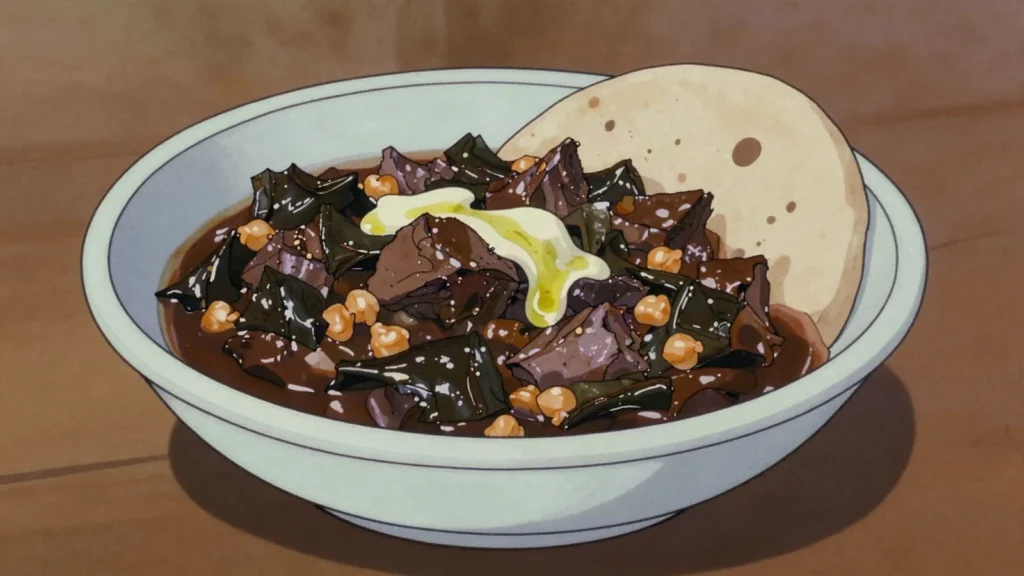
- Spoon the stew into shallow bowls or a platter. Spread it out rather than heaping it up. It should be a thick even layer. Serve plenty of khubz alongside it. It keeps three days refrigerated in a covered bowl. Bring it back to room temperature before serving.
Technique
- The sumac must be steeped in hot water and strained, with only the sour red liquid going into the stew and the ground sumac discarded — used whole it is gritty and astringent, and this step is genuinely essential. Use hot rather than boiling water, since boiling draws out bitterness, and steep it at least thirty minutes.
- Tahini seizes sharply when liquid is added, going thick and grainy quite suddenly, then thins again as you continue — keep whisking and adding liquid through that stiff stage. It must be entirely smooth before it goes into the pot, since lumps of tahini and flour never disappear. Once it is in, keep the heat low and stir constantly: high heat splits the tahini out and burns the base almost immediately.
- Sumagiyya is genuinely eaten at room temperature, which is a deliberate choice since the flavours are fuller than when hot. Cooked meat left standing warm is a risk, with two hours the usual guidance, so cool it quickly by spreading it into a wide dish, refrigerate it, and bring it back to room temperature to serve — the traditional result more safely. Tahini is sesame, a major allergen, entirely invisible in the finished stew.
Substitutions
- Tinned chickpeas replace home-cooked ones directly; rinse them first. Samna, clarified butter, replaces the oil for browning the lamb.
- Gazan cooking uses far more red chilli than the rest of Palestine, along with ground dill seed as a signature spice — quite different from fresh dill leaf, with a warm almost caraway-like character. Both appear prominently here, and the chilli can be adjusted to taste.
Variations
- Simmer the lamb in plain water rather than the sumac liquid, which goes in later — long cooking dulls the sourness considerably, so keep it back until the meat is tender.
- Wash the chard through several changes of water, since it grows in sandy soil and holds grit, and chop it finely so it almost disappears into the stew. Cook the stalks about ten minutes before the leaves go in, since they need longer.
- It should be thick enough to hold its shape briefly on a plate rather than soupy, and it thickens further as it cools, so make it slightly looser than you want. The sumac gives sourness rather than salt, so it needs decisive salting to come together.
History
Cooked in Gaza for Eid and eaten at room temperature; the sumac is soaked and strained before it goes in.
Frequently asked questions
What is Sumagiyya?
Sumagiyya is a soup & stew from Palestine: gazan stew of chard, meat and tahini soured with steeped sumac. Cooked in Gaza for Eid and eaten at room temperature; the sumac is soaked and strained before it goes in.
How long does Sumagiyya take to make?
Sumagiyya takes 40 minutes plus steeping of preparation and 1 hour 45 minutes of cooking. The recipe makes serves 8. It is rated hard to make.
What can I substitute in Sumagiyya?
Yes, within limits. Tinned chickpeas replace home-cooked ones directly; rinse them first. Samna, clarified butter, replaces the oil for browning the lamb. Gazan cooking uses far more red chilli than the rest of Palestine, along with ground dill seed as a signature spice — quite different from fresh dill leaf, with a warm almost caraway-like character. Both appear prominently here, and the chilli can be adjusted to taste.
What is the most important thing to get right in Sumagiyya?
Pour hot rather than boiling water over it. Let it steep for at least half an hour. Gazan cooking is notably hot with chilli. Adjust it to your own taste though. It goes from smooth to stiff and grainy. Add the liquid gradually while whisking hard. Keep going through that stiff stage.