
Ingredients
Pearls
- 500 gmoghrabieh, large couscous pearls
Chicken
- 1chicken, jointed
- 2onions
- 2cinnamon sticks
- 6cardamom pods
- 3bay leaves
- 1 tbspallspice berries
- 2 litreswater
- salt
Pot
- 500 gsmall pearl onions, peeled
- 400 gcooked chickpeas
- 3 tbspghee or butter
- 2 tbspground caraway
- 1 tbspground cinnamon
- 1 tbspground allspice
- 1 tspblack pepper
To finish
- salt
- chopped coriander
To serve
- the broth, in bowls
- lemon wedges
Directions
- Poach the chicken with the onions, cinnamon, cardamom, bay and allspice berries for about an hour, then lift it out and strain the broth.
- Skim the broth well, and keep all of it, because the pearls are cooked in it and it is served alongside. Pull the chicken into large pieces and discard the skin and bones. Peel the pearl onions, which is tedious and worth doing properly.
- Cover them with boiling water for a minute first and the skins slip off far more easily. Leave them whole and do not trim the root end flat, or they fall apart into layers in the pot.
- Simmer the peeled onions in some of the broth for 20 minutes until tender but still holding. Boil them in plenty of salted water for 10 to 15 minutes, or steam them over the broth if you prefer. Drain them and rinse them briefly in cold water to stop the cooking.
- Rinse them and toss them in a little ghee. Left to sit undressed they glue into a single mass within minutes. Melt the ghee in a wide pot and add the caraway, cinnamon, allspice and pepper, frying for 30 seconds.
- Add the drained pearls, the onions, the chickpeas and the chicken and turn everything through the spiced ghee. Pour in enough hot broth to moisten it without drowning it, and simmer gently 15 minutes.
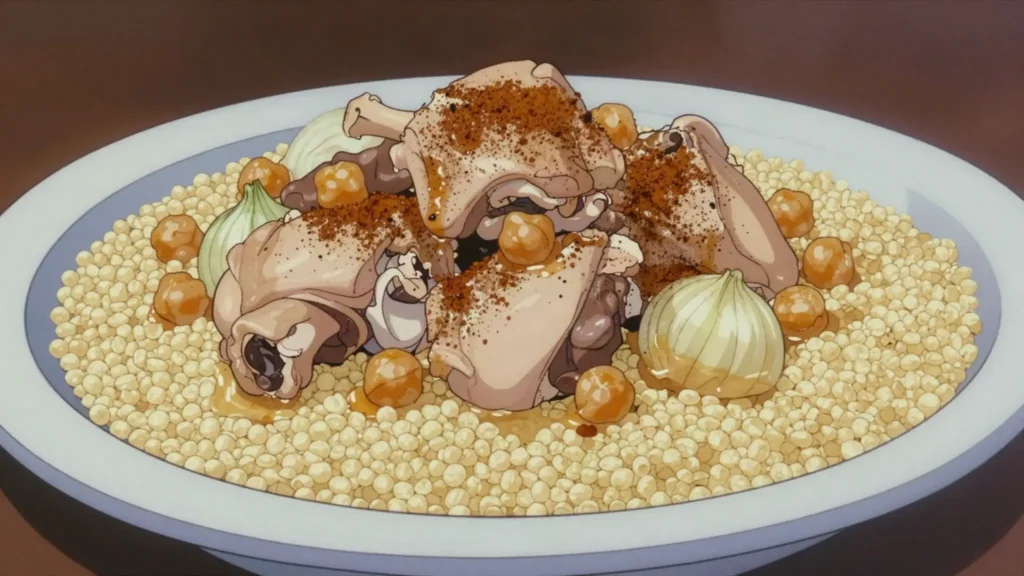
- Keep it moist rather than soupy. The pearls should be coated and glossy, and the remaining broth is served separately. Taste and season hard, remembering there is a great deal of starch to salt. Serve heaped on a platter, scattered with coriander, with bowls of the hot broth alongside to be spooned over or drunk.
Technique
- Moghrabieh is sold dried in Lebanese and Middle Eastern shops, and fresh in Beirut.
- Israeli couscous, ptitim, is machine-extruded pasta and behaves differently.
- Lamb is used as often as chicken in some households.
Substitutions
- Large pearl couscous or fregola in place of moghrabieh.
- Frozen pearl onions, which saves a long peeling job.
Variations
- Made with lamb.
- Served as a soup, with far more broth.
- Maftoul, the Palestinian relative with smaller hand-rolled pearls.
History
The name means Moroccan, recording the couscous that travelled east; Beirut cooks roll the pearls far larger.
Frequently asked questions
What is Moghrabieh?
Moghrabieh is a main from Lebanon: large hand-rolled couscous pearls with chicken, chickpeas and pearl onions. The name means Moroccan, recording the couscous that travelled east; Beirut cooks roll the pearls far larger.
How long does Moghrabieh take to make?
Moghrabieh takes 40 min of preparation and 1 hr 30 min of cooking. The recipe makes 6 servings. It is rated medium to make.
What can I substitute in Moghrabieh?
Yes, within limits. Large pearl couscous or fregola in place of moghrabieh. Frozen pearl onions, which saves a long peeling job.
What is the most important thing to get right in Moghrabieh?
Cover them with boiling water for a minute first and the skins slip off far more easily. Leave them whole and do not trim the root end flat, or they fall apart into layers in the pot.