
Ingredients
Cabbage
- 1whole head of sour cabbage (kiseli kupus), about 2 kg, from the barrel
- 200 gshredded sour cabbage, for lining and covering the pot
Filling
- 600 gminced pork shoulder, not too lean
- 300 gminced beef
- 150 gsmoked bacon or smoked pork belly, finely diced
- 150 gshort-grain rice, rinsed
- 2onions (300 g), very finely chopped
- 4garlic cloves, minced
- 1egg
- 1 tbspsweet paprika
- 1 tspblack pepper
- 1 tspsalt, or less if the cabbage is very salty
- 1 tspdried thyme or savory
The pot
- 300 gsmoked ribs, smoked hock or dried pork neck (suvo meso)
- 2bay leaves
- 1 tspwhole black peppercorns
- About 1.2 litres water
- 2 tbsplard or oil
Zaprška
- 2 tbsplard or oil
- 2 tbspplain flour
- 1 tbspsweet paprika
Directions
- Take the sour cabbage head apart leaf by leaf, trimming the thick central rib flat with a knife so each leaf will roll. Taste a leaf: if it is fiercely salty, soak the leaves 30 minutes in cold water and pat dry.
- Mix the two minces with the diced smoked bacon, rice, onion, garlic, egg, paprika, pepper, salt and thyme. Work it for 3 minutes until sticky. Fry a teaspoonful to check the seasoning before you roll eighteen of them.
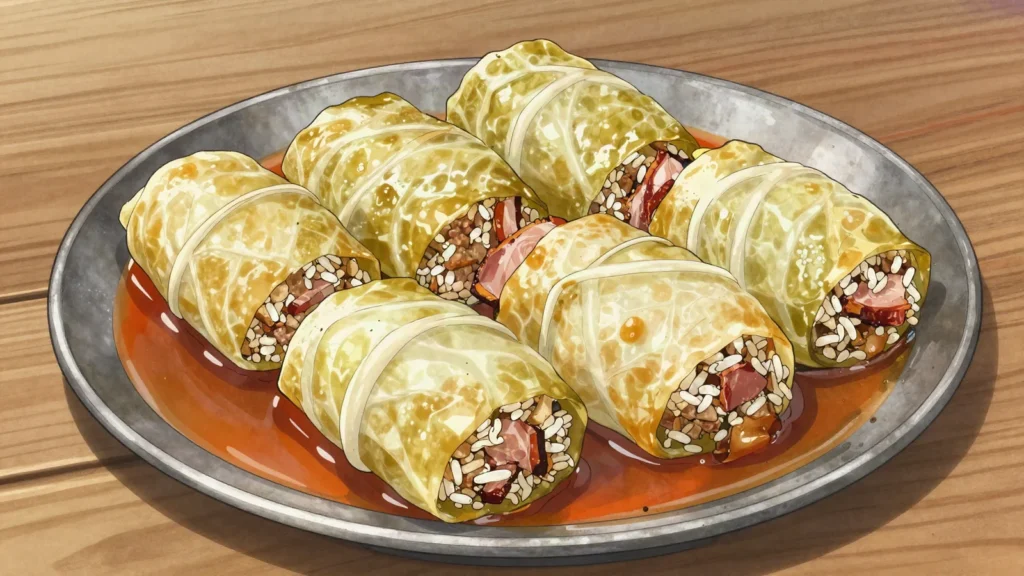
- Put a heaped tablespoon of filling on each leaf near the stem end, fold the sides in, and roll into a tight cylinder, tucking the ends in with a finger so nothing escapes. Leave a little slack: the rice swells to roughly triple.
- Line the base of a wide heavy pot with a layer of shredded sour cabbage and a few pieces of the smoked meat.
- Pack the rolls in tightly, seam side down, in concentric circles, tucking pieces of smoked rib and hock between them. Build in two layers if needed. Tight packing stops them unravelling.
- Cover with the remaining shredded cabbage, add the bay and peppercorns, and pour in enough water to just cover. Set a heatproof plate on top to weigh everything down.
- Bring to a bare simmer, then cook on the lowest possible heat, covered, for 2 hours 30 minutes. It must never boil hard or the rolls burst. Alternatively cook at 160°C (325°F) in the oven, which is gentler and what many households prefer.
- Make the zaprška: melt the lard, stir in the flour and cook 3–4 minutes to a pale hazelnut roux, take it off the heat, stir in the paprika so it does not burn, then loosen with a ladle of the hot cooking liquid.
- Pour the zaprška around the edges of the pot, shake the pot rather than stirring it, and cook uncovered a further 25–30 minutes until the liquid is glossy, rust-red and slightly thickened.
- Rest at least 30 minutes before serving, and expect it to be better the next day. Serve two or three rolls per person with the smoked meat, plenty of the sauce and boiled potatoes or bread.
Technique
- Sour cabbage is not the same as sauerkraut. Whole heads are salted and lacto-fermented in barrels over weeks, and only whole fermented leaves have the pliability and sour depth for sarma. Blanched fresh cabbage makes a different, sweeter dish.
- Serbian sarma is smoked, not tomato-based. The character comes from cured ribs, dried neck and smoked bacon cooked in the pot; there is no tomato sauce in the classic Serbian version, unlike some neighbouring traditions.
- Underfill the leaves. The single most common failure is overstuffing, which splits the rolls once the rice expands and turns the pot into a cabbage and mince soup.
- Winter food and Slava food. Sarma is made in enormous pots for family feasts and traditionally sits in a cold pantry for a day before it is eaten.
Substitutions
- No sour cabbage head? Buy a jar of whole sour cabbage leaves from a Balkan or Polish shop. Failing that, blanch fresh cabbage leaves 3 minutes and add 3 tbsp of sauerkraut brine and 1 tbsp vinegar to the pot to compensate.
- Smoked ribs can be replaced by smoked gammon hock or good smoked bacon in one piece.
- Lard is the traditional fat and gives the right flavour to the zaprška; sunflower oil works but tastes leaner.
Variations
- Vojvodina sarma, made with a splash of tomato and often with more rice.
- Sarma od zelja, wrapped in fermented chard or vine leaves for summer.
- A lean version made with minced turkey, common where pork is avoided.
History
Cabbage leaves wrapped around a filling of minced meat and rice, spread widely across the Balkans through Ottoman Turkish influence beginning around the 1500s, since sarma, meaning wrapped in Turkish, describes a technique closely related to Turkish dolma and shares that dish’s Ottoman-era path across the empire’s former territories. In Bosnia and Herzegovina specifically, sarma carries strong ties to Eid and other major religious and family celebrations, traditionally prepared in large batches for gatherings rather than as routine daily cooking, reflecting both the dish’s labor-intensive rolling process and its significance as a hospitality food. Bosnian sarma is generally distinguished from some neighboring regional versions by its use of fermented, sour cabbage leaves specifically rather than fresh cabbage, adding a distinct tang to the dish.
Frequently asked questions
What is Sarma?
Sarma is a main from Bosnia and Herzegovina: sour cabbage rolls, fixture of holiday tables. Cabbage leaves wrapped around a filling of minced meat and rice, spread widely across the Balkans through Ottoman Turkish influence beginning around the 1500s, since sarma, meaning wrapped in Turkish, describes a technique closely related to Turkish dolma and shares that dish’s Ottoman-era path across the empire’s former territories. In Bosnia and Herzegovina specifically, sarma carries strong ties to Eid and other major religious and family celebrations, traditionally prepared in large batches for gatherings rather than as routine daily cooking, reflecting both the dish’s labor-intensive rolling process and its significance as a hospitality food. Bosnian sarma is generally distinguished from some neighboring regional versions by its use of fermented, sour cabbage leaves specifically rather than fresh cabbage, adding a distinct tang to the dish.
How long does Sarma take to make?
Sarma takes 50 min of preparation and 3 hr of cooking. The recipe makes 6 servings, about 18 rolls. It is rated medium to make.
What can I substitute in Sarma?
Yes, within limits. No sour cabbage head? Buy a jar of whole sour cabbage leaves from a Balkan or Polish shop. Failing that, blanch fresh cabbage leaves 3 minutes and add 3 tbsp of sauerkraut brine and 1 tbsp vinegar to the pot to compensate. Smoked ribs can be replaced by smoked gammon hock or good smoked bacon in one piece. Lard is the traditional fat and gives the right flavour to the zaprška; sunflower oil works but tastes leaner.
What is the most important thing to get right in Sarma?
Bring to a bare simmer, then cook on the lowest possible heat, covered, for 2 hours 30 minutes. It must never boil hard or the rolls burst. Alternatively cook at 160°C (325°F) in the oven, which is gentler and what many households prefer.