
Ingredients
Starches
- 500 grice, steamed
- 600 gcassava, boiled
- 6green plantains, boiled
- 600 gsweet potato, boiled
- 500 gpotatoes, boiled or fried
Beans
- 400 gdried red beans, soaked and cooked
- 1onion, chopped
- 2tomatoes, chopped
- 2 tbspoil
- salt
Stewed greens
- 600 gisombe, cassava leaves, or spinach
- 3 tbspgroundnut paste
- 1onion, chopped
- 2 tbspoil
Meat stew
- 800 gbeef or goat, in chunks
- 2onions, chopped
- 4tomatoes, chopped
- 2 tbsptomato paste
- 3garlic cloves, crushed
- 1stock cube
- salt and pepper
Extras
- 1avocado, sliced
- a tomato and onion salad
- akabanga chilli oil
Directions
- Peel the cassava thoroughly and remove the pink underskin. Cut it in half lengthways and pull out the woody central fibre. Cassava must be cooked through, since raw cassava contains cyanogenic compounds. Boil the pieces for about twenty-five minutes until a knife slides in easily. Drain them and keep them warm. Oil your hands before peeling, since the sap stains permanently.
- Cut the ends off and score the skin lengthways. Boil them in salted water for about twenty minutes. Soak the dried red beans overnight and drain them. Boil them hard for ten minutes, which deals with the lectins. Lower the heat and simmer them for about an hour until soft.
- Cook the onion and tomato in oil in a separate pan. Stir the cooked beans into that base with some of their liquid. Simmer them together for fifteen minutes and season them. The cassava leaves need much longer than most greens.
- Simmer the pounded leaves for at least forty-five minutes. Cook the onion in oil and add the boiled leaves. Loosen the groundnut paste with hot liquid before adding it.
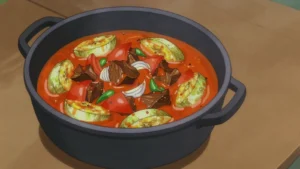
- Stir it in and simmer for another twenty minutes. Brown the meat in oil in batches over a high heat. Lift it out and cook the onions until soft. Add the garlic, tomato paste and chopped tomatoes. Return the meat, add water to cover and the stock cube.
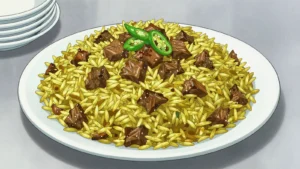
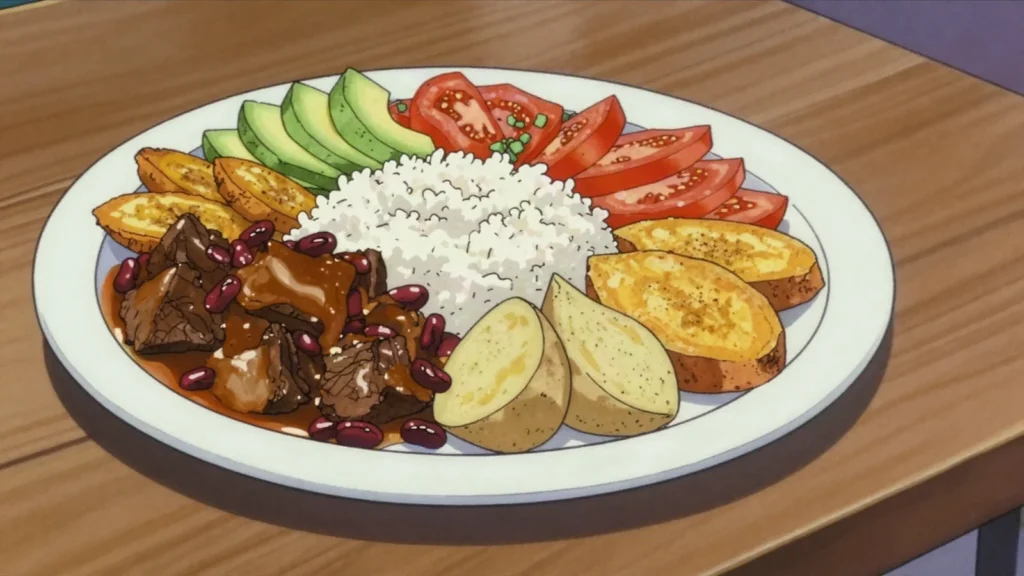
- Simmer it covered for about ninety minutes until tender. Reduce the sauce at the end so it clings to the meat. Set everything out in warmed dishes at once. Start with a base of rice across one side. Add cassava, plantain and sweet potato around the rim. Spoon the beans into the centre. Add the cooked greens beside them.
- Ladle the meat stew over the top if you are having it. Lay slices of avocado over one edge. Add a spoonful of fresh tomato and onion salad. Serve akabanga chilli oil at the table, one drop at a time. It is extremely hot and is used very sparingly.
Technique
- Melange is a plate built from many dishes at once, not a single recipe.
- Both cassava root and cassava leaf must be cooked thoroughly, since raw cassava is toxic.
- Akabanga chilli oil is extremely hot and is used a drop at a time.
Substitutions
- Spinach in place of cassava leaf, cooked far more briefly.
- Any combination of the starches, since the point is variety.
Variations
- Vegetarian, with the meat stew left off.
- With fish stew in place of meat.
- With matoke stew added as another element.
History
The standard Rwandan lunch, sold by weight in Kigali canteens where diners build one heaped plate.
Frequently asked questions
What is Melange?
Melange is a main from Rwanda: buffet plate piling rice, beans, cassava, plantain and stew together. The standard Rwandan lunch, sold by weight in Kigali canteens where diners build one heaped plate.
How long does Melange take to make?
Melange takes 1 hour of preparation and 2 hours of cooking. The recipe makes 1 plate per person. It is rated medium to make.
What can I substitute in Melange?
Yes, within limits. Spinach in place of cassava leaf, cooked far more briefly. Any combination of the starches, since the point is variety.
What is the most important thing to get right in Melange?
Peel the cassava thoroughly and remove the pink underskin. Cut it in half lengthways and pull out the woody central fibre. Cassava must be cooked through, since raw cassava contains cyanogenic compounds. Boil the pieces for about twenty-five minutes until a knife slides in easily. Drain them and keep them warm. Oil your hands before peeling, since the sap stains permanently.