
Ingredients
The dough
- 600 gplain flour
- 120 gsugar
- or to taste
- 7 gsachet fast-action dried yeast
- 1 teaspoonsalt
- half a teaspoon ground cardamom
- or grated nutmeg
- or a mixture of both
The liquid
- about 300 ml warm milk
- or coconut milk
- or warm water
- 1egg, beaten
- optional
- 50 gbutter, melted
- or 3 tablespoons oil
For frying
- 1 litrevegetable oil
- or enough for 6 cm depth
To serve
- hot, on their own
- sugar, to dust, optional
- sweet milky tea
- or coffee
Directions
- Use ground cardamom or grind the seeds fresh. Put the flour into a large bowl. Add the sugar and the yeast to one side of the bowl. Add the salt to the opposite side. Keep the salt and yeast apart until you begin mixing.
- Add the cardamom or nutmeg and stir the dry ingredients. Make a well in the centre of the flour. Warm the milk gently until it is just warm to the touch. It must never be hot, since heat kills yeast.
- Pour most of it into the well. Add the beaten egg and the melted butter if you use them. Mix with your hand until a rough dough forms. Add the remaining liquid only if it looks dry. Turn it out onto a lightly floured surface. Knead it steadily for about eight minutes. Turn it a quarter and repeat that movement. It should become smooth and elastic.
- Shape it into a ball and put it in an oiled bowl. Cover it with a damp cloth or cling film. Leave it somewhere warm for about two hours. It should roughly double in size. Roll each into a smooth round about the size of a golf ball.
- Roll it to about one centimetre thick. Cut it into triangles or squares with a knife. Lay them on a floured tray, well apart. Cover them and leave them twenty minutes. They should look visibly puffed.
- Use a deep heavy pan or a pot. Fill it no more than one third full of oil. Oil bubbles up sharply when dough goes in. Never leave hot oil unattended for a moment. Keep a well fitting lid within easy reach. If the oil catches fire, turn off the heat. Heat the oil to one hundred and seventy degrees. These are thick and they need time in the middle.
- Turn them as they cook so they colour evenly. Fry them for about five minutes in total. They should be deep golden all over. Break it open and look at the centre. It should be cooked through, light and bready. Lift them out with a slotted spoon.
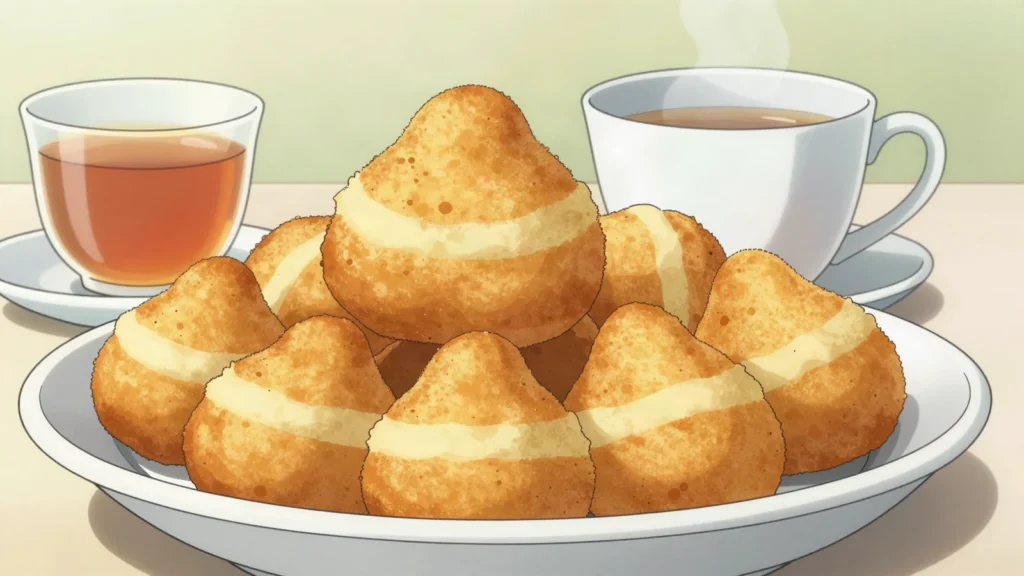
- Drain them on a rack over kitchen paper. A rack keeps them considerably less greasy than paper alone. Let the oil recover between batches. Serve them hot, within minutes of frying. Dust them with sugar while still hot if you like. Many households do not bother, since the dough is sweet.
Technique
- Fry at 170 degrees, cooler than for many fried foods. These are thick and need time in the middle; hotter oil browns the outside while the centre stays raw and doughy, which is the commonest failure with fried dough. Break the first one open and check before frying the rest.
- Deep-frying rules apply: fill the pan no more than a third, never leave it unattended, keep a lid within reach, and if the oil catches fire turn off the heat and smother it. Never throw water on burning oil.
- Give the shaped pieces a second rise of twenty minutes before frying. Skipping it makes them dense, and it costs nothing.
- Enriched dough rises slowly, because sugar and fat both slow the yeast. Give it the two hours rather than raising the temperature — overheated dough tastes strongly of raw yeast.
- This is a yeasted dough rather than a wet batter, which is what distinguishes amandazi from relatives like puff puff. It shapes by hand, gives a breadier and less airy result, and keeps a little better.
- Cardamom is characteristic of East African fried dough and arrived through the Indian Ocean spice trade, travelling inland with the language and the recipes. Grind the seeds fresh if you can, since it is considerably more fragrant than the pre-ground.
- Drain on a rack rather than paper alone. Sitting in absorbed oil on paper makes them greasy.
- The name is related to Swahili mandazi, with the prefix changing according to the Bantu language — the same pattern as vitumbua, vitumbuwa and zitumbuwa. Burundi is a long way from the coast, and the word arriving there says something real about the reach of Swahili trade.
- Coastal mandazi are usually rolled flat and cut into triangles, often with coconut milk and cardamom. Inland versions are frequently rounds and simpler. Both are made and neither is the correct version.
Substitutions
- Coconut milk replaces dairy milk and points the dough towards its coastal relatives.
- Water replaces milk entirely for a plainer and lighter version.
- The egg and butter both enrich the dough and both can be left out.
- Nutmeg replaces cardamom, or both are used together.
- Rolled and cut triangles replace hand-rolled balls, giving the coastal mandazi shape.
- Any neutral high-smoke-point oil suits the frying.
Variations
- Swahili mandazi, cut into triangles and made with coconut milk, are the coastal relatives that gave the name.
- Vitumbuwa in Zambia and zitumbuwa in Malawi are the southern relatives, the latter made with banana.
- Puff puff and bofrot in West Africa are made from a wet batter rather than a kneaded dough.
- A version with mashed banana worked into the dough is made in some households.
- Some cooks add grated coconut, which is more common nearer the coast.
- A less sweet version is eaten with savoury stews rather than with tea.
History
The Swahili coast mandazi carried inland along trade and mission routes, fried and sold at Rwandan markets with tea.
Frequently asked questions
What is Amandazi?
Amandazi is a snack from Burundi: sweet fried dough balls taken with tea. The Swahili coast mandazi carried inland along trade and mission routes, fried and sold at Rwandan markets with tea.
How long does Amandazi take to make?
Amandazi takes 20 minutes plus 2 hours rising of preparation and 25 minutes of cooking. The recipe makes makes about 24. It is rated easy to make.
What can I substitute in Amandazi?
Yes, within limits. Coconut milk replaces dairy milk and points the dough towards its coastal relatives. Water replaces milk entirely for a plainer and lighter version. The egg and butter both enrich the dough and both can be left out. Nutmeg replaces cardamom, or both are used together. Rolled and cut triangles replace hand-rolled balls, giving the coastal mandazi shape. Any neutral high-smoke-point oil suits the frying.
What is the most important thing to get right in Amandazi?
Add the cardamom or nutmeg and stir the dry ingredients. Make a well in the centre of the flour. Warm the milk gently until it is just warm to the touch. It must never be hot, since heat kills yeast.