
Ingredients
Beef
- 1 kgbeef, in small cubes of 2 cm, with some fat
Marinade
- 200 gthick yoghurt
- 2 tbspginger paste
- 2 tbspgarlic paste
- 1 tbspground coriander
- 1 tspturmeric
- 1 tbspchilli powder
- 1 tspblack pepper
- salt
Rice
- 700 gchinigura or kalijira rice, the small aromatic Bangladeshi grain
- or basmati
The pot
- 150 mlmustard oil
- 4onions, thinly sliced
- 6green chillies
- 1 tbsptehari masala: cinnamon, cardamom, clove, mace, ground
- 2bay leaves
- 1 tspsugar
To finish
- a pinch of saffron or kewra water
- fried onions, beresta
- 2 tbspghee
To serve
- borhani, the spiced yoghurt drink
- salad
- achar
Directions
- Heat the mustard oil until it just begins to smoke, then take it off and let it cool slightly. Mustard oil must be heated to smoking first to drive off its raw sharpness, which is standard practice across Bengal.
- Cut it into 2 cm cubes, keeping some fat on, since lean beef dries out. Marinate it in the yoghurt, ginger, garlic and ground spices for at least an hour. Now fry the sliced onions in the mustard oil until deep golden and crisp.
- Take them properly dark rather than merely golden, since that browning is the base of the colour and much of the sweetness. Lift out about a third for the top and leave the rest in the pot. Fry it hard, stirring, for 10 minutes until the yoghurt has dried onto the meat and the oil separates.
- Cook it until the oil visibly splits out from the masala. Add the whole spices, bay and sugar. Add a little water, cover, and simmer for 45 minutes to an hour until the beef is tender. Cook the beef until it is genuinely tender before the rice goes anywhere near it, since the rice needs only twenty minutes and cannot wait for the meat. Meanwhile wash the rice gently and soak it for 30 minutes.
- Drain the soaked rice thoroughly. Bring it to a rolling boil and taste the liquid. Season the liquid until it tastes slightly too salty, because the rice will absorb all of it and dilute the seasoning.
- Boil uncovered until the liquid has dropped to the level of the rice, about 5 minutes. Scatter the reserved fried onions, the ghee and the kewra or saffron over the top. Cover the pot tightly, sealing the lid with foil or a strip of dough if it is loose.
- Put it on the lowest possible heat, over a tawa or heat diffuser, for 20 to 25 minutes. A diffuser between the pot and the flame is what stops the base burning during the dum, and Dhaka shops use a thick iron plate.
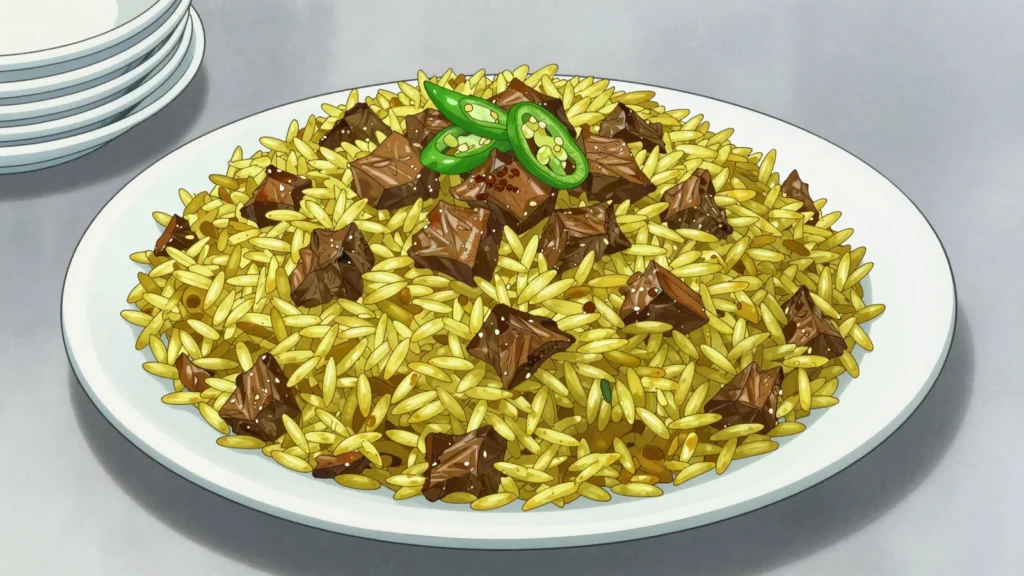
- Rest it 10 minutes off the heat. Lift and fold rather than stirring, since these small grains break into mush if handled roughly. Serve it hot with borhani, the spiced yoghurt drink, which is the fixed partner in Dhaka. Serve salad, achar and a boiled egg alongside.
Technique
- Chinigura and kalijira are the small aromatic Bangladeshi rices and are worth seeking out.
- Borhani, the spiced yoghurt drink, is the standard accompaniment.
- Beef is standard in Dhaka tehari and mutton versions exist elsewhere.
Substitutions
- Basmati in place of chinigura, adjusting the liquid.
- Mutton or goat in place of beef, cooked longer.
Variations
- Made with mutton.
- Chicken tehari, which cooks much faster.
- With potatoes added, which some households include.
History
Old Dhaka’s mustard-oil beef rice, cooked in large degs; unlike biryani the meat goes in before the rice, and beef is standard.
Frequently asked questions
What is Tehari?
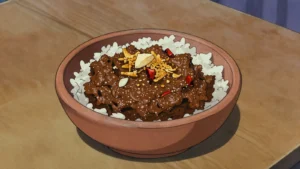
Tehari is a main from Bangladesh: old Dhaka spiced rice with small beef chunks and mustard oil. Old Dhaka’s mustard-oil beef rice, cooked in large degs; unlike biryani the meat goes in before the rice, and beef is standard.
How long does Tehari take to make?
Tehari takes 40 min plus 1 hr marinating of preparation and 1 hr 30 min of cooking. The recipe makes 8 servings. It is rated medium to make.
What can I substitute in Tehari?
Yes, within limits. Basmati in place of chinigura, adjusting the liquid. Mutton or goat in place of beef, cooked longer.
What is the most important thing to get right in Tehari?
Heat the mustard oil until it just begins to smoke, then take it off and let it cool slightly. Mustard oil must be heated to smoking first to drive off its raw sharpness, which is standard practice across Bengal.