
Ingredients
The caterpillars
- 300 gdried caterpillars
- mopane or sapelli
- warm water, for soaking
The pan
- 3onions, sliced
- 5garlic cloves, crushed
- 3hot chillies, chopped
- 2tomatoes, chopped
- 4 tablespoonspalm oil
- or groundnut oil
- 1 teaspoonground black pepper
- salt
Sometimes added
- 1stock cube
- a little tomato purée
- a handful of parsley
To serve
- with rice
- or fufu or chikwangue
- with greens
- or alone as a snack
Directions
- Put the dried caterpillars in a bowl. Cover them over with warm water. Let them soak for about thirty minutes. Thirty minutes is usually enough. Rub them between your hands in the water. Pour all of the dirty water off. Cover them with fresh water and repeat. Keep going until the water runs clear. That usually takes three or four changes.
- Drain them thoroughly in a colander. Squeeze them gently to remove water. Wet caterpillars steam rather than frying. Put them in a pot of fresh water. Add a little salt to the water. Simmer them for about fifteen minutes.
- Drain them and discard the water. Pat them dry with a clean cloth. Heat the oil in a wide heavy pan. Heat it gently rather than fiercely.
- Add the sliced onions to the pan. Cook them for a good eight minutes. Let them soften and turn golden. Add the crushed garlic to them. Add the chopped chillies as well. Cook them for two more full minutes. Add the chopped tomatoes to the pan.
- Cook them down for about six minutes. The tomato should soften and break down. Cook it until it goes quite jammy. Add the drained caterpillars to the pan.
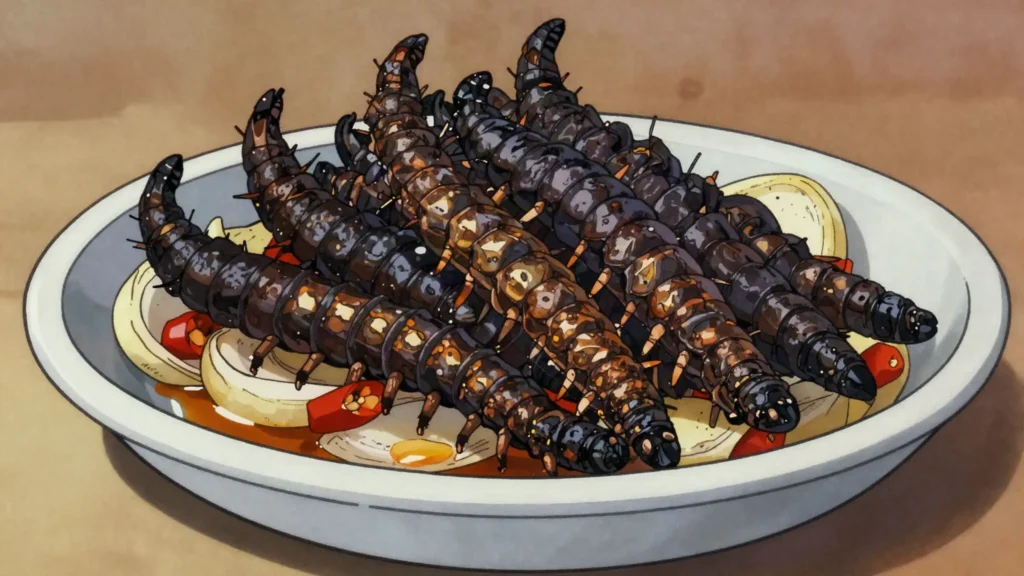
- Turn them through the cooked base. Season them with salt and black pepper. Let them fry for about ten minutes. Turn them regularly as they cook. Let them catch the pan a little. Do not stir them constantly at all. Taste it and adjust the salt as needed.
- Add more chilli if you want more heat. This dish is usually made genuinely hot. Adjust it to your own taste though. Serving it is always done hot. Spoon it out into a serving bowl. Serve plain rice or fufu alongside. Add cooked greens to the plate. It keeps three days refrigerated.
Technique
- Insects contain tropomyosin, a protein that also occurs in shellfish and dust mites, and people allergic to shellfish may cross-react to it; the cross-reactivity is documented. Say clearly what is being served rather than assuming people know what mbinzo are, and anyone with a shellfish allergy should avoid them.
- Dried caterpillars are traded loose in sacks and pick up dust and grit, so soak them thirty minutes in warm water and then wash them through three or four changes, rubbing them between your hands, until the water runs clear. Squeeze them gently before frying, since wet ones steam rather than browning.
- These are a delicacy rather than a food of last resort — bought by choice, sometimes more expensive than meat, and genuinely high in protein and iron. The atlas records them as the food they are.
Substitutions
- Groundnut oil stands in for red palm oil, though palm gives the colour and earthy flavour.
- Some cooks add a little water and stew them soft; others fry them dry and crisp. Both are made.
Variations
- Mopane worms are Gonimbrasia belina, feeding on the mopane tree and eaten across southern Africa.
- Sapelli caterpillars come from the forest provinces and travel to Kinshasa by river and road.
- Drying is what makes a short gathering season available all year.
History
Dried caterpillars, mostly from mopane and sapelli trees, are eaten in quantity in Kinshasa and traded from forest provinces in sacks.
Frequently asked questions
What is Mbinzo?
Mbinzo is a snack from DR Congo: dried caterpillars fried with chili and onion, protein-rich delicacy. Dried caterpillars, mostly from mopane and sapelli trees, are eaten in quantity in Kinshasa and traded from forest provinces in sacks.
How long does Mbinzo take to make?
Mbinzo takes 20 minutes plus soaking of preparation and 30 minutes of cooking. The recipe makes serves 6. It is rated easy to make.
What can I substitute in Mbinzo?
Yes, within limits. Groundnut oil stands in for red palm oil, though palm gives the colour and earthy flavour. Some cooks add a little water and stew them soft; others fry them dry and crisp. Both are made.
What is the most important thing to get right in Mbinzo?
Drain them thoroughly in a colander. Squeeze them gently to remove water. Wet caterpillars steam rather than frying. Put them in a pot of fresh water. Add a little salt to the water. Simmer them for about fifteen minutes.