
Ingredients
The greens
- 1 kgsweet potato leaves
- young and tender
- with their soft stems
The pot
- 2onions, chopped
- 4garlic cloves, crushed
- 5 tablespoonsred palm oil
- 2tomatoes, chopped
- 1hot chilli, chopped, optional
- salt and black pepper
- about 200 ml water
Sometimes added
- 4 tablespoonsgroundnut paste
- a piece of smoked fish
- a little dried shrimp
To serve
- with fufu or chikwangue
- rice
- grilled fish
Directions
- Pick the leaves from the tough stems. Keep the soft young stems with them. Thick woody stems stay tough however long they cook. Wash the leaves in several changes of water. Fill a bowl and lift the leaves out. Repeat it until no grit settles.
- Stack the leaves and roll them up. Slice them across into ribbons. Cut them all up into fine ribbons. Heat the palm oil in a wide heavy pot. Heat it gently rather than fiercely. Add the chopped onions to the pot. Cook them for a good eight minutes.
- Let them soften without browning much. Add the crushed garlic to them. Cook it for two more full minutes. Add the chopped tomatoes to the pot. Add the chopped chilli if you want heat.
- Cook them down for about six minutes. The tomato should soften and break down. Cook it until it goes quite jammy. Add the chopped leaves to the pot. Add them in batches if the pot is full. Raw leaves take up an enormous amount of space. Add a handful, let it wilt, add more. Adding the liquid is straightforward enough.
- Add a little water to the pot. Season it with salt and black pepper. Add only a little to start with. Add more later if it goes dry. Cover the pot and lower the heat. Let it cook for about thirty minutes. Stir it through every now and then. The leaves need real cooking to soften.
- Cook them on if they still resist. They should collapse into a soft mass. Stir groundnut paste into a little hot water. Make it into a smooth loose paste. Paste added dry sits in lumps.
- Let it cook for ten more minutes. Add water if it goes too thick. Flake smoked fish into the pot. Let it cook through with the greens. Taste it and adjust the salt as needed. Add more chilli if you want more heat. Taste it before adding any more. Serving it is always done hot. Spoon it out into a serving bowl. Serve fufu or chikwangue alongside. It keeps three days refrigerated.
Technique
- Sweet potato is grown for the tuber, but the leaves are picked repeatedly through the season while the tuber is harvested only once at the end, so the greens give food long before it — a genuine second harvest from one plant. Use the young leaves and soft growing tips; bend a stem to test it, since it should snap rather than bend.
- Cassava leaves need long cooking because they contain cyanogenic compounds, but sweet potato leaves have no such problem and are simply a leafy green cooked until tender. It is worth being clear about which leaf is which, and the atlas treats cassava leaf separately for that reason.
- Palm oil burns at a lower temperature than many oils, so heat it gently: overheated palm oil loses its flavour and turns from orange to dull brown. It is used generously here as a flavour rather than just a cooking fat.
Substitutions
- Groundnut paste loosened in hot water first thickens and enriches the stew, though it is optional; say clearly if it has gone in, since peanut allergy can be severe.
- Smoked fish or dried shrimp adds a deep savoury note and brings its own salt.
Variations
- The leaves are often pounded in a mortar rather than chopped, which gives a softer denser result.
- Cassava, taro and pumpkin leaves are treated in broadly the same way across Central Africa.
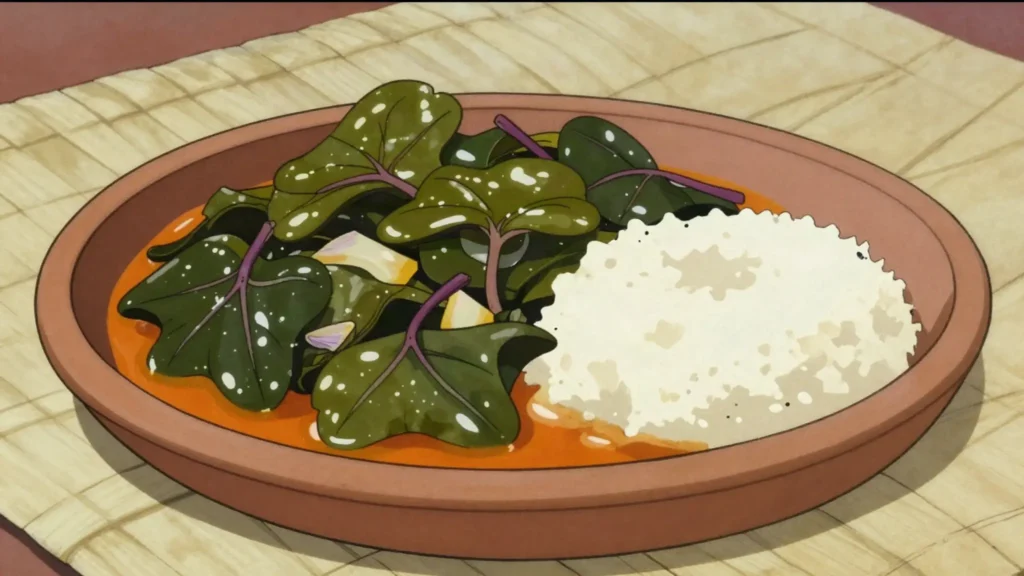
- It is served with fufu or chikwangue, or with rice, alongside grilled fish.
History
Sweet potato arrived from the Americas; Congolese cooks eat the leaves as a green, a second harvest from a crop grown for its tuber.
Frequently asked questions
What is Matembele?
Matembele is a salad & side from DR Congo: sweet potato leaves stewed with onion and palm oil. Sweet potato arrived from the Americas; Congolese cooks eat the leaves as a green, a second harvest from a crop grown for its tuber.
How long does Matembele take to make?
Matembele takes 20 minutes of preparation and 40 minutes of cooking. The recipe makes serves 6. It is rated easy to make.
What can I substitute in Matembele?
Yes, within limits. Groundnut paste loosened in hot water first thickens and enriches the stew, though it is optional; say clearly if it has gone in, since peanut allergy can be severe. Smoked fish or dried shrimp adds a deep savoury note and brings its own salt.
What is the most important thing to get right in Matembele?
Stack the leaves and roll them up. Slice them across into ribbons. Cut them all up into fine ribbons. Heat the palm oil in a wide heavy pot. Heat it gently rather than fiercely. Add the chopped onions to the pot. Cook them for a good eight minutes.