
Ingredients
Pastry
- 500 gstrong white flour
- 125 glard or shortening
- 125 gcold butter
- 1 tspsalt
- 175 mlcold water
Filling
- 400 gbeef skirt, in 1 cm dice
- 400 gpotatoes, thinly sliced
- 200 gswede, diced small
- 1large onion, chopped
- 25 gbutter
- plenty of salt and coarse black pepper
To glaze
- 1egg, beaten
Directions
- Rub the fats into the flour and salt, add the cold water, and bring it together into a firm dough. Knead briefly, then chill for at least an hour.
- Use strong flour and a firm short pastry rather than puff. This pastry had to survive being carried down a mine in a pocket, which is exactly what it was built for.
- Divide into six and roll each piece into a circle about 20 cm across.
- Use beef skirt if you can get it. It is the traditional cut and it stays tender through a long bake in a way that lean steak simply does not.
- Layer the filling on one half of each circle: potato first, then swede, then onion, then the beef on top, seasoning heavily at every layer.
- Everything goes in raw. The filling cooks inside the pastry in its own steam, which is the entire construction of a pasty, and precooked filling gives you a dry one.
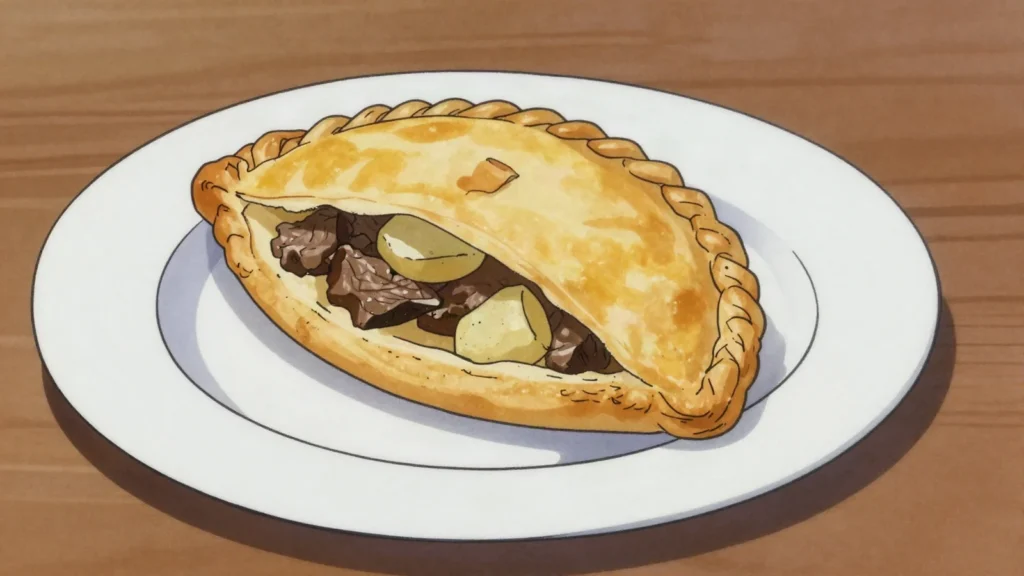
- Dot with butter, fold the pastry over, and crimp the edge into a rope by folding and pressing along its length with thumb and forefinger.
- The crimp runs along the side, not across the top. A pasty crimped over the top is a different object, and the PGI specification granted in 2011 requires a side crimp and manufacture in Cornwall.
- Glaze with beaten egg and cut a small slit in the top for steam.
- Bake at 200°C (400°F) for 15 minutes, then lower to 165°C (330°F) and bake for a further 45 minutes.
- Cool for at least 10 minutes before eating. The inside is molten and will burn you.
Technique
- Season the raw filling far more heavily than feels right. It is a large volume of potato and swede and it will taste of nothing otherwise.
- Swede rather than turnip, whatever it is called locally. The two words are used interchangeably in parts of Britain and the vegetable meant here is the yellow one.
- The crimp was traditionally the handle: miners held it with dirty hands and threw it away.
- The PGI covers where it is made rather than who eats it, so a pasty made anywhere else is simply not allowed to use the name commercially.
Substitutions
- Chuck or braising steak in place of skirt, diced small.
- All butter pastry, which is richer and slightly less sturdy.
Variations
- With a small amount of the filling replaced by a sweet corner of apple, an old miner’s two-course pasty.
- Vegetarian, with more swede and potato and a handful of cheese.
- Made small, as party pasties.
History
A pastry case filled with beef, potato, swede and onion, crimped along one thick edge into a rope-like seal, developed specifically as a portable, self-contained meal for Cornwall’s tin and copper miners from at least the 1700s onward, since the pastry’s thick crimped edge functioned as a handle miners could hold and discard with dirty, sometimes arsenic-contaminated hands, eating only the cleaner filled portion. Some accounts describe miners marking one end of the pasty with their initials in pastry so a half-eaten one could be safely set aside and resumed later underground. The Cornish pasty gained European Union protected geographical indication status in 2011, legally restricting the name to pasties made in Cornwall using the traditional filling and distinctive crimped, D-shaped form.
Frequently asked questions
What is Cornish pasty?
Cornish pasty is a snack from United Kingdom: folded shortcrust pastry of beef, potato, swede, onion. A pastry case filled with beef, potato, swede and onion, crimped along one thick edge into a rope-like seal, developed specifically as a portable, self-contained meal for Cornwall’s tin and copper miners from at least the 1700s onward, since the pastry’s thick crimped edge functioned as a handle miners could hold and discard with dirty, sometimes arsenic-contaminated hands, eating only the cleaner filled portion. Some accounts describe miners marking one end of the pasty with their initials in pastry so a half-eaten one could be safely set aside and resumed later underground. The Cornish pasty gained European Union protected geographical indication status in 2011, legally restricting the name to pasties made in Cornwall using the traditional filling and distinctive crimped, D-shaped form.
How long does Cornish pasty take to make?
Cornish pasty takes 45 min plus 1 hr chilling of preparation and 1 hr of cooking. The recipe makes 6 pasties. It is rated medium to make.
What can I substitute in Cornish pasty?
Yes, within limits. Chuck or braising steak in place of skirt, diced small. All butter pastry, which is richer and slightly less sturdy.
What is the most important thing to get right in Cornish pasty?
Use strong flour and a firm short pastry rather than puff. This pastry had to survive being carried down a mine in a pocket, which is exactly what it was built for.