
Ingredients
Meat
- 800 gstewing beef
- in large pieces
- or 1 kg crab, cleaned
- or both together
- juice of 2 limes
- 2 teaspoonssalt
Vegetables
- 3aubergines
- berejèn, chopped
- 3chayotes
- militon, peeled and chopped
- 1small cabbage, shredded
- 3carrots, chopped
- 300 gspinach or watercress
- 2turnips, chopped
- 200 ggreen beans
Epis and the pot
- 4 tablespoonsepis
- Haitian green seasoning
- 2onions, chopped
- 6garlic cloves, crushed
- 4tomatoes, chopped
- 3 tablespoonstomato purée
- 5 tablespoonsoil
- 1scotch bonnet, whole
- 2stock cubes
- 3 sprigsthyme
- juice of 1 lime
- salt and black pepper
To serve
- white rice
- or diri kole
- pikliz
- fried plantain
Directions
- Peel it under running water if it bothers you. It needs far less cooking than beef. Cut the beef into large pieces. Rub it with lime juice and salt. Let it sit for fifteen minutes. Rinse it thoroughly in cold water. Pat it all completely dry after.
- Rub epis over the beef pieces. Cover it over and refrigerate it. Give it at least one full hour. Heat the oil in a large heavy pot. Add the beef to the pot in batches.
- Brown it well on all of its sides. Do not crowd the pot at any point. Set each batch aside as it browns. Add the chopped onions to the pot. Cook them for a good ten minutes. Add the crushed garlic to them. Cook it for two more full minutes.
- Add the chopped tomatoes to the pot. Add the tomato purée with them. Cook them down for about ten minutes. The tomato must cook right down. Oil should separate at the edges. Raw tomato taste should be entirely gone. Put the browned beef back in the pot. Add the thyme sprigs to it as well.
- Add the whole scotch bonnet to it. Crumble the stock cubes into it. Add water to just cover the meat. Bring it up to a gentle simmer. Cover it and lower the heat right down. Give it at least ninety minutes. Cook the meat first and add them after. Peel and chop all the vegetables. Keep them roughly the same size. That keeps them all cooking evenly.
- Add the carrots and the turnips. Add the chopped chayote to the pot. Add more water if it looks dry. Cover the pot again and cook it on. Give them about fifteen minutes. Add the aubergine and the cabbage. Add the green beans with them.
- Cover it and cook it on again. Give them about twenty minutes. Add the spinach or watercress. Let it all wilt down completely. Give it about five full minutes. Cook them on if any still resist. Lift out the beef pieces first.
- Set them all aside on a warm plate. Mash the vegetables in the pot. Use a potato masher or a wooden pestle. Work them until they are a thick mash. It should be thick and almost smooth.
- Put the beef pieces back in the pot. Stir them through the vegetable mash. Adding crab is done here if using it. Add cleaned crab pieces to the pot. Let them simmer for fifteen minutes. Crab needs only a short cooking.
- Add it near the end rather than early. Take the lid right off the pot. Let it simmer away there uncovered. Give it about twenty full minutes. Stir it regularly so it does not catch. Legim must be thick rather than wet. Reduce it further if it is loose. A thick mash catches on the base easily.
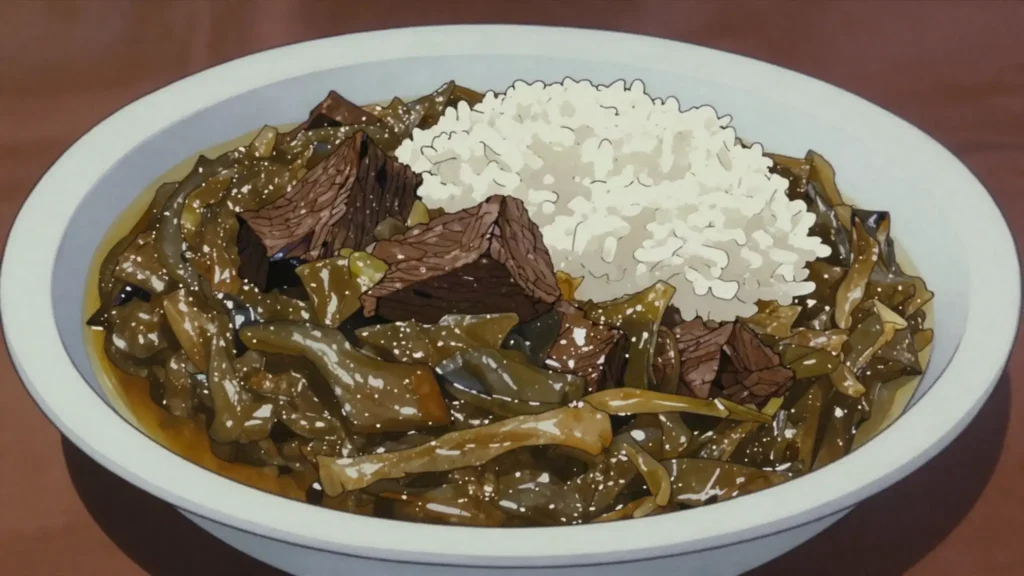
- Stir right into the corners each time. Lower the heat if it starts to stick. Taste it and adjust the salt as needed. Add black pepper to taste as well. Squeeze in lime juice to lift it. Serving it is always done piping hot. Spoon it out over plain white rice. Put pikliz out on the table too. Serve fried plantain alongside. It keeps four days refrigerated.
Technique
- The vegetables are cooked until they collapse and then mashed or pounded into a thick almost smooth mass, which is what defines legim; a vegetable stew left in pieces is a different dish, and legim should hold its shape on a spoon rather than being soupy.
- The beef is lifted out before mashing and returned afterwards, since the meat stays in recognisable pieces and only the vegetables are mashed; traditionally it is pounded with a pestle for a coarser texture, where a blender gives a smooth uniform one.
- Aubergine collapses completely and gives the body of the dish, disappearing into the mash entirely, which makes it the most important vegetable here; the firmer vegetables go in first and the greens last so they all finish together.
Substitutions
- Crab in place of beef is the other traditional version, added near the end since it needs little cooking.
- Epis, the Haitian green seasoning, is made in quantity and kept for almost every savoury dish.
Variations
- Some households use beef and crab together in the same pot.
- The exact mixture of vegetables varies considerably by household.
- It is pounded with a pestle, mashed by hand, or blended, each giving a different texture.
History
A thick mash of aubergine, chayote and other vegetables stewed with meat, eaten over rice as a Sunday dish.
Frequently asked questions
What is Legim?
Legim is a main from Haiti: thick braised vegetable stew with beef or crab. A thick mash of aubergine, chayote and other vegetables stewed with meat, eaten over rice as a Sunday dish.
How long does Legim take to make?
Legim takes 45 minutes of preparation and 2 hours of cooking. The recipe makes serves 8. It is rated medium to make.
What can I substitute in Legim?
Yes, within limits. Crab in place of beef is the other traditional version, added near the end since it needs little cooking. Epis, the Haitian green seasoning, is made in quantity and kept for almost every savoury dish.
What is the most important thing to get right in Legim?
Brown it well on all of its sides. Do not crowd the pot at any point. Set each batch aside as it browns. Add the chopped onions to the pot. Cook them for a good ten minutes. Add the crushed garlic to them. Cook it for two more full minutes.