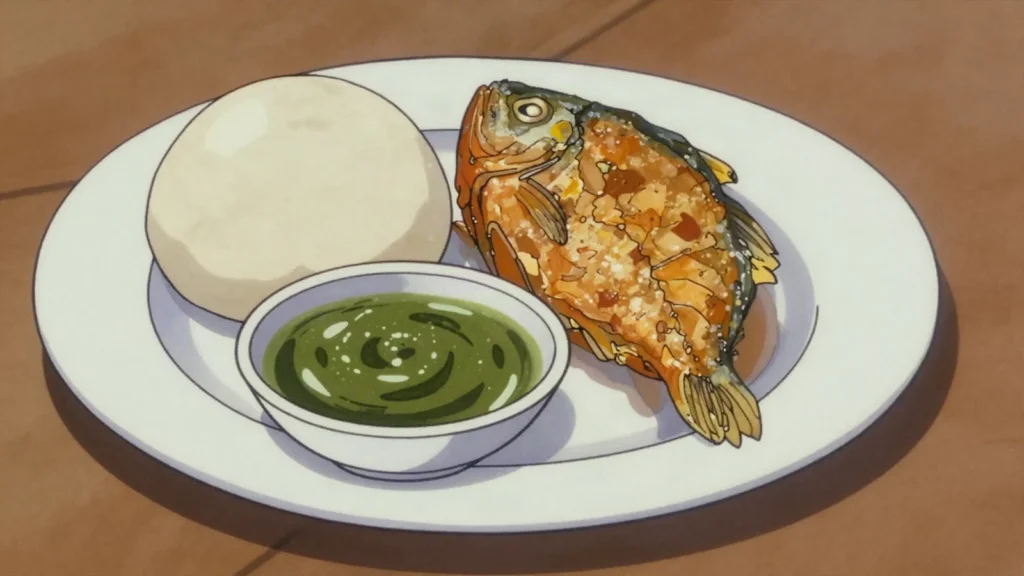

Ingredients
Dough
- 500 gfermented maize dough
- or 400 g maize flour soured for 2 days
- 200 gcassava dough, optional
To cook
- 1.2 litreswater
- 1/2 teaspoonsalt
To serve
- ademe dessi, jute leaf sauce
- or any Togolese sauce
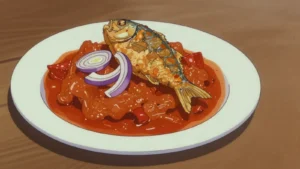
- grilled or fried fish
Equipment
- a heavy pot
- a strong wooden spoon or paddle
Directions
- Mix maize flour with warm water into a thick paste. Cover it with a cloth and leave it in a warm place. Stir it once a day with a clean spoon. It should bubble and smell pleasantly sour. Discard it if it grows coloured mould.
- Discard it if it smells rotten rather than sour. The usual ratio is about three parts maize to one of cassava. Put the dough into a large bowl. Add about half the water gradually. Work it with your hand until it is smooth. There must be no lumps at all.
- Add the salt into the mixture. Pour the rest of the water into a heavy pot. Bring the water up to the boil. Pour the slurry into the boiling water.
- Stir it hard immediately with a wooden spoon. It will start to thicken within a minute. Keep stirring hard as it thickens. Press the dough against the side of the pot. Fold it back over onto itself.
- Keep pressing and folding it over. It also gives the smooth texture. Add a splash of hot water if it becomes unworkable. Judging when it is done takes practice.
- Taste a little to check for raw flour. Shaping it is done immediately. Scoop hot akoume into the bowl. Swirl it around to make a smooth ball. Turn it out onto a serving plate. The wet bowl stops it sticking.
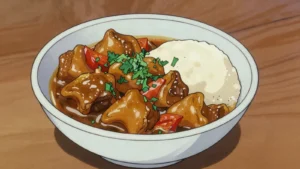
- Make one ball for each person. That keeps them from drying out. Set one ball onto each warm plate. Ladle sauce beside it, not over it. Eating it is done with the right hand. Pinch off a piece and roll it in your palm. Press a hollow into it with your thumb. Use that hollow to scoop up the sauce.
Technique
- Akoume, banku, kenkey and similar fermented maize staples are eaten across the coast of Ghana, Togo and Benin.
- They differ in whether cassava is added and in how they are cooked and wrapped.
Substitutions
- Ready-made fermented corn dough from an African shop is by far the easiest starting point.
- Maize flour soured at home for two days works and gives a milder tang.
Variations
- Banku in Ghana is essentially the same dough with cassava mixed in.
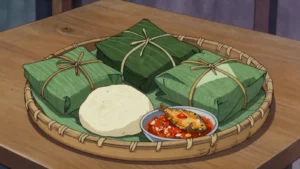
- Kenkey is fermented maize dough wrapped in leaves and boiled.
- A firmer version made without cassava is preferred in some households.
History
The Ewe name for the fermented maize staple Ghanaians call banku; maize spread along this coast after Portuguese contact.
Frequently asked questions
What is Akoumé?
Akoumé is a main from Togo: fermented corn dough swallow, the daily staple. The Ewe name for the fermented maize staple Ghanaians call banku; maize spread along this coast after Portuguese contact.
How long does Akoumé take to make?
Akoumé takes 10 minutes of preparation and 30 minutes of cooking. The recipe makes serves 6. It is rated medium to make.
What can I substitute in Akoumé?
Yes, within limits. Ready-made fermented corn dough from an African shop is by far the easiest starting point. Maize flour soured at home for two days works and gives a milder tang.
What is the most important thing to get right in Akoumé?
Discard it if it smells rotten rather than sour. The usual ratio is about three parts maize to one of cassava. Put the dough into a large bowl. Add about half the water gradually. Work it with your hand until it is smooth. There must be no lumps at all.