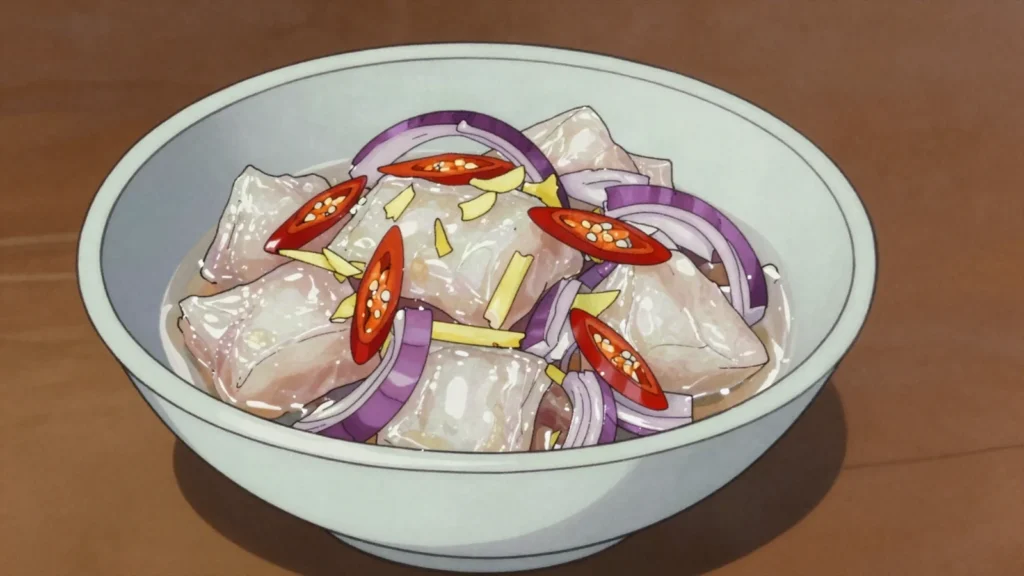

Ingredients
Fish
- 500 gvery fresh firm sea fish, in 1.5 cm cubes
First wash
- 100 mlcane vinegar, for rinsing
- 1 tspsalt
Cure
- 200 mlcane vinegar
- juice of 6 calamansi
- 1thumb ginger, julienned
- 1red onion, sliced
- 3siling labuyo, sliced
- 1 tspsalt
- 1 tspblack pepper
Optional
- 100 mlcoconut milk
- 1cucumber, diced
- 1 tbsptabon-tabon, grated
To serve
- beer
Directions
- Use sea fish caught that day, firm-fleshed and smelling of nothing but the sea; tuna, tanigue, mackerel or snapper. The vinegar firms the surface and changes the texture but it does not make unsafe fish safe, and freshwater fish should never be used because of parasites.
- Cut the fish into even cubes of about 1.5 cm.
- Rinse the cubes in a little vinegar with salt, work them gently, then drain that vinegar away and discard it. That first rinse draws out blood and the fishy liquid, and throwing it away is what keeps the final dish clean-tasting rather than muddy.
- Put the drained fish in a clean bowl with the fresh vinegar, calamansi, ginger, onion, chilli, salt and pepper.
- Toss gently and leave it 10 to 20 minutes. Twenty minutes at most. Stir in the coconut milk in the last minute if you want the creamy southern version.
- Taste and adjust the sourness, salt and heat, all of which should be strong.
- Serve immediately in a bowl with the curing liquid, which is drunk at the end.
Technique
- Ceviche cures in citrus and kinilaw in vinegar, and the two are separate traditions rather than versions of one another.
- Tabon-tabon, a native fruit grated into the cure, is traditional in Mindanao and is held to cut the fishiness.
- The curing liquid left in the bowl is drunk as a chaser and is called the sinuglaw’s kick in some regions.
Substitutions
- Coconut vinegar, or rice vinegar diluted slightly.
- Lime or lemon in place of calamansi.
Variations
- Sinuglaw, mixed with grilled pork belly.
- With coconut milk, as made in Mindanao.
- Made with shellfish, sea urchin or seaweed instead of fish.
History
Fish cured in vinegar and calamansi with ginger and chilli rather than cooked, a technique documented long before Spanish arrival.
Frequently asked questions
What is Kinilaw?
Kinilaw is a salad & side from Philippines: raw fish cured in vinegar, calamansi, ginger and coconut. Fish cured in vinegar and calamansi with ginger and chilli rather than cooked, a technique documented long before Spanish arrival.
How long does Kinilaw take to make?
Kinilaw takes 25 min of preparation and no cooking at all. The recipe makes 4 servings. It is rated easy to make.
What can I substitute in Kinilaw?
Yes, within limits. Coconut vinegar, or rice vinegar diluted slightly. Lime or lemon in place of calamansi.
What is the most important thing to get right in Kinilaw?
Use sea fish caught that day, firm-fleshed and smelling of nothing but the sea; tuna, tanigue, mackerel or snapper. The vinegar firms the surface and changes the texture but it does not make unsafe fish safe, and freshwater fish should never be used because of parasites.