A knobbly, aromatic, intensely sour citrus of Japan and Korea whose zest and juice carry a perfume somewhere between grapefruit, mandarin and lime — and the small sour citruses of the region that are used the same way.
Where it comes from
Yuzu originated in China as a cross between the mandarin and the ichang papeda, a hardy wild citrus, and has been grown in Japan for over a thousand years. It is cold-tolerant, which is why it thrives where lemons cannot, and it is grown almost entirely for its aroma: the fruit is seedy, has little juice and is rarely eaten. The zest is grated over soups, sashimi and pickles, the juice goes into ponzu and vinegared dishes, and whole fruit float in the winter solstice bath.
Korea grows it as yuja and preserves it sliced in honey or sugar for yuja-cha tea. Japan has a family of related sour citrus used the same way: sudachi, small and green, squeezed over grilled fish and soba; kabosu, larger and milder; and daidai, a bitter orange whose name means ‘generations’. The Philippine kalamansi and the Vietnamese and Chinese small limes belong to the same broad habit of squeezing a small, sharp, perfumed citrus over food at the table.
Varieties
- Yuzu — Yellow when ripe, about the size of a tangerine, bumpy and fragrant. Zest and juice; the base of ponzu and yuzu kosho.
- Green yuzu — The unripe fruit, harvested in late summer. Sharper and greener in aroma; the season’s first.
- Sudachi — Small and green, the citrus of Tokushima. Squeezed over grilled matsutake, soba and sashimi.
- Kabosu — Larger, juicier and milder than sudachi, from Oita. A table citrus for fish and hotpot.
- Yuja (Korean) — The same fruit, preserved in sugar for tea and used in dressings and sweets.
- Kalamansi — The Philippine lime — tiny, very sour, orange inside. Everyday squeeze for noodles, grilled meat and dipping sauces.
In the kitchen
Yuzu is a finishing ingredient. A few strands of zest over a clear soup, a squeeze into a dipping sauce, a spoon of juice in a dressing — heat destroys the perfume and the whole point is the perfume. Yuzu kosho, a paste of yuzu zest, chilli and salt, is the exception that is cooked with.
Bottled yuzu juice is a reasonable stand-in for fresh in dressings and ponzu; the aroma of the zest has no substitute. Where none can be had, a mix of grapefruit and lime zest gets nearest.
Choosing and keeping
Fresh yuzu is seasonal — autumn and early winter — and expensive outside Japan and Korea. The fruit should be heavy for its size and highly fragrant when the skin is scratched. It keeps two or three weeks in the fridge.
Zest freezes well in a small bag; juice freezes well in cubes. Bottled juice, once opened, keeps in the fridge for some weeks before it dulls.
Dishes with yuzu
 TapsilogCured beef tapa with garlic fried rice and runny egg
 Mee RebusYellow noodles in thick sweet potato and prawn gravy with egg and lime
 Arroz CaldoGinger rice porridge with chicken, safflower and fried garlic
 UlkoyCrisp fritters of grated squash and whole small shrimp, fried and eaten by hand
 Shabu-shabuPaper-thin beef swished through kombu broth, dipped in ponzu or sesame
 Hokkien MeePrawn-stock braised noodles with squid, lime and sambal
 IsawCharcoal-grilled chicken intestine skewers dipped in spiced vinegar
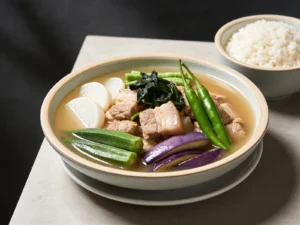 SinigangSour tamarind soup with pork or shrimp and vegetables
Yuzu and the East Asian citrus is tagged on 22 dishes from 5 countries in the atlas. These notes are written from general knowledge and carry no per-fact citation — see About.