
Ingredients
The meatballs
- 600 gminced beef
- or lamb, or a mixture
- with about 20 percent fat
- 1small onion, grated and squeezed
- a large handful of parsley, chopped
- a handful of coriander, chopped
- 1 teaspoonground cumin
- 1 teaspoonsweet paprika
- half a teaspoon ground cinnamon
- half a teaspoon ras el hanout
- optional
- 1 teaspoonsalt
- half a teaspoon black pepper
- a pinch of cayenne, optional
The sauce
- 3 tablespoonsolive oil
- 1large onion, finely chopped
- 4 clovesgarlic, crushed
- 800 gripe tomatoes, chopped
- or 2 tins chopped tomatoes
- 1 teaspoonsweet paprika
- 1 teaspoonground cumin
- half a teaspoon ground ginger
- a pinch of saffron, optional
- 1 teaspoonsugar
- salt and black pepper
- about 150 ml water
To finish
- 4eggs
- coriander and parsley, chopped
- a pinch of cumin
To serve
- khobz, the Moroccan bread
- or any good bread
- olives
- a salad of tomato and onion
Directions
- Steam rises, condenses on the cone and runs back down. The dish is otherwise the same. Soak the base and lid in water overnight. Never put an earthenware tagine on high direct heat. Use a heat diffuser on a hob. Never move a hot tagine onto a cold surface.
- Use more than feels right. Grate it rather than chopping it. Then squeeze it dry in your hand. Put the mince in a bowl. Add everything and mix with your hands. Work the mixture for two or three minutes. Knead it rather than stirring. Do not work it for ten minutes.
- Cover it and refrigerate it for thirty minutes. Wash everything afterwards. Mince carries surface bacteria through the interior. Wet your hands. Roll small balls, about the size of a walnut. Large ones stay raw or need longer, overcooking the sauce.
- Keep them small. Heat the olive oil in the tagine or pan. Add the chopped onion. Cook it gently for about ten minutes. It should soften completely. Add the garlic and cook two minutes. Add the paprika, cumin and ginger. Cook them briefly in the oil. Keep the heat moderate. Add a splash of water if it threatens to catch. Add the chopped tomatoes and the sugar.
- Add the saffron if you are using it. Real saffron is expensive and a pinch is enough. Crumble it into a little warm water first. Adding it dry wastes most of it. Simmer it for about twenty minutes. It should reduce and thicken. Taste before and after to judge. Do not brown them first. Add the water if the sauce is very thick. Cover and simmer gently for twenty minutes.
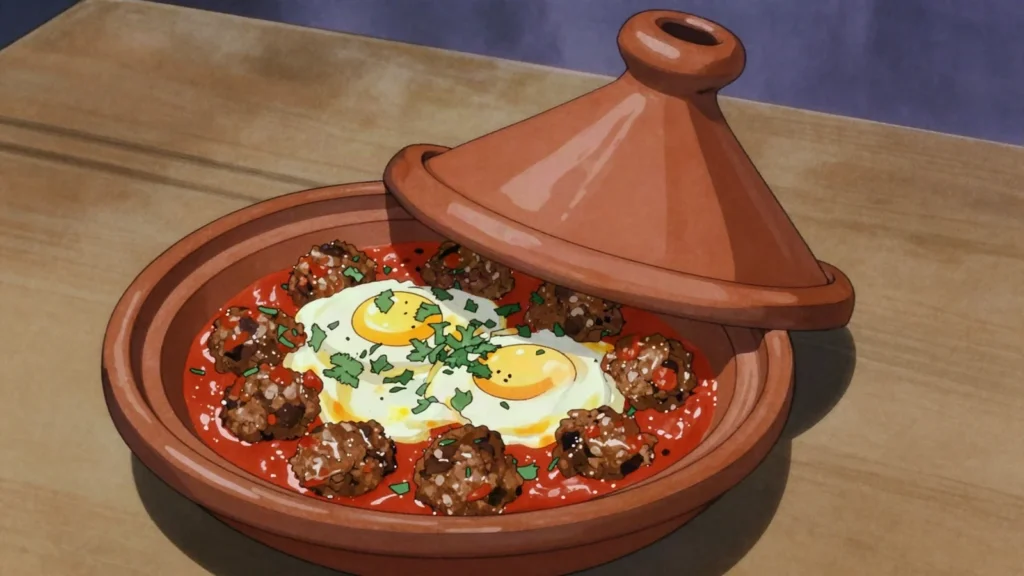
- Shake the pan occasionally rather than stirring. Turn them once, gently, halfway through. Cut one open at the twenty-minute mark. Minced meat must be cooked right through. Make small hollows between the meatballs. Crack an egg into each hollow. Cover the pan again. Cook for five to eight minutes. The whites should be completely set.
- Cook them through for anyone vulnerable. Cook them for three or four minutes longer. Scatter chopped coriander and parsley over. Add a pinch of cumin. Bring the whole dish to the table. Eating is done with the right hand. Freeze them before the eggs go in.
Technique
- Grate the onion and squeeze it dry before it goes into the mince. Grated onion distributes evenly where chopped pieces would break the meatballs apart, but it carries a great deal of water that loosens the mixture.
- Knead the mixture two or three minutes until it turns tacky. That tackiness holds the meatballs together — but stop there, since ten minutes of working gives dense springy meatballs.
- Keep them walnut-sized. Small balls cook through evenly in the sauce; large ones either stay raw or need long enough to overcook the sauce around them.
- Do not brown the meatballs first. In a tagine they are poached in the sauce, which keeps them tender and lets them flavour it directly.
- Reduce the sauce properly before the meatballs go in. They release liquid as they cook, so a sauce that seems right becomes watery.
- Shake the pan rather than stirring, and turn the meatballs once. Stirring breaks them up.
- Use mince with about twenty percent fat. Extra lean gives dry hard meatballs and a thin sauce.
- Use far more parsley and coriander than feels right. In Moroccan kefta the herbs are a main ingredient, not a seasoning.
- Crumble saffron into a little warm water before adding it. Added dry, most of its colour and flavour is wasted.
- The whites should be fully set and the yolks still soft — but a soft yolk is not fully cooked and carries a small salmonella risk. Give them three or four minutes more for anyone pregnant, very young, elderly or immunocompromised.
- Never put an earthenware tagine on high direct heat, never move a hot one onto a cold surface, and never add cold liquid to a hot one. It cracks from thermal shock, and a heat diffuser is worth having. Season a new unglazed one by soaking it overnight, then oiling and heating it gently.
- Some decorative tagines are not food safe and older or souvenir glazes may contain lead. Buy one sold explicitly for cooking and keep decorative ones for serving.
- Cook the meatballs and sauce ahead and add fresh eggs when you reheat. The eggs do not keep, and the rest is better the next day.
Substitutions
- Lamb replaces beef, or the two are mixed, which is very good.
- Tinned chopped tomatoes replace fresh out of season.
- A heavy casserole or a lidded frying pan replaces a tagine.
- Ras el hanout is optional; cumin, paprika and cinnamon carry the dish without it.
- Saffron can be left out entirely.
- The eggs can be left out for a plainer kefta tagine, which is also made.
Variations
- Kefta mkaouara is the same dish under another common name.
- Kefta grilled on skewers is the other great Moroccan treatment of the same mixture.
- Tagine with preserved lemon and olives is the classic chicken version.
- Tagine of lamb with prunes and almonds is the sweet festive one.
- Shakshuka in Tunisia and the Levant poaches eggs in a similar tomato and pepper sauce without meatballs.
- Some cooks add a handful of olives or preserved lemon to the sauce.
History
Spiced, ground meatballs, typically beef or lamb mixed with onion, parsley and cumin, cooked slowly in a tomato-based sauce within the distinctive conical clay cooking vessel also called a tagine, often finished with a cracked egg cooked directly into the sauce, documented across Morocco as one of the country’s most commonly prepared everyday tagine dishes. Its cooking vessel, the tagine, with its characteristic cone-shaped lid designed to trap and recirculate steam back down onto the food during slow cooking, reflects a distinctly Moroccan and wider Maghrebi cooking technology developed specifically to allow flavourful, moist slow-cooking using minimal water in the region’s historically arid climate. Kefta tagine remains a beloved, widely prepared everyday dish across Moroccan households.
Frequently asked questions
What is Kefta tagine?
Kefta tagine is a main from Morocco: spiced meatballs simmered in tomato sauce, finished with poached eggs. Spiced, ground meatballs, typically beef or lamb mixed with onion, parsley and cumin, cooked slowly in a tomato-based sauce within the distinctive conical clay cooking vessel also called a tagine, often finished with a cracked egg cooked directly into the sauce, documented across Morocco as one of the country’s most commonly prepared everyday tagine dishes. Its cooking vessel, the tagine, with its characteristic cone-shaped lid designed to trap and recirculate steam back down onto the food during slow cooking, reflects a distinctly Moroccan and wider Maghrebi cooking technology developed specifically to allow flavourful, moist slow-cooking using minimal water in the region’s historically arid climate. Kefta tagine remains a beloved, widely prepared everyday dish across Moroccan households.
How long does Kefta tagine take to make?
Kefta tagine takes 30 minutes of preparation and 50 minutes of cooking. The recipe makes serves 4. It is rated easy to make.
What can I substitute in Kefta tagine?
Yes, within limits. Lamb replaces beef, or the two are mixed, which is very good. Tinned chopped tomatoes replace fresh out of season. A heavy casserole or a lidded frying pan replaces a tagine. Ras el hanout is optional; cumin, paprika and cinnamon carry the dish without it. Saffron can be left out entirely. The eggs can be left out for a plainer kefta tagine, which is also made.
What is the most important thing to get right in Kefta tagine?
Steam rises, condenses on the cone and runs back down. The dish is otherwise the same. Soak the base and lid in water overnight. Never put an earthenware tagine on high direct heat. Use a heat diffuser on a hob. Never move a hot tagine onto a cold surface.