
Ingredients
Meat
- 1.5 kglamb shank, shoulder or beef shin, in large pieces on the bone
Seasoning
- 1whole head of garlic, cloves peeled and left whole
- 1preserved lemon, quartered
- 2 tbspsmen, fermented butter, or ghee
- 1 tspground cumin
- 1 tspsweet paprika
- 1 tspground ginger
- a generous pinch of saffron
- 1 tspblack pepper
- 1 tbspsalt
- 100 mlwater
Equipment
- a tanjia, the tall clay urn, or a heavy casserole with a tight lid
- paper and string, to seal
To serve
- bread
- cumin and salt on the side
- mint tea
Directions
- Put the meat into the clay urn.
- Add the whole peeled garlic cloves, the preserved lemon, the smen and all the spices.
- Use whole garlic cloves rather than chopped, since they soften into sweet whole pieces over hours. Bloom the saffron in a spoonful of warm water first, which draws out the colour.
- Add only about 100 ml of water.
- Cover the mouth with paper or parchment and tie it down tightly with string. Now cook it very slowly for 5 hours or more.
- Cut the string and tear the paper off, and the smell that comes out is the reason it is done this way.
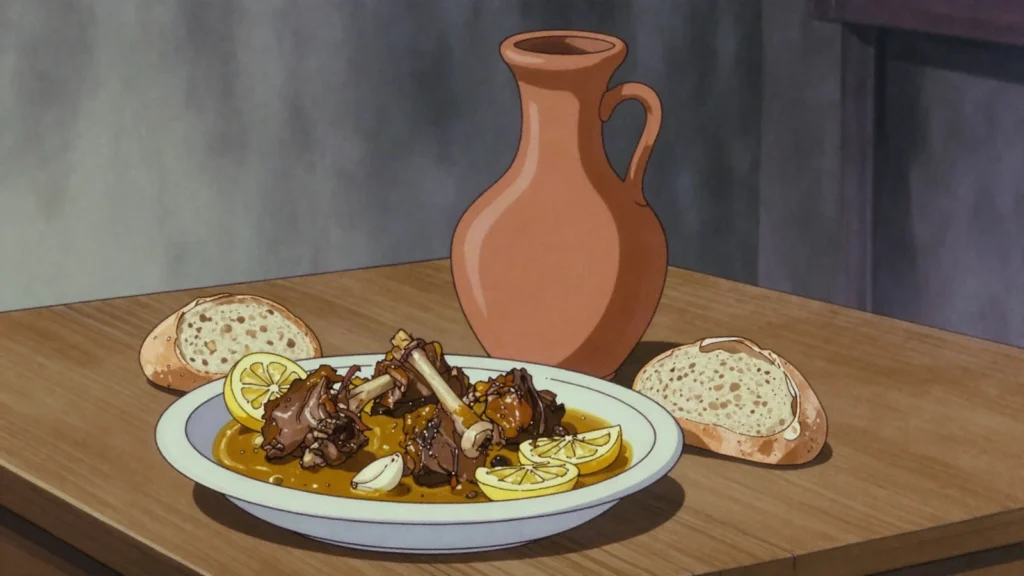
- Tip it out into a shallow dish, or serve it straight from the urn. Serve it with plenty of bread and nothing else.
Technique
- The tanjia urn is sold cheaply in Marrakesh souks.
- Hammams in Marrakesh still cook them for customers for a small fee.
- It is traditionally a men’s dish, which is unusual in Moroccan cooking.
Substitutions
- A heavy casserole with a tight lid in place of the clay urn.
- Ghee in place of smen, which is much milder.
Variations
- Made with beef shin.
- With more preserved lemon, which some prefer.
- With a little ras el hanout added.
History
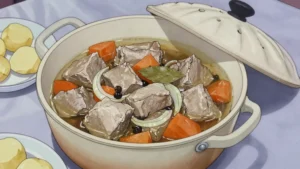
Meat, typically beef or lamb, slow-cooked for many hours in a distinctive urn-shaped clay pot along with preserved lemon, garlic and spices, developed specifically in Marrakech, traditionally cooked not at home but at a local communal bathhouse furnace, or hammam, where the sealed clay pot would be left to cook slowly in the ambient heat of the furnace throughout the day while its owner attended to other business. This distinctive cooking method, relying on a shared public heat source rather than a home oven, reflects a specifically Marrakchi urban tradition historically associated with working men who lacked time to cook at home, making tanjia sometimes informally described as a bachelor’s dish within Marrakech specifically. Tanjia remains closely and specifically associated with Marrakech’s distinct culinary identity within the broader landscape of Moroccan cuisine.
Frequently asked questions
What is Tanjia?
Tanjia is a main from Morocco: marrakshi lamb sealed in a clay urn, slow-cooked in hammam ashes. Meat, typically beef or lamb, slow-cooked for many hours in a distinctive urn-shaped clay pot along with preserved lemon, garlic and spices, developed specifically in Marrakech, traditionally cooked not at home but at a local communal bathhouse furnace, or hammam, where the sealed clay pot would be left to cook slowly in the ambient heat of the furnace throughout the day while its owner attended to other business. This distinctive cooking method, relying on a shared public heat source rather than a home oven, reflects a specifically Marrakchi urban tradition historically associated with working men who lacked time to cook at home, making tanjia sometimes informally described as a bachelor’s dish within Marrakech specifically. Tanjia remains closely and specifically associated with Marrakech’s distinct culinary identity within the broader landscape of Moroccan cuisine.
How long does Tanjia take to make?
Tanjia takes 20 min of preparation and 5 hr of cooking. The recipe makes 4 servings. It is rated medium to make.
What can I substitute in Tanjia?
Yes, within limits. A heavy casserole with a tight lid in place of the clay urn. Ghee in place of smen, which is much milder.
What is the most important thing to get right in Tanjia?
Add the whole peeled garlic cloves, the preserved lemon, the smen and all the spices.