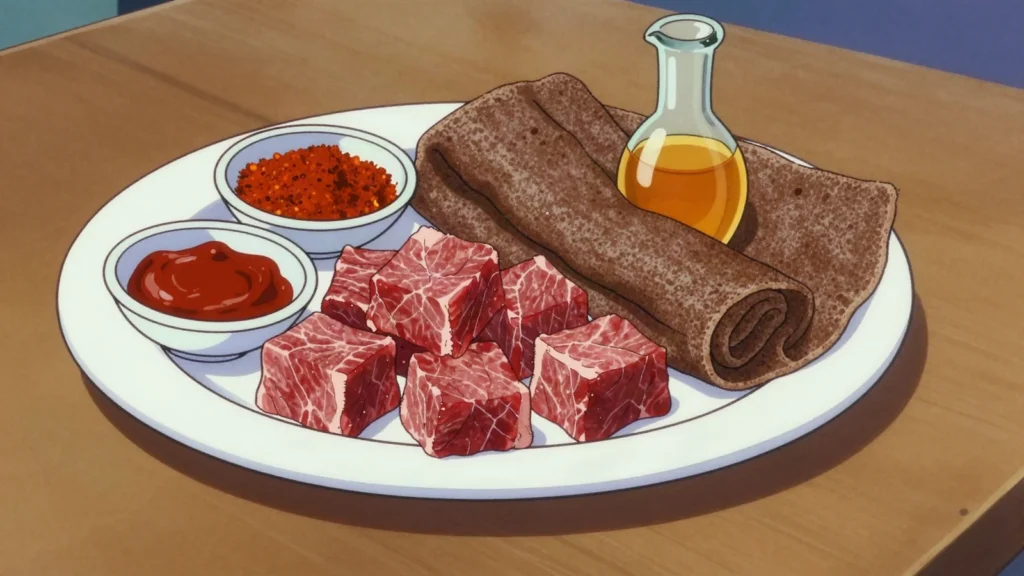

Raw beef cut to order at the table and dipped in mitmita and awaze. Butchery restaurants hang the carcass in the dining room and slice from it as customers order; freshness is judged by eye and the meat is eaten within hours of slaughter.
The safety of raw beef here comes from same-day slaughter of a known animal in a room where the carcass is visible — a chain that cannot be reproduced from a supermarket, and Ethiopia’s own tapeworm prevalence is directly tied to the practice.
What goes into it
- beef from a carcass slaughtered that day
- mitmita — chilli, cardamom and salt
- awaze — a chilli and berbere paste
- sometimes ayib and injera
How it is made
There is no preparation beyond butchery. The animal is slaughtered in the morning, the carcass hung in the restaurant, and pieces cut off and served immediately, unrefrigerated and uncooked, with a chilli dip alongside. The whole safety of the practice rests on how few hours have passed.
How long it takes: hours between slaughter and eating
How it is eaten
Cut at the table, dipped in mitmita or awaze, with injera and a glass of tej.
History
Butchery restaurants hang the carcass in the dining room and slice to order; freshness is judged by eye, and the meat is eaten within hours of slaughter.
Frequently asked questions
What is Kurt?
Kurt is a main from Ethiopia: raw beef cut to order at the table, dipped in mitmita and awaze. Butchery restaurants hang the carcass in the dining room and slice to order; freshness is judged by eye, and the meat is eaten within hours of slaughter.
How is Kurt made?
There is no preparation beyond butchery. The animal is slaughtered in the morning, the carcass hung in the restaurant, and pieces cut off and served immediately, unrefrigerated and uncooked, with a chilli dip alongside. The whole safety of the practice rests on how few hours have passed. It takes hours between slaughter and eating.
Can I make Kurt at home?
No, and the atlas gives no method for it. The safety of raw beef here comes from same-day slaughter of a known animal in a room where the carcass is visible — a chain that cannot be reproduced from a supermarket, and Ethiopia’s own tapeworm prevalence is directly tied to the practice.
What goes into Kurt?
Beef from a carcass slaughtered that day, mitmita — chilli, cardamom and salt, awaze — a chilli and berbere paste, sometimes ayib and injera.
How is Kurt eaten?
Cut at the table, dipped in mitmita or awaze, with injera and a glass of tej.