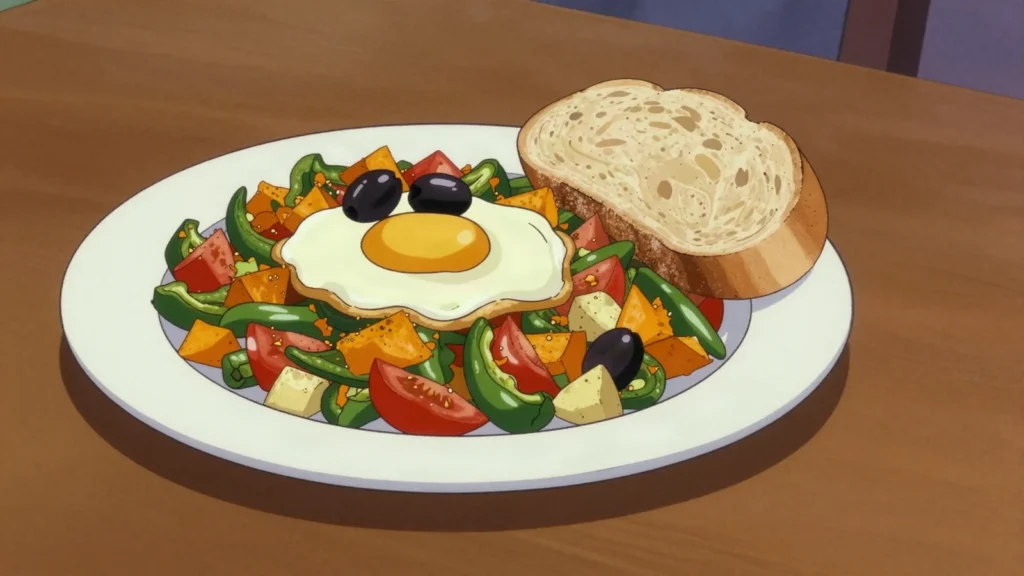

Ingredients
To fry
- 4green peppers
- 4tomatoes
- 2courgettes
- or 400 g pumpkin
- 3potatoes
- 1onion
- 2chillies
- oil, for deep frying
Eggs
- 4eggs
- or 6 for a fuller plate
To season
- 1 teaspoonground caraway
- 1 teaspoonground coriander
- 2 tablespoonsharissa
- salt and black pepper
- olive oil, to drizzle
Sometimes added
- 1 tintuna, drained
- black olives
- capers
- a boiled egg
Directions
- Wash all the vegetables thoroughly. Leave the peppers and tomatoes whole. Cut the potatoes into thick chunks. Cut the courgettes into thick lengths. Peel and quarter the onion first. That keeps them from collapsing in the oil. Pour oil into a deep pan to eight centimetres. Never fill a pan more than halfway with oil.
- Heat the oil to about 175C for frying. Fry one kind of vegetable at a time. Lift each of them out as it is done. Set them on kitchen paper or a rack. Frying the potato takes the longest. Fry the potato chunks for about eight minutes. They should be golden and cooked through.
- Fry the whole peppers for about five minutes. Turn them so every side blisters. Stand well back, since they spit. Frying the tomatoes takes care. Fry the whole tomatoes for three minutes.
- Lift them out before they collapse. They hold a great deal of hot juice. Fry the courgette for about four minutes. Fry the onion quarters for about five.
- Fry the chillies for two minutes. Drain everything very thoroughly. Crack the eggs into the hot oil. Fry them for about two minutes. Lift them out and drain them well. The yolk stays soft in the middle. Tip all the fried vegetables onto a board. Add the fried eggs onto the board.
- Chop everything together with a blade. Work across the pile repeatedly. Keep it coarse rather than fine. Aim for pieces about a centimetre. Scatter the caraway and coriander over it. Add salt and black pepper to it. Chop it through once more to mix. Stir harissa through it on the board. Stalls usually ask how hot you want it.
- Pile it onto a plate or into a bowl. Add tuna, olives or capers if you like. Serve bread alongside for scooping. It must be eaten genuinely hot.
Technique
- Every vegetable is deep-fried separately because each cooks at a different rate, so frying them together would burn some and leave others raw; they are combined only at the chopping stage.
- The fried vegetables and eggs are chopped together on the board with a mezzaluna, two knives or heavy scissors, which mixes and seasons at once, but the chop must stay coarse since over-chopping turns it to paste.
- Deep frying an egg is not the same as pan frying: the white puffs up and goes lacy while the yolk stays soft, and that broken yolk is what binds the whole plate.
Substitutions
- Pumpkin can replace the courgette, and both are used in Tunisia.
- Harissa can be stirred through or served on the side to taste.
Variations
- Tuna, olives, capers or a boiled egg are added to a fuller plate.
- It is served in a bowl or stuffed into a baguette to eat walking.
- Stalls ask how hot you want it and add harissa accordingly.
History
Everything is deep-fried separately then chopped together on the board with scissors or a mezzaluna, a street stall dish sold by the plate.
Frequently asked questions
What is Kafteji?
Kafteji is a street food from Tunisia: chopped fried peppers, tomatoes, squash and potato with egg. Everything is deep-fried separately then chopped together on the board with scissors or a mezzaluna, a street stall dish sold by the plate.
How long does Kafteji take to make?
Kafteji takes 25 minutes of preparation and 35 minutes of cooking. The recipe makes serves 4. It is rated medium to make.
What can I substitute in Kafteji?
Yes, within limits. Pumpkin can replace the courgette, and both are used in Tunisia. Harissa can be stirred through or served on the side to taste.
What is the most important thing to get right in Kafteji?
Wash all the vegetables thoroughly. Leave the peppers and tomatoes whole. Cut the potatoes into thick chunks. Cut the courgettes into thick lengths. Peel and quarter the onion first. That keeps them from collapsing in the oil. Pour oil into a deep pan to eight centimetres. Never fill a pan more than halfway with oil.