
Ingredients
Batter
- 500 gplain flour
- 7 ginstant yeast
- 1 tspsalt
- 2 tbspcaster sugar
- 350 mlwarm milk
- 2eggs
- 50 gbutter, melted
To add
- 150 graisins
- 80 gcurrants
- 1apple, peeled and finely diced
- 3 tbsprum or warm water, to soak the fruit
- grated zest of 1 lemon
For frying
- 2 litressunflower oil
To finish
- icing sugar, to dust generously
Equipment
- a deep heavy pan
- two spoons, or an ice cream scoop
Directions
- Put the raisins and currants in a small bowl. Pour over the rum or warm water. Leave them for at least thirty minutes. Dry fruit scorches at the surface of the ball. Drain them and pat them dry before use. Making the batter takes no kneading at all. Warm the milk to blood temperature and no hotter. Put the flour, yeast, salt and sugar in a large bowl.
- Whisk them together so the yeast is evenly spread. Add the warm milk, the eggs and the melted butter. Beat it hard with a wooden spoon for three minutes. It should be a thick smooth batter rather than a dough.
- Fold in the drained fruit, the diced apple and the lemon zest. Do not add them before beating, since they would break up. Cover the bowl with a clean cloth. Leave it somewhere warm for about an hour. It should roughly double and be visibly full of bubbles.
- Use a deep heavy pan and fill it no more than halfway. Heat the oil to about 175 degrees. Use a thermometer, since guessing is what ruins them. It should rise within a couple of seconds and sizzle steadily.
- Dip both spoons in the hot oil first. Scoop a generous spoonful with one spoon. Work close to the surface of the oil so it does not splash. Frying them takes a few minutes each.
- Fry five or six at a time without crowding the pan. Fry them for about six minutes in total. Turn them as they colour, though they often turn themselves. They should be deep golden brown all over. Break one open and look at the middle. It should be light and fully cooked rather than doughy. Lift them onto a rack lined with paper. Do not stack them while they are hot.
- Let the oil come back up to temperature between batches. Finishing them is done just before serving. Dust them very generously with icing sugar. Do this at the last moment, since the sugar dissolves on a warm ball. Pile them into a bowl or a paper cone. They are eaten with the fingers, standing outdoors in the cold.
Technique
- Soak the dried fruit first, since dry fruit scorches at the surface of the ball.
- Fry at a measured 175C, as cooler oil makes them greasy and hotter leaves them raw.
- Dust with icing sugar at the last moment, since it dissolves on a warm ball.
Substitutions
- Water in place of milk, for a plainer batter.
- Chopped dried apricot in place of some of the raisins.
Variations
- Appelbeignets, made with rings of apple in batter.
- Made plain, with no fruit at all.
- With candied peel through the batter.
History
Deep-fried dough balls eaten at New Year; Dutch settlers carried the fried dough to New Amsterdam, where it fed into the American doughnut.
Frequently asked questions
What is Oliebollen?
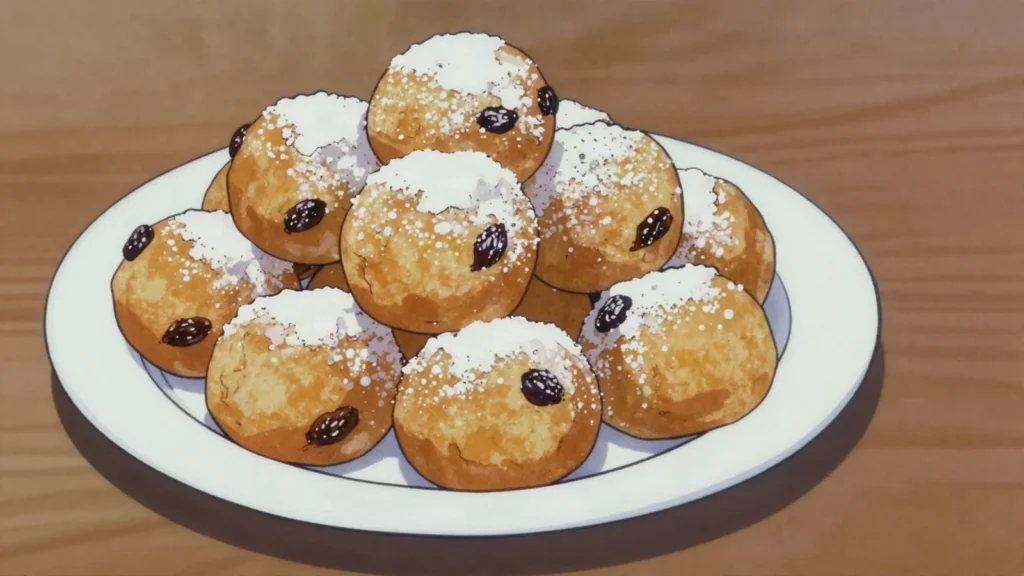
Oliebollen is a street food from Netherlands: fried dough balls with raisins, sugar-dusted; New Year’s treat. Deep-fried dough balls eaten at New Year; Dutch settlers carried the fried dough to New Amsterdam, where it fed into the American doughnut.
How long does Oliebollen take to make?
Oliebollen takes 25 min plus 1 hour rising of preparation and 30 min of cooking. The recipe makes 24 balls. It is rated easy to make.
What can I substitute in Oliebollen?
Yes, within limits. Water in place of milk, for a plainer batter. Chopped dried apricot in place of some of the raisins.
What is the most important thing to get right in Oliebollen?
Whisk them together so the yeast is evenly spread. Add the warm milk, the eggs and the melted butter. Beat it hard with a wooden spoon for three minutes. It should be a thick smooth batter rather than a dough.