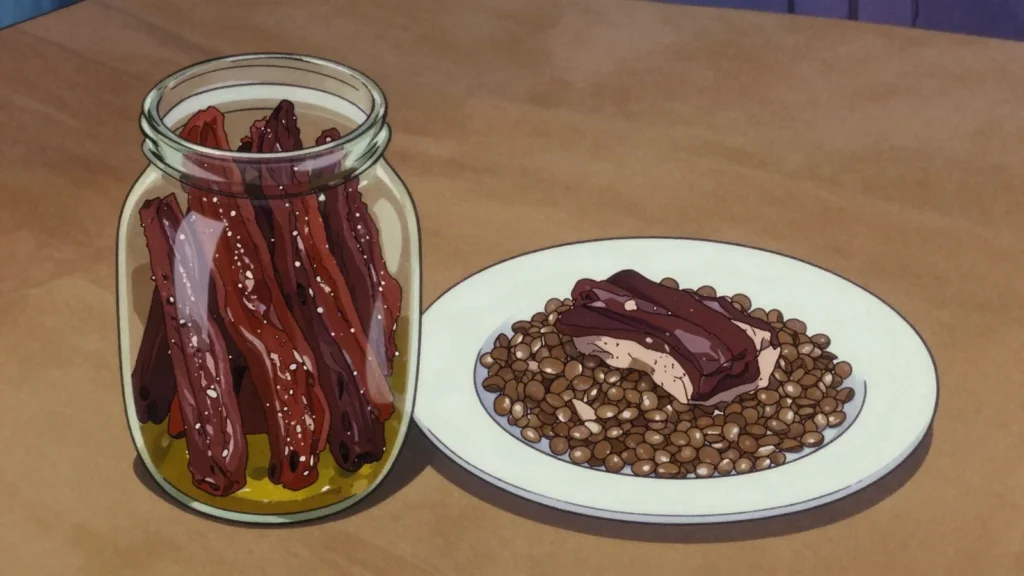

Mutton strips salted with coriander and chilli, sun-dried and stored in fat. It is made from the Eid al-Adha sheep across Tunisia and Libya; the dried meat keeps for months under olive oil or rendered fat and flavours couscous all year.
It is raw meat dried in open heat and then stored submerged in fat at ambient temperature — an anaerobic store, which is the classic botulism setting, and the drying has to reach a dryness a damp kitchen cannot.
What goes into it
- mutton, cut in long strips
- coarse salt
- coriander, caraway and chilli
- olive oil or rendered tail fat
How it is made
Strips are rubbed with salt and ground spices and hung on rooftop lines in the dry heat for several days until leathery. They are then fried in fat and packed into jars submerged in it, which excludes the air completely. Both stages matter: the drying takes out the water, the fat keeps the air out.
How long it takes: several days of drying, then stored under fat for months
How it is eaten
Lifted from the jar and cut into couscous, chakchouka and lentils.
History
Made from the Eid al-Adha sheep across Tunisia and Libya; the dried meat keeps for months under olive oil or rendered fat and flavours couscous all year.
Frequently asked questions
What is Kaddid?
Kaddid is a charcuterie & cured from Tunisia: mutton strips salted with coriander and chili, sun-dried and stored in fat. Made from the Eid al-Adha sheep across Tunisia and Libya; the dried meat keeps for months under olive oil or rendered fat and flavours couscous all year.
How is Kaddid made?
Strips are rubbed with salt and ground spices and hung on rooftop lines in the dry heat for several days until leathery. They are then fried in fat and packed into jars submerged in it, which excludes the air completely. Both stages matter: the drying takes out the water, the fat keeps the air out. It takes several days of drying, then stored under fat for months.
Can I make Kaddid at home?
No, and the atlas gives no method for it. It is raw meat dried in open heat and then stored submerged in fat at ambient temperature — an anaerobic store, which is the classic botulism setting, and the drying has to reach a dryness a damp kitchen cannot.
What goes into Kaddid?
Mutton, cut in long strips, coarse salt, coriander, caraway and chilli, olive oil or rendered tail fat.
How is Kaddid eaten?
Lifted from the jar and cut into couscous, chakchouka and lentils.