
Ingredients
Fish
- 2whole fish, about 600 g each, stingray, mackerel or snapper
- 1 tspturmeric
- 1 tspsalt
- juice of 1 lime
Sambal
- 10dried red chillies, soaked
- 4fresh red chillies
- 6shallots
- 4 clovesgarlic
- 2cm galangal
- 2 stalkslemongrass, sliced
- 1 tspbelacan, toasted shrimp paste
- 2 tbsptamarind paste
- 1 tbsppalm sugar
- 4 tbspoil
- salt
To cook
- banana leaves, softened over a flame
- a little coconut milk for basting
To serve
- steamed rice
- sambal belacan
- lime wedges
- sliced cucumber and raw shallot
Directions
- Score the flesh deeply on both sides, down to the bone, three or four cuts on each side. The scoring lets the marinade reach into the flesh and it helps a thick fish cook through before the outside burns.
- Rub it with turmeric, salt and lime and leave it for twenty minutes. Turmeric and salt on fish before cooking is standard across the region, and it firms the surface and takes off any muddiness. Soak the dried chillies in hot water for twenty minutes until soft.
- Wrap the shrimp paste in foil and toast it in a dry pan for a couple of minutes on each side. Now pound or blend the chillies, shallots, garlic, galangal, lemongrass and belacan into a smooth paste.
- Add a splash of oil to help a blender turn if it will not catch. Fry it in oil over a medium heat for fifteen to twenty minutes, stirring often. Fry it patiently until the paste darkens and the oil visibly separates and pools at the edges. Add the tamarind and palm sugar and cook for five minutes more. Season it with salt and taste it: it should be hot, sour, sweet and salty all at once.
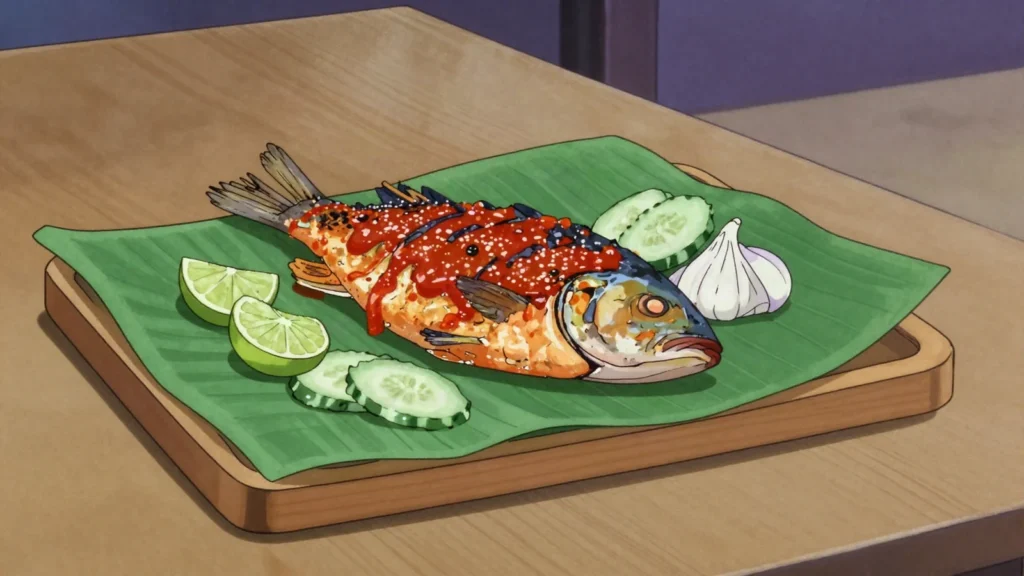
- Lay the fish on a banana leaf and spread sambal thickly over both sides, working it into the scores. Keep some sambal back to serve alongside, since much of what goes on the fish will char. Now the fire, which should be moderate rather than fierce.
- Grill over charcoal that has burned down to glowing embers with no flames. Use a moderate fire, since the sambal contains sugar and burns black long before a whole fish is cooked through.
- Set the leaf and fish on the grill and cook for eight to twelve minutes a side, depending on thickness. Baste it with a little coconut milk as it cooks, which keeps it moist and helps it colour. Turn it once only, using the leaf itself or a wide spatula to support it. It is done when the flesh at the thickest point flakes away from the bone easily.
- Serve steamed rice, sambal belacan, lime wedges, cucumber and raw shallot alongside. The raw shallot and cucumber against the hot sambal is the balance the plate needs, and it is how it is always served.
Technique
- The banana leaf stops the sambal falling through and adds its own aroma.
- Belacan must be toasted before it goes into the paste.
- The sambal is fried until the oil separates, which is called pecah minyak.
Substitutions
- Any firm whole fish in place of stingray.
- Foil in place of banana leaf, accepting the loss of aroma.
Variations
- Ikan bakar Padang, with a yellow turmeric-based paste.
- Wrapped fully in the leaf and cooked as a parcel.
- Made with squid or prawns instead of fish.
History
Grilled fish, marinated in a blend of turmeric, chili and other spices before being wrapped in banana leaf and cooked over an open charcoal flame, documented across Malaysia as one of the country’s most popular seafood dishes, reflecting Malaysia’s significant coastal geography and its correspondingly strong tradition of fresh seafood cookery. Its banana leaf wrapping, both imparting a subtle aroma to the fish and helping to keep it moist during grilling, reflects a broader Southeast Asian culinary technique for cooking over open fire while protecting delicate proteins from direct char. Ikan bakar remains a widely eaten dish across Malaysia, particularly popular at outdoor food courts and seaside restaurants throughout the country.
Frequently asked questions
What is Ikan Bakar?
Ikan Bakar is a main from Malaysia: banana-leaf grilled fish slathered with sambal. Grilled fish, marinated in a blend of turmeric, chili and other spices before being wrapped in banana leaf and cooked over an open charcoal flame, documented across Malaysia as one of the country’s most popular seafood dishes, reflecting Malaysia’s significant coastal geography and its correspondingly strong tradition of fresh seafood cookery. Its banana leaf wrapping, both imparting a subtle aroma to the fish and helping to keep it moist during grilling, reflects a broader Southeast Asian culinary technique for cooking over open fire while protecting delicate proteins from direct char. Ikan bakar remains a widely eaten dish across Malaysia, particularly popular at outdoor food courts and seaside restaurants throughout the country.
How long does Ikan Bakar take to make?
Ikan Bakar takes 30 min plus 30 min marinating of preparation and 25 min of cooking. The recipe makes 4 servings. It is rated medium to make.
What can I substitute in Ikan Bakar?
Yes, within limits. Any firm whole fish in place of stingray. Foil in place of banana leaf, accepting the loss of aroma.
What is the most important thing to get right in Ikan Bakar?
Lay the fish on a banana leaf and spread sambal thickly over both sides, working it into the scores. Keep some sambal back to serve alongside, since much of what goes on the fish will char. Now the fire, which should be moderate rather than fierce.