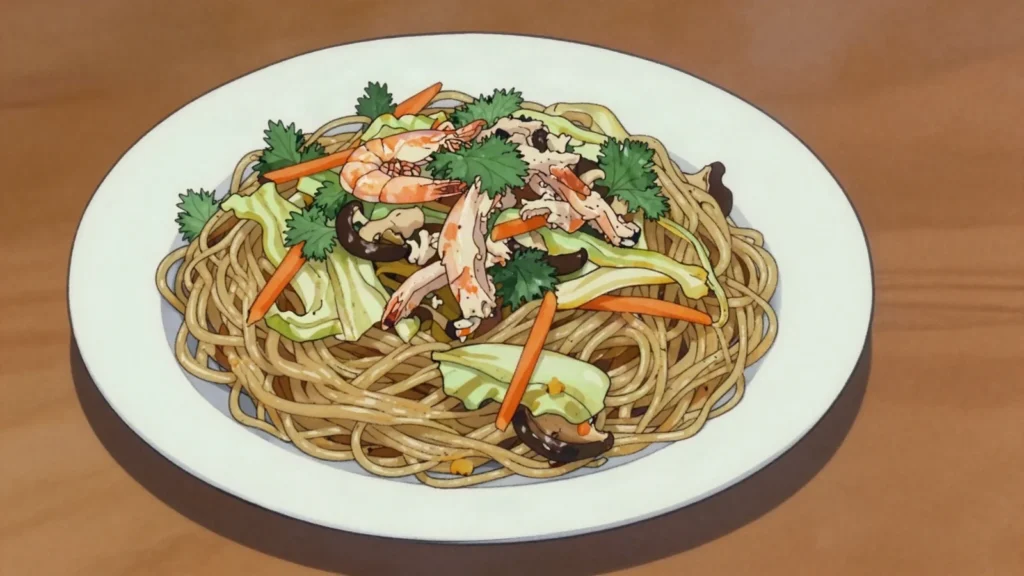

Ingredients
Noodles
- 300 gfine rice vermicelli
- Hsinchu style if you can find it
- warm water, for soaking
Main
- 250 gpork belly or shoulder, in strips
- 40 gdried shrimp
- 6dried shiitake mushrooms
- 300 gcabbage, finely shredded
- 2carrots, in matchsticks
- 6shallots, sliced
- or 1 onion, sliced
- 4spring onions, in lengths
Sauce
- 3 tablespoonssoy sauce
- 1 tablespoondark soy sauce
- 1 tablespoonrice wine
- 1 teaspoonsugar
- 1 teaspoonwhite pepper
- 250 mlstock
- plus the mushroom soaking water
To cook
- 4 tablespoonsoil
- or lard, traditionally
To serve
- chilli sauce
- black vinegar
- coriander
Directions
- Warm water softens it gently instead. Preparing the dried ingredients takes soaking. Put the dried shiitake in a bowl. Cover them over with hot water. Soak them for at least thirty minutes. Keep every drop of that soaking water. Put the dried shrimp in a small bowl.
- Cover them over with warm water. Soak them for about fifteen minutes. Drain them and keep that water too. Squeeze the soaked shiitake out gently. Cut off and discard the tough stems. Slice the caps into thin strips. Put the vermicelli in a wide bowl. Cover it with warm rather than hot water. Let it soak for about eight minutes. The noodles should be pliable and bendy.
- Drain the noodles thoroughly in a colander. Shake as much water off as you can. Wet noodles steam rather than fry. Cut through them once or twice with scissors. Stir-frying moves far too fast to chop as you go. Shred the cabbage as finely as you can. Cut the carrots into fine matchsticks. Slice the shallots and the pork. Mix the sauce ingredients together.
- Set everything out beside the pan in order. Heat a wok or wide pan until very hot. Add the oil and swirl it round. Add the sliced shallots to it. Fry them until fragrant and golden. Give them about two full minutes.
- Add the drained dried shrimp in. Fry them for about one minute. Add the pork strips to the pan. Fry them hard for about three minutes. Let them brown rather than just cook. Add the sliced mushrooms to the pan.
- Fry them for about two minutes. Add the carrot matchsticks next. Fry them for another two minutes. Add the shredded cabbage last. Fry it for about two minutes only. It should wilt but keep some crunch. Pour in the stock and the sauce mixture. Add the mushroom soaking water as well.
- Pour it in carefully, leaving any grit behind. Bring it up to a strong simmer. Add the drained noodles to the pan. That is how they take on the flavour.
- Toss them with tongs or long chopsticks. Lift from the bottom and fold over. Do not stir them hard with a spoon. Keep tossing for about three minutes. Judging when it is done takes a look. Add a splash of stock if they are still firm. Add the spring onion lengths in. Toss them through for thirty seconds.
- Taste it and adjust the soy and pepper. Serving it is done immediately. Tip it onto a large serving plate. Scatter coriander over the top. Put chilli sauce and black vinegar on the table. It keeps two days refrigerated.
Technique
- Hsinchu’s strong dry northeasterly autumn winds take moisture out of racked noodles evenly, which is why the industry settled there; Fujianese settlers brought the craft and it was industrialised under Japanese rule between eighteen ninety-five and nineteen forty-five.
- Hsinchu makes two kinds: chuifen is steamed and slightly thicker, holding up better in a stir-fry, while shuifen is boiled and finer and suits soups; most exported noodles are the steamed kind.
- Dried rice vermicelli must be soaked in warm water rather than boiled, since boiling turns it to mush in seconds; it should stay pliable with a firm core and finish cooking in the pan.
Substitutions
- Any fine rice vermicelli works, soaked the same way.
- Lard is the traditional cooking fat and gives more flavour than oil.
Variations
- Some cooks add dried squid alongside the dried shrimp.
- A soup version uses the same noodles in broth rather than stir-fried.
- Black vinegar splashed over at the table is standard in Taiwan.
History
Hsinchu’s autumn northeasterly winds dry the noodles perfectly, a craft brought by Fujianese settlers and industrialised in the Japanese era.
Frequently asked questions
What is Hsinchu Rice Noodles?
Hsinchu Rice Noodles is a main from Taiwan: fine rice vermicelli stir-fried with pork, dried shrimp and shredded cabbage. Hsinchu’s autumn northeasterly winds dry the noodles perfectly, a craft brought by Fujianese settlers and industrialised in the Japanese era.
How long does Hsinchu Rice Noodles take to make?
Hsinchu Rice Noodles takes 30 minutes plus soaking of preparation and 20 minutes of cooking. The recipe makes serves 4. It is rated medium to make.
What can I substitute in Hsinchu Rice Noodles?
Yes, within limits. Any fine rice vermicelli works, soaked the same way. Lard is the traditional cooking fat and gives more flavour than oil.
What is the most important thing to get right in Hsinchu Rice Noodles?
Cover them over with warm water. Soak them for about fifteen minutes. Drain them and keep that water too. Squeeze the soaked shiitake out gently. Cut off and discard the tough stems. Slice the caps into thin strips. Put the vermicelli in a wide bowl. Cover it with warm rather than hot water. Let it soak for about eight minutes. The noodles should be pliable and bendy.