
Ingredients
- 700 gsweet potato (the white-fleshed Caribbean kind if you can get it), peeled and finely grated
- 150 gfresh coconut, finely grated, or 120 g desiccated coconut soaked in 100 ml warm water
- 150 gplain flour
- 120 gdark brown sugar
- 60 graisins
- 1 tspground cinnamon
- ½ tspfreshly grated nutmeg
- ¼ tspground cloves
- ½ tspsalt
- 1 tspvanilla extract
- 60 gbutter, melted
- about 100 ml coconut milk, to bind
To wrap
- 6–8banana leaves, cut into 25 cm squares and passed over a flame until glossy and pliable
- kitchen string
Directions
- Grate the sweet potato on the fine side of a box grater, not in a food processor: hand-grating gives the slightly ragged texture that makes a ducana chewy rather than pasty.
- Squeeze the grated potato lightly in your hands to shed the loosest liquid, but do not wring it dry, as some moisture is needed to steam the parcel.
- Mix the potato with the coconut, flour, sugar, raisins, cinnamon, nutmeg, cloves, salt and vanilla until evenly speckled.
- Work in the melted butter and enough coconut milk to give a heavy, sticky dough that just holds its shape on a spoon, like a stiff pudding batter.
- Soften the banana leaves over a gas flame or in boiling water for 10 seconds a side until they turn a deep glossy green and stop cracking when folded.
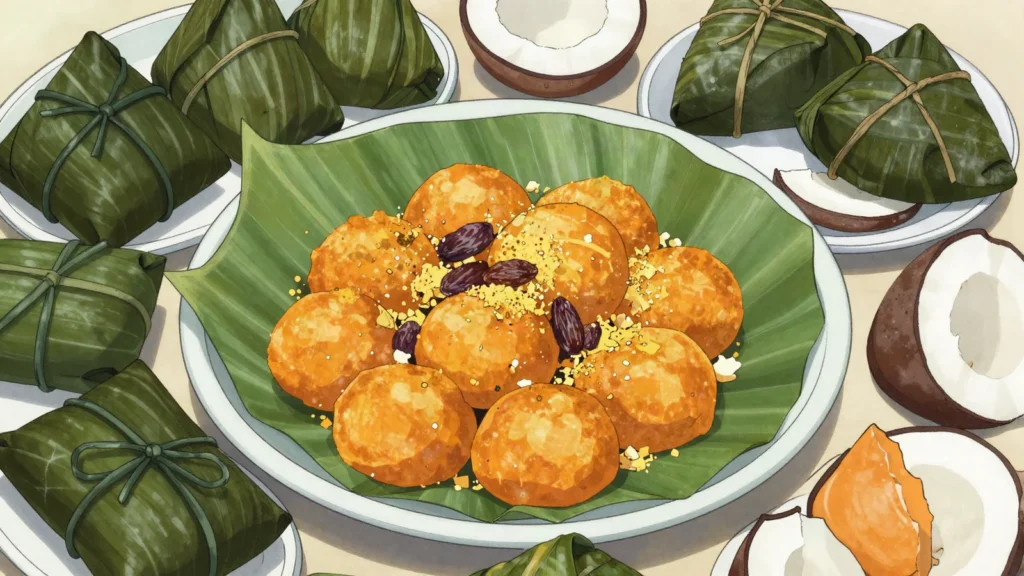
- Spoon 3 heaped tablespoons onto the middle of each leaf, fold the sides over the filling, then fold in the ends to make a snug rectangular parcel, and tie it crossways with string. Do not overfill: the dough swells as it cooks.
- Lower the parcels into a large pan of boiling water, weight them down with a plate so they stay submerged, and boil steadily for 40–45 minutes.
- Unwrap one to test: the ducana should be firm, dense and springy right through, with no wet raw centre, and it should smell strongly of nutmeg and coconut. Serve warm in the leaf, opened at the table.
Technique
- Ducana is descended from West African leaf-wrapped puddings brought to the Caribbean, and the banana leaf is not decoration: it perfumes the dough and stops water getting in while letting steam through.
- White-fleshed Caribbean sweet potato is drier and starchier than the orange supermarket kind. If you use orange sweet potato, add 2 extra tablespoons of flour to compensate for the extra moisture.
- It should be sweet but not cloying. In Antigua it is served as a starchy side against savoury, salty plates, so it needs restraint with the sugar.
Substitutions
- No banana leaves? Use squares of doubled foil lined with baking paper, or steam the mixture in well-buttered ramekins covered with foil for 50 minutes.
- Fresh coconut is far better, but desiccated coconut rehydrated in warm water is a reasonable stand-in.
Variations
- Ducana with grated pumpkin mixed into the sweet potato, common in the countryside.
- A cassava version, the older form of the dish, made with grated cassava in place of sweet potato.
History
Grated sweet potato and coconut steamed in banana leaf, eaten with saltfish and pepperpot, rooted in West African dumpling traditions.
Frequently asked questions
What is Ducana?
Ducana is a salad & side from Antigua and Barbuda: grated sweet potato-coconut dumpling steamed in banana leaf. Grated sweet potato and coconut steamed in banana leaf, eaten with saltfish and pepperpot, rooted in West African dumpling traditions.
How long does Ducana take to make?
Ducana takes 35 min of preparation and 45 min of cooking. The recipe makes 6 servings (about 10 parcels). It is rated medium to make.
What can I substitute in Ducana?
Yes, within limits. No banana leaves? Use squares of doubled foil lined with baking paper, or steam the mixture in well-buttered ramekins covered with foil for 50 minutes. Fresh coconut is far better, but desiccated coconut rehydrated in warm water is a reasonable stand-in.
What is the most important thing to get right in Ducana?
Grate the sweet potato on the fine side of a box grater, not in a food processor: hand-grating gives the slightly ragged texture that makes a ducana chewy rather than pasty.