
Ingredients
Beans
- 400 gdried carioca beans, soaked overnight
- 2bay leaves
- salt
Pork
- 200 gbacon or pork belly, in cubes
- 300 glinguiça or calabresa sausage, sliced
- 150 gpork crackling, torroesmo, optional
Base
- 1large onion, chopped
- 6 clovesgarlic, chopped
- 3 tbspoil
Also
- 4eggs, beaten
- 200 gcassava flour, farinha de mandioca
- 1 bunchkale, couve, very finely shredded
- 4spring onions, chopped
- chopped parsley
- black pepper
To serve
- with rice, and with couve refogada
Directions
- Soak them overnight, which shortens the cooking and gives an even result. Cook them with bay leaves until tender but still holding their shape completely. Stop while they still have some bite, since they get tossed in a hot pan afterwards and mushy beans turn the whole dish to paste.
- Drain them thoroughly and let them dry off. Drain them properly, since any liquid clinging to the beans turns the cassava flour into a gluey mess. Fry the bacon slowly until it renders and crisps, then lift it out with a slotted spoon.
- Fry the sausage in the same fat until browned, and lift that out too. Scramble the beaten eggs in a little of the fat until just set, breaking them into small pieces. Take them off while they are still soft, since they will be tossed with the hot beans afterwards. Set the eggs aside with the pork.
- Fry the onion in the remaining fat until soft, then add the garlic and cook until fragrant. Do not let the garlic darken, since burnt garlic carries bitterness right through the finished dish.
- Roll the leaves into a tight cigar and slice them into threads a millimetre or two wide. Add it to the pan and toss it for a minute only, until it turns bright green and just wilts. Cook it briefly, since overcooked kale goes drab and slippery and loses the point of adding it. Return the beans to the pan and toss them through the onion and fat.
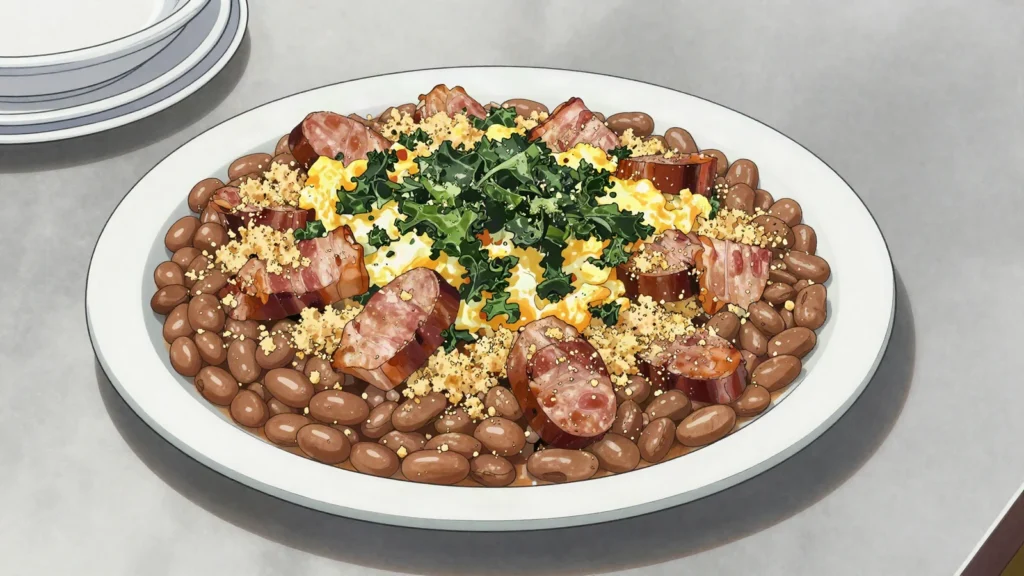
- Add it a handful at a time rather than all at once, since it absorbs fat instantly and dumped in it forms dry lumps. The flour should coat everything and turn golden as it toasts in the fat. Add enough that the mixture is loose and separate rather than wet, but stop before it turns dry and powdery. It should look like beans and sausage in a golden, crumbly, coated mass, holding together loosely.
- Return the bacon, sausage, crackling and scrambled egg and toss everything together. Season with plenty of black pepper and check the salt. Stir in the spring onion and parsley off the heat. Serve it hot with white rice, and with more couve alongside.
Technique
- Tropeiros were the muleteers who moved goods across Brazil.
- It is dry rather than soupy, unlike feijoada.
- The cassava flour goes in gradually or it clumps.
Substitutions
- Any smoked sausage in place of linguiça.
- Pinto beans in place of carioca beans.
Variations
- With pork crackling stirred through, which is common.
- Made without egg, which some prefer.
- With more kale, as a lighter version.
History
A dish combining beans, cassava flour, bacon, sausage and collard greens, documented across Brazil, particularly the state of Minas Gerais, with roots tracing to the tropeiros, mule drivers and traders who transported goods across Brazil’s interior during the colonial and early independence periods and needed durable, portable, high-energy food for their long journeys. Its combination of shelf-stable ingredients, beans, dried meat and cassava flour, reflects that specific historical need for food that could travel well over many days without refrigeration, and the dish’s name directly references those historic mule-driving traders. Feijão tropeiro remains a beloved traditional dish particularly associated with Minas Gerais and Brazil’s broader rural interior culinary tradition.
Frequently asked questions
What is Feijão tropeiro?
Feijão tropeiro is a main from Brazil: minas beans tossed with cassava flour, sausage, eggs and kale. A dish combining beans, cassava flour, bacon, sausage and collard greens, documented across Brazil, particularly the state of Minas Gerais, with roots tracing to the tropeiros, mule drivers and traders who transported goods across Brazil’s interior during the colonial and early independence periods and needed durable, portable, high-energy food for their long journeys. Its combination of shelf-stable ingredients, beans, dried meat and cassava flour, reflects that specific historical need for food that could travel well over many days without refrigeration, and the dish’s name directly references those historic mule-driving traders. Feijão tropeiro remains a beloved traditional dish particularly associated with Minas Gerais and Brazil’s broader rural interior culinary tradition.
How long does Feijão tropeiro take to make?
Feijão tropeiro takes 25 min plus soaking of preparation and 1 hr 30 min of cooking. The recipe makes 6 servings. It is rated medium to make.
What can I substitute in Feijão tropeiro?
Yes, within limits. Any smoked sausage in place of linguiça. Pinto beans in place of carioca beans.
What is the most important thing to get right in Feijão tropeiro?
Soak them overnight, which shortens the cooking and gives an even result. Cook them with bay leaves until tender but still holding their shape completely. Stop while they still have some bite, since they get tossed in a hot pan afterwards and mushy beans turn the whole dish to paste.