
Ingredients
Prawns
- 800 gprawns, shells and heads kept
- juice of 1 lime
- salt and pepper
Cassava purée
- 800 gcassava, peeled and cut into chunks
- 400 mlcoconut milk
- water, to cook
Base
- 2onions, chopped
- 6 clovesgarlic
- 1red pepper
- 1green pepper
- 4tomatoes
- 3 tbspolive oil
Also
- 100 mldendê, red palm oil
- 400 mlcoconut milk
- 1 bunchcoriander
- 3spring onions
- 1chilli, optional
To serve
- white rice
- farofa
Directions
- Use sweet cassava, sold as aipim or macaxeira in Brazil and simply as cassava or yuca elsewhere. Sweet cassava is the variety grown for eating fresh, and it still must be peeled thoroughly and cooked through before eating.
- Peel it thickly, removing both the brown skin and the pink layer beneath, and cut out the woody fibre running through the centre. Never eat cassava raw or undercooked, since the root contains compounds that are only removed by proper cooking.
- Boil it in plenty of water until it is completely soft and falling apart, which takes twenty-five to thirty minutes. It is done when a fork goes through with no resistance and the pieces have begun to split open. Blend it while hot, adding coconut milk gradually until it is thick and completely smooth. Do not over-blend it into glue, and stop as soon as it is smooth.
- Set the cassava purée aside for now. Now the prawn stock, which takes five minutes and improves everything. Peel the prawns and keep every head and shell. Fry the shells hard in a little oil until they turn deep pink and smell strongly, crushing them as they cook.
- Cover them with water, simmer for fifteen minutes and strain, pressing the solids. Do not simmer shellfish stock much longer than fifteen minutes, since it turns bitter.
- Season the peeled prawns with lime, salt and pepper and set them aside. Fry the onions in olive oil until soft, then add the garlic and peppers and cook until softened. Add the chopped tomatoes and cook them down to a thick base, about ten minutes. Loosen it with more coconut milk until it is the consistency of a thick soup.
- Simmer it gently for ten minutes, stirring often, since a thick starchy purée catches readily on the base. Red palm oil is thick, deep orange and strongly flavoured, and it gives bobó both its colour and its character.
- Warm it gently rather than heating it hard, since overheated dendê bleaches pale and loses its flavour. Stir it into the pot and let it cook through for a couple of minutes. Add them to the simmering purée and cook for three to four minutes only. Prawns are done the moment they turn opaque and curl into a loose C shape.
- Take the pot off the heat as soon as they are done. Stir in the chopped coriander and spring onion off the heat. Taste and season, and add a squeeze of lime to lift it. Serve it hot with white rice and farofa on the side.
Technique
- Sweet cassava is the eating variety and must still be cooked through.
- The cassava purée is what distinguishes bobó from other Bahian stews.
- Dendê is essential and refined palm oil will not substitute.
Substitutions
- Frozen cassava, which is widely sold and works well.
- Chicken or fish in place of prawns.
Variations
- Bobó de frango, made with chicken.
- With more chilli, which is common.
- Made with a mix of prawns and fish.
History
A rich, creamy stew combining shrimp with a purée of manioc root, coconut milk and palm oil, documented across Brazil, particularly the state of Bahia, with clear roots in West African culinary tradition, brought to Brazil through the transatlantic slave trade and closely tied to Bahia’s substantial Afro-Brazilian population and culinary heritage. Its rich combination of coconut milk, palm oil and manioc reflects ingredients and techniques central to West African cooking traditions, particularly Yoruba culinary influence, adapted using ingredients available in Brazil’s Bahia region. Bobó de camarão remains one of the most iconic dishes of Bahian cuisine, considered a defining example of Brazil’s Afro-Brazilian culinary heritage.
Frequently asked questions
What is Bobó de camarão?
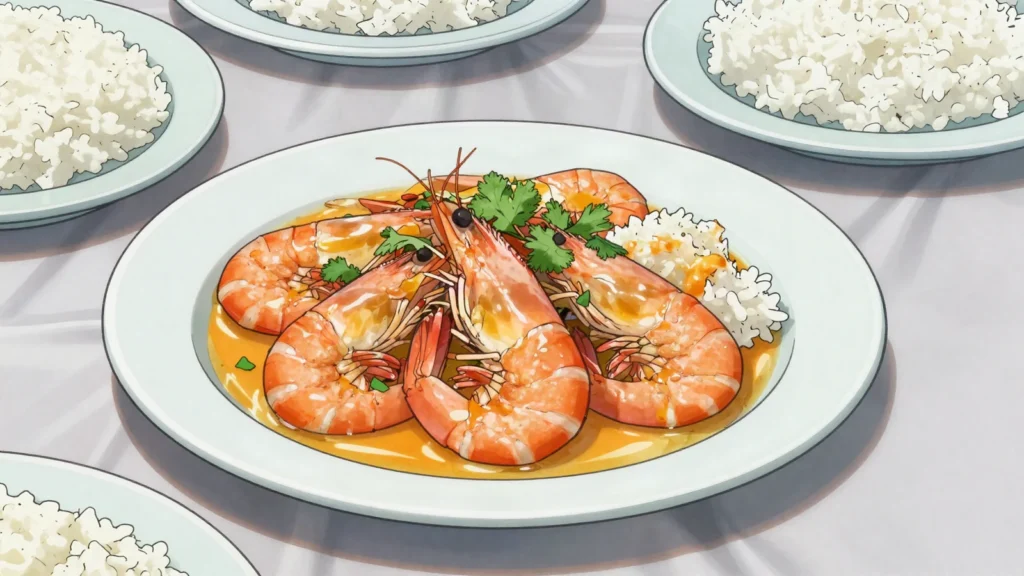
Bobó de camarão is a main from Brazil: shrimp in silky cassava-coconut cream enriched with dendê. A rich, creamy stew combining shrimp with a purée of manioc root, coconut milk and palm oil, documented across Brazil, particularly the state of Bahia, with clear roots in West African culinary tradition, brought to Brazil through the transatlantic slave trade and closely tied to Bahia’s substantial Afro-Brazilian population and culinary heritage. Its rich combination of coconut milk, palm oil and manioc reflects ingredients and techniques central to West African cooking traditions, particularly Yoruba culinary influence, adapted using ingredients available in Brazil’s Bahia region. Bobó de camarão remains one of the most iconic dishes of Bahian cuisine, considered a defining example of Brazil’s Afro-Brazilian culinary heritage.
How long does Bobó de camarão take to make?
Bobó de camarão takes 30 min of preparation and 50 min of cooking. The recipe makes 6 servings. It is rated medium to make.
What can I substitute in Bobó de camarão?
Yes, within limits. Frozen cassava, which is widely sold and works well. Chicken or fish in place of prawns.
What is the most important thing to get right in Bobó de camarão?
Use sweet cassava, sold as aipim or macaxeira in Brazil and simply as cassava or yuca elsewhere. Sweet cassava is the variety grown for eating fresh, and it still must be peeled thoroughly and cooked through before eating.