Chopped meat and fat seasoned and packed into a casing — fresh, smoked, cured or cooked — one of humanity’s oldest processed foods and one of its most varied: from the fresh pork banger and the Italian salsiccia to chorizo, merguez, bratwurst, kielbasa, boerewors, linguiça and the Chinese lap cheong.
Where it comes from
Homer mentions a sausage and the Romans had dozens; the word comes from the Latin for salted. Stuffing seasoned minced meat into a cleaned intestine solved three problems at once — it used every scrap of the animal, it kept the meat, and it made it portable — and every pig-, sheep- and cattle-keeping culture developed its own. Germany alone claims over a thousand kinds. The great divides are fresh versus preserved, and pork versus everything else: Muslim and Jewish sausages are lamb and beef; the Spanish, Portuguese, Italian and German traditions are overwhelmingly pork.
Fresh sausages — bangers, salsiccia, bratwurst, boerewors, merguez, Thai sai ua — are raw seasoned meat that must be cooked. Smoked and cooked sausages — kielbasa, frankfurters, andouille, Chinese lap cheong — are ready to eat or reheat. Cured sausages — salami, chorizo curado, saucisson sec, soppressata — are fermented and dried for weeks and eaten raw; they have their own page under charcuterie. The chorizo of Spain is cured; the chorizo of Mexico is fresh; the two share only a name and paprika.
Varieties
- Fresh pork sausage (banger, salsiccia, bratwurst) — Coarse pork with salt, pepper and herbs or spices; fried, grilled or crumbled into a sauce.
- Chorizo — Spanish: pork with paprika and garlic, cured (eaten raw) or semi-cured for cooking. Mexican: fresh, spiced with chilli and vinegar, crumbled and fried.
- Merguez — North African lamb (or beef) sausage with harissa, cumin and coriander; grilled. Now French as much as Maghrebi.
- Kielbasa and smoked sausages — Polish smoked pork sausage; Cajun andouille; German Bockwurst and Frankfurter. Cooked or smoked, reheated or grilled.
- Boerewors and linguiça — South African coiled beef-and-pork sausage with coriander; Portuguese smoked garlic sausage of the Azores and Brazil.
- Blood and offal sausages — Black pudding, morcilla, boudin noir, Blutwurst; haggis and andouillette. Cooked, usually sliced and fried.
In the kitchen
Cook fresh sausages gently — medium heat, twenty minutes for a thick banger, turning — so they cook through without bursting or charring; pricking is unnecessary and loses the juices. Or poach briefly first and finish on the grill. Crumbled out of the casing into a hot pan, fresh sausage meat becomes the base of a ragù, a stuffing, a pasta sauce or a pizza topping.
Cooking chorizo sliced and fried releases red paprika oil that flavours everything after it — potatoes, chickpeas, squid, eggs. Merguez is grilled over charcoal and eaten with bread and harissa or over couscous. Smoked sausages are simmered in soups and stews (kielbasa with cabbage and beans, andouille in gumbo) or sliced and fried. Blood sausage is sliced thick and fried until the outside crisps.
Choosing and keeping
Fresh sausages keep two or three days in the fridge and freeze well; they should smell fresh and the casing should be dry and unbroken. Cooked and smoked sausages keep a week or two; vacuum-packed, longer. Cured sausages keep for weeks hanging or in the fridge.
A good fresh sausage has a high meat content (over 80%) and a natural casing; cheap ones are padded with rusk and water. Butchers who make their own are worth finding. Spanish cooking chorizo is labelled ‘para cocinar’ or ‘fresco’ — cured chorizo can be cooked too but is drier.
Dishes with sausage
 Okroshkacold kvass soup with vegetables, egg, ham
 ChorrillanaFry pile under sliced beef, sausage, onions, fried eggs; Valparaíso
 HúngarosSpicy smoked sausage split, grilled and served in a bread roll
 TortaCrusty bolillo sandwich stuffed with meats, beans, avocado
 StamppotPotatoes mashed with kale or sauerkraut, smoked sausage on top.
 LocroHominy, squash and meat stew eaten on patriotic May 25
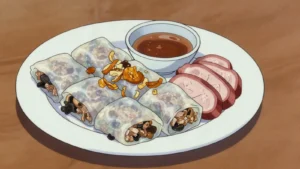 Banh CuonGossamer steamed rice sheets rolled around minced pork and wood-ear
 Coniglio in porchettaBoned rabbit rolled with wild fennel, garlic and pancetta, then roasted.
Sausages is tagged on 132 dishes from 72 countries in the atlas. These notes are written from general knowledge and carry no per-fact citation — see About.