
Ingredients
Chickpeas
- 300 gdried chickpeas, soaked overnight with 1 tsp bicarbonate of soda
- 1bay leaf
Bread
- 3flatbreads, torn into pieces
- oil or ghee for frying
Yoghurt sauce
- 700 gthick yoghurt
- 3 clovesgarlic, crushed to a paste with salt
- 3 tbsptahini
- juice of 1 lemon
- salt
To finish
- 60 gbutter or ghee
- 50 gpine nuts
- 1 tspground cumin
- sumac
- chopped parsley
- a little pomegranate
To serve
- warm, assembled at the last moment
Directions
- Soak them overnight with a teaspoon of bicarbonate of soda. The bicarbonate raises the pH of the soaking water, which softens the skins and lets the chickpeas cook far softer than they otherwise would.
- Rinse them well after soaking, since too much bicarbonate leaves a soapy taste. Simmer them with a bay leaf for an hour to an hour and a half until they are genuinely soft. Cook them until they crush easily between finger and thumb, since firm chickpeas are wrong here.
- Keep the cooking liquid, which is used to warm the chickpeas at the end and to loosen the sauce. Some cooks slip the skins off, which gives a smoother result and takes a patient half hour.
- Tear the flatbread into rough pieces rather than cutting it, which gives better texture. Fry the pieces in batches until deep golden and crisp all through, then drain them. Make sure they are crisp right through rather than merely coloured, since any softness collapses immediately under the yoghurt. The bread can be prepared hours ahead and kept in a tin.
- Whisk the yoghurt with the tahini, garlic paste, lemon and salt until completely smooth. Crush the garlic to a paste with salt rather than chopping it, which distributes it evenly instead of leaving harsh raw lumps. Now warm it, and warm it gently.
- Set it over a very low heat and stir constantly until it is just warm to the touch. Never let yoghurt approach a boil, since it splits into grainy curds and watery whey and cannot be brought back. Keep the butter, which is poured over the finished dish.
- Assemble it at the very last moment, immediately before it goes to the table. The entire appeal of fatteh is the contrast between crisp bread, soft chickpeas and warm yoghurt, and that contrast lasts about five minutes.
- Spread the fried bread in the bottom of a wide dish. Spoon the warm chickpeas over, with a few spoonfuls of their hot cooking liquid. That splash of hot chickpea liquid softens the bread just slightly, which is deliberate and is not the same as soaking it.
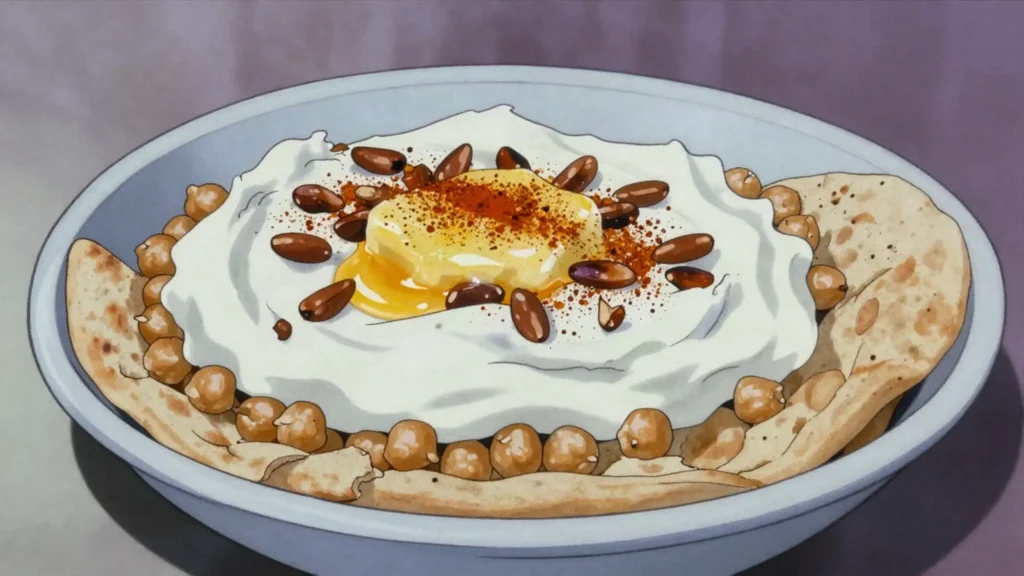
- Pour the warm yoghurt sauce over the top, covering everything. Scatter the fried pine nuts over and pour the browned butter over them. Dust with cumin and sumac, and scatter parsley and pomegranate seeds over.
Technique
- Fatteh is a family of dishes, named for the crumbled bread rather than a filling.
- The yoghurt must be warmed gently or it splits.
- It must be assembled at the very last moment.
Substitutions
- Tinned chickpeas, warmed in their liquid, which is a common shortcut.
- Toasted rather than fried bread, which is lighter.
Variations
- Fattet djaj, with shredded chicken.
- Fattet batinjan, with fried aubergine.
- With lamb and toasted almonds, as a festive version.
History
A layered dish combining crisped or toasted pita bread with chickpea, yoghurt and often ground meat, topped with toasted pine nut, documented across Lebanon and the wider Levant region for many generations, closely related to similarly named and constructed fatteh dishes found across neighboring countries including Egypt and Syria. Its layered structure, with crisped bread at the base soaking up yoghurt and chickpea broth from the layers above, reflects a broader regional tradition of transforming stale or day-old bread into a substantial, flavourful component of a larger dish. Fatteh remains a popular traditional dish across Lebanon, commonly eaten for breakfast or as a hearty light meal.
Frequently asked questions
What is Fatteh?
Fatteh is a breakfast from Lebanon: chickpeas, torn pita and warm yoghurt topped with fried nuts. A layered dish combining crisped or toasted pita bread with chickpea, yoghurt and often ground meat, topped with toasted pine nut, documented across Lebanon and the wider Levant region for many generations, closely related to similarly named and constructed fatteh dishes found across neighboring countries including Egypt and Syria. Its layered structure, with crisped bread at the base soaking up yoghurt and chickpea broth from the layers above, reflects a broader regional tradition of transforming stale or day-old bread into a substantial, flavourful component of a larger dish. Fatteh remains a popular traditional dish across Lebanon, commonly eaten for breakfast or as a hearty light meal.
How long does Fatteh take to make?
Fatteh takes 20 min plus overnight soaking of preparation and 1 hr 30 min of cooking. The recipe makes 6 servings. It is rated medium to make.
What can I substitute in Fatteh?
Yes, within limits. Tinned chickpeas, warmed in their liquid, which is a common shortcut. Toasted rather than fried bread, which is lighter.
What is the most important thing to get right in Fatteh?
Soak them overnight with a teaspoon of bicarbonate of soda. The bicarbonate raises the pH of the soaking water, which softens the skins and lets the chickpeas cook far softer than they otherwise would.