
Ingredients
The dough
- 500 gplain flour
- 300 gfresh grated coconut
- or 200 g desiccated, moistened
- 1onion, finely chopped
- 2green chillies, chopped
- 1 teaspoonsalt
- about 250 ml water
Sometimes added
- a few curry leaves
- chopped
- 1 teaspoonground cumin
To cook
- a flat griddle
- or a heavy frying pan
- a little oil
To serve
- lunu miris
- onion and chilli sambol
- or seeni sambol
- with tea
Directions
- Cover it with warm water for ten minutes. Desiccated is dry and less flavourful. Put the flour in a large bowl. Add all the grated coconut to it. Add the chopped onion and chilli. Add the salt in to them as well. Rub the coconut through the flour.
- Use your fingers to work it through. There should be no clumps of coconut. Add all of the water gradually. Bring it together into a dough. You will need less water with it. Add it in just a splash at a time. Judging the dough takes a squeeze. Squeeze a piece of it in your palm. It should hold together firmly.
- Knead it just until it comes together. The coconut prevents that anyway. Cover the dough and let it rest. Give it about fifteen minutes. Divide the dough up into pieces. Roll each one into a smooth ball.
- Make them about the size of a fist. Keep every one of them the same size. Flatten each ball between your palms. Work it out to about a centimetre. Keep it thick rather than thin. Press them back together as you go.
- Heat a flat griddle over medium heat. The roti is thick and needs time. Lay a roti on the hot griddle. Give it about four full minutes. Brown spots should appear underneath. The upper surface should look dry. Turn it and give four more minutes. Turn it once rather than repeatedly. Press it down gently with a spatula. Pressing helps it cook through.
- Press gently rather than hard. Brush a little oil on as it cooks. A little extra helps it brown. Cook them for longer if it is. Keeping them warm is worth doing. Stack them under a cloth as you go. The cloth keeps them warm and soft.
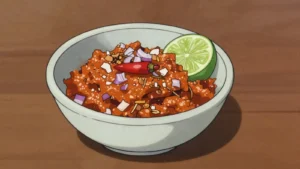
- Stack them up as they come off. Pound red onion, chilli and salt. Add lime juice and a little Maldive fish. Leave it out for a vegetarian sambol. Serving them is always done hot. Tear the hot roti apart by hand. Dip it right into the hot sambol. Serve hot black tea alongside it. They keep a day in a sealed box.
Technique
- The coconut is structural rather than a flavouring — it is a very large proportion of the dough, and its moisture and oil are what make the bread work. Fresh scraped coconut brings its own moisture, so add the water gradually and expect to need less than with desiccated.
- Pat the dough out by hand to about a centimetre rather than rolling it: a rolling pin compresses it too much where hands keep it loose and coarse, and that thickness is characteristic. The edges crack as you pat, which is normal with a coarse dough — press them back together as you go.
- Cook it on a moderate heat, since the roti is thick and needs time and high heat burns it before it cooks through. Turn it once rather than repeatedly and press gently with a spatula, since hard pressing makes it dense.
Substitutions
- Desiccated coconut moistened with warm water for ten minutes stands in for fresh scraped, though it is drier and less flavourful.
- Lunu miris is pounded red onion, chilli, lime and salt, often with Maldive fish, dried cured tuna, for savoury depth — that makes it non-vegetarian, so leave it out for a vegetarian sambol.
Variations
- The dough is stiff and coarse rather than smooth like a bread dough, since the coconut keeps it rough and there is no gluten to develop; knead it only a minute or two.
- The roti is plain and coconut-rich and the sambol sharp and burning, and the two balance each other exactly — neither works as well alone.
- Stack the cooked roti under a cloth, which keeps them warm and soft; uncovered they dry out quickly.
History
The cheapest breakfast in Sri Lanka, cooked on a flat griddle and eaten with lunu miris chilli paste.
Frequently asked questions
What is Pol Roti?
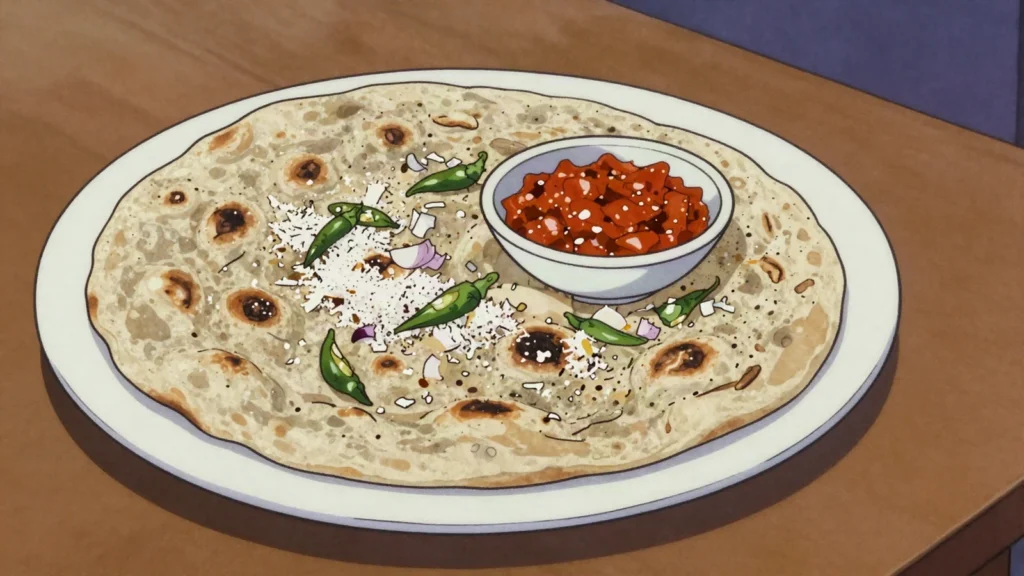
Pol Roti is a breakfast from Sri Lanka: thick griddled flatbread of flour and scraped coconut, torn and dipped in sambol. The cheapest breakfast in Sri Lanka, cooked on a flat griddle and eaten with lunu miris chilli paste.
How long does Pol Roti take to make?
Pol Roti takes 20 minutes of preparation and 25 minutes of cooking. The recipe makes about 8 roti. It is rated easy to make.
What can I substitute in Pol Roti?
Yes, within limits. Desiccated coconut moistened with warm water for ten minutes stands in for fresh scraped, though it is drier and less flavourful. Lunu miris is pounded red onion, chilli, lime and salt, often with Maldive fish, dried cured tuna, for savoury depth — that makes it non-vegetarian, so leave it out for a vegetarian sambol.
What is the most important thing to get right in Pol Roti?
Make them about the size of a fist. Keep every one of them the same size. Flatten each ball between your palms. Work it out to about a centimetre. Keep it thick rather than thin. Press them back together as you go.